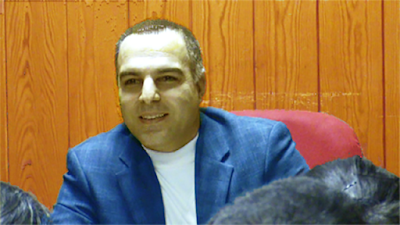
The Position of Mother Tongue in Human Societies

Hamid Dadizadeh

“Identity”, as P. Krostrity suggests, “is defined as the linguistic construction of membership in one or more social groups or categories”. (1999)4 Identity is the tool by which every human being identifies himself or herself on the planet earth.

Language and Human Identity: South Azerbaijanis, a Case Study

The “primordial and enduring importance of our mother language” has repeatedly been emphasized by the world renowned researchers and writers. Mother language is referred to as “the homeland of our innermost thoughts”.1 The interrelatedness of language with other human faculties and senses takes us spontaneously to the position to pay more attention to the dimensions of language in the history of human civilization. One can approach the mother language from a variety of perspectives (e.g. educational, sociological, psychological, artistic/literary, historical, political, and post-colonial).

This paper will shed light on the position of mother language on defining the personal identity of those students whose mother language has been marginalized.

Matsura Koichiro, UNESCO Director General has reiterated the importance of mother language education and encouraged the world academic communities to highlight this important issue in order to defend those languages that are at the risk of dying out.2 This paper will also emphasize on the importance of mother language education not only it is “the intangible heritage of humanity”, but the mother languages are rich sources of identity and personal wealth of each nation and its citizens. In our contemporary world, in order an individual citizen or a nation to be able to participate in decision-making, and other democratic process, to have his or her voice to be heard, or have access to a “fair share of power and resources (either material or non-material) _of their native land, he or she has to be able to speak out, to negotiate and try to influence. The mother language is an inseparable part of every child. In other words, it is implicitly interwoven with the individual’s identity of every child genetically. The structure, vocabulary, and resources of mother language are buried in the every individual. It is the responsibility of democratic societies to facilitate the potentialities of linguistic heritage of child to flourish and endow the individual child with a rich source of power to communicate with others and prove his or her identity without any shame and marginalization.

In the second chapter, this paper will examine the relationship of mother language with human identities with special referral to the Southern Azerbaijan where more than 20 million Turkic Azeri speaking people reside. Iran, as a multilingual society has been practicing monolingualism in public education and in other aspects of the social life. The outcome of this policy however has resulted in deprivation of millions of Azerbaijanis from learning in their own language and practicing freely their culture and cultural productions. Meanwhile, the Economic and Social Council of the United Nations, on their 2002 issue of the Human Rights report has clearly elucidated the status of “Azeri’s” in Iran and ascertained the accelerating policy of assimilation of non Persian people in this country. For more clarification, however, a summarized list of the report from annex 111 shed light on this matter:

Denial of cultural autonomy;

Harassment and imprisonment of cultural activists;

The banning of the use of Azeri language in schools;

Changing or distorting Azeri geographical names.

The deprivation of marginalized minorities around the world has led Skutnab-Kangas to invent a declaration of children’s linguistic human rights, (1986)3, where he suggests that:

1-Every child should have the right to identity positively with her original mother tongue(s) and have her identification accepted and represented by others

2-Every child should have the right to learn the mother tongue(s) fully

3-Every child should have the right to choose when s/he wants to use the mother tongue in all official situations.

This paper will then discuss the meaning of identity and will explore the areas of internal and external identification with special reference to the educational system practiced in the Southern Azerbaijan of Iran.

What Do I Mean by the Identity?

“Identity”, as P. Krostrity suggests, “is defined as the linguistic construction of membership in one or more social groups or categories”. (1999)4 Identity is the tool by which every human being identifies himself or herself on the planet earth. That is why the ancient Greek philosophers believed that the only means of human distinction with other species is the language. We are embedded in our languages. With languages, we are being inherited a wide variety of characteristics and signs which distinguishes every single nation from others. Therefore, “language and communication are critical aspects of the production of a wide variety of identities expressed at many levels of social organization”, Krostrity1999. Identity is implicitly buried in human beings. And this is only human species that recognize and appreciate this identity. Identity gives meaning to human’s life. Identity is identity, there is nothing recognized as minority or majority when we speak of identity. The existence, presence and function of every human being in this universe are marked by his or her identities. The crucial component of this identity is language which composes the essence of human culture. It is with the whole branches of language production that human civilization has been extended through centuries and the artistic, literary, scientific and other precious human heritages preserved from fatal catastrophic events throughout history. Having said that, and keeping this in mind, one can understand clearly the deep concern and worries of UNESCO expressed on the press release no.2002-07 as following:

“About half of the 6000 or so languages spoken in the world are under threat. Over the past three centuries, languages have died out and disappeared at a dramatic and steadily increasing pace, especially in the Americas and Australia. Today at least 3,000 tongues are endangered, seriously endangered or dying in many parts of the world.”4

One of the endangered languages of our modern era is Azerbaijani language, the language of Turkic Azeri population of Iran. In the report of Economic and Social Council of United Nations, for the year 2002 we read:

“The Azerbaijani Turkic-speaking people of Iran (also referred to as Azeris) are recognized as the largest minority and may indeed be the largest group in the country. It appears to be accepted that about 12 million of them live in the north-west and that in the country as whole there may be as many as 30 million. It is asserted that the Azeris have lived on the Iranian plateau for thousands of years and that they predate the entry of Persian tribes to the area”.5

With the universal wave of enlightenment, Azeris in Iran has endeavored to return themselves, make themselves free from the alienation and assimilation policies of the former and existing rulers. The Azeri youth and intellectuals have been attempting to convince the Islamic government to implement the Constitutional Law of the Islamic Republic and enforce the rules and regulations the founders have authorized. In chapter two of this Constitution, the article 15 clearly explains the ethnic composition of Iran as a multilingual and multicultural society. The article 15 reads:”


The state and common language and script of Iran is Persian. Documents, correspondence, official texts and shall be in this language and script.

However, the use of local and ethnic languages in the press and mass media and teaching of their literature shall be allowed, besides the Persian language”.6 But, in the real world,” in Azerbaijan of Iran, as 21Azer.blog suggests,

”the Turkic language has been banned from schools and government offices. Since the Turkic language press shared the same fate, there were no Turkic newspapers or magazines published. Students were forced to speak in Persian in schools, and in the face of using their mother language they were fined and whipped”.7

It should be noted that despite all restrictions and pressures, the Azeri writers and artists attempt to be active in the field of ‘identity struggle’ by publishing articles, papers and books in their native language. However, the progressive teachers and students of southern Azerbaijan have played a crucial role in running this ‘identity struggle’ forward and communicating with people about the related issues in the field of learning. In this study, I interviewed several teachers in Azerbaijan who have been actively and conscientiously involved in covert mother language retention and maintenance and adopted the mother language teaching in scientific subjects, such as chemistry and physics, I came across to amazing and perplexing results. I used qualitative research methodology by providing the informants by the questionnaire. One of my study participants, a physics teacher in Tabriz high schools, Amogli, who has been science instructor for about 18 years in secondary schools, passionately addressed me by saying that:

“Oh, hamid, you cannot understand how I enjoyed teaching physics in Azeri Turkic language, the mother tongue of all 99 percent of these students. I was not allowed to do this, but the principal closed his eyes and let me do what I wanted. My students repeatedly told me that they understand the science much more clearly and easily when they are being taught directly in their own mother tongue”8.

Mother tongue instruction has been repeatedly and emphatically encouraged by experienced educators and pedagogues. Critical sociolinguists like Jim Cummins and Skutnab Kangas (1988) has written extensively on this issue. As a citizen of Southern Azerbaijan, I would like to mention that the deprivation of mother language instruction in formal education in this huge province and among all Turkic speaking population of Iran has resulted in catastrophic human loss and brain-drain from Azerbaijan. Thousands of Azerbaijani intellectuals turned their back to their motherland, and because of linguistic marginalization which is a form of violation of basic human rights, were uprooted from their native home and succumbed to displacement in other parts of the world. The assimilationist policies of Shah Regime had resulted in some of Azerbaijan students who were living in outside provinces and Tehran, to deny their original linguistic identity. The severity of this denial was so deep that some try to change their birthplaces from their birth documents. But the course of history and universal wave of ethnic enlightenment and consciousness and thanks to the information super highway and amazingly high speed internet, the transition from “shame to struggle” is noticeable now among this population.

It is unbelievable that in the Southern Azerbaijan, restrictions are still being imposed on this issue regardless of the constitutional law which I mentioned above. But in the course of ‘identity struggle’, all hurdles are being removed naturally by democratic demands of ordinary people. Since” language, as Jorgaqi 9 suggests,” means identity and we identify ourselves with the words we express in our different languages”, the importance and effectiveness of this vital sign of human identity must be considered by the law makers. Jorgaqi, as an ordinary citizen who lives out of her country as an involuntarily displaced person and experiences the separation from her mother language, expresses her thoughts in a passionate way:

Mother language is your first cry in this world showing that you are alive. It is the nicest, most impressive and sophisticated tool which gives meaning to the world. She goes on saying that,” language is the direct expression of your culture.”

The reader will understand the sensitivity of mother tongue instruction in Southern Azerbaijan of Iran when s/he pays attention to the historical background of this ancient nation. William Douglass, the USA Supreme Judge in 1940s who had traveled the middle East, has written extensively in regards to Azerbaijani people, their aspirations, emotions and potentialities. We read in his book,

Azerbaijan is a historic place. Here Zoroaster lived in the sixth century and taught the unending conflict between good and evil. Azerbaijan, being from time to time out of mind an international high way, has seen the crossing of many races.10

Historically, the people of Azerbaijan have been extremely proud of their language and culture. While they have been exposed to multiple foreign invasions, pillages, lootings and occupation, this people have suffered a lot from absence of their formal language instruction. And though the modern education was introduced in Iran by M.Roshdiyyeh, an Azerbaijani scholar and philanthropist, the dominant power separated this nation from their mother tongue instruction. This long time deprivation, humiliation and racism have caused a widespread interest among the intellectuals and a clandestine movement for national identity among Azeri people and freedom-fighters.

Bibliography

1-Matsurura, Koichiro, director general of UNESCO, 2001,
His Speech on the Occasion International Mother Language Day

2-Cummins and Kangas, 1988
Minority Education, from Shame to Struggle, 14-15, multiculturalism Matters, Toronto.

3-Skutnab Kangas, 1988,
Minority Education: From Shame to Struggle, 19-20

4-Linguistic Diversity,
UNESCO Press Relewase, No.2002-07
http://upo.unesco.org/press/3103798pr1.htm

5-Report of Economic and Social Council
United Nations, 2002, Commision on Human Rights, 58th session.

6-Constitutional Law of Islamic Republic of Iran,
Chapter Two, article 15

7-21- Azer.blogspot.com
8/4/2003, pp 34-35

8-Excerpts from the questionnaire No.1, pp3-4

9-Jorgaqi, Suela,
Proud of Being Multi-Lingual, 2003.

10-Douglass, William,
Strange Land and Friendly People, printed in the USA, 1948, pp-38-39

Read more ...

Iran’s Latest Ethnic Revolt

Yet that seems to be happening in Golestan, one of Iran's 30 provinces, with the ethnic Turkmen community seething with anger against Tehran. It all started on Jan. 4, when a gunboat of the Islamic Revolutionary Guard Corps shot and killed a 20-year-old Turkmen fisherman in the coastal waters of the Caspian Sea.

FACING ethnic revolts in both Baluchistan and Kur distan, the last thing that Tehran might have wanted was a similar problem in another corner of Iran with a non-Persian majority.

Yet that seems to be happening in Golestan, one of Iran's 30 provinces, with the ethnic Turkmen community seething with anger against Tehran. It all started on Jan. 4, when a gunboat of the Islamic Revolutionary Guard Corps shot and killed a 20-year-old Turkmen fisherman in the coastal waters of the Caspian Sea.

The authorities claim that the fisherman, one Hissmauddin Khadivar, had been part of an illegal fishing expedition whose 30 or so members were later arrested and that his death was an accident.

As news of the incident spread, bands of angry Turkmen, some armed with daggers and sticks, attacked government offices and set vehicles on fire. One group attacked a police station; another tried to lay siege to the local Revolutionary Guard barracks near the fishing port of Bandar-Turkmen.

Eyewitnesses say the riots lasted until late Sunday night (Jan. 6), ending after reinforcements flew in from other cities. Over the two days, more than 300 people were arrested and taken away to unknown destinations. A spokesman for the Turkmen Human Rights Group said dozens were injured. How many might have died is unclear, because the Guard took some of the injured with them, ostensibly for hospitalization in other towns.

In the following days, anti-government demonstrations rocked a number of other cities, including Gonbad Kavous and Quchan, where Turkmens are a majority. A state of emergency remains in force in Bandar Turkmen and Gonbad Kavous.

The Turkmen anger appears to have been so strong and widespread as to oblige the government in Ashgabat, capital of neighboring Turkmenistan, to stop its flow of natural gas to Iran, provoking a diplomatic tussle with Tehran.

Turkmens number around 2.2 million and form a majority in Golestan province. They are also present in North Khorassan (along the border with the former Soviet Republic of Turkmenistan) and the Caspian province of Mazandaran. Turkmens say Iran has gerrymandered them across four provinces to curtail their political influence by denying them the number of seats they might otherwise have won in the Islamic Consultative Assembly, Iran's ersatz parliament.

An Altaic people sharing racial roots with the Uzbeks, the Kazakh and the Kyrgyz, the Turkmens are easily distinguishable from other Iranians thanks to their skin color, slanted eyes and other Asiatic features. Their distinct languages, Yamut and Koklan, are related to Turkish, Korean, Chinese and Japanese. And they are overwhelmingly Sunni Muslims, while some 86 percent of Iranians are Shiites.

In the 1920s, Iran's Turkmens rose in revolt and declared a Soviet Republic with support from Moscow. The short-lived republic was destroyed by Reza Khan, the general who became Iran's shah in 1925. Over 200 Turkmen chiefs were hanged and hundreds of families transported far from Turkmen territories. After the fall of the shah, the Turkmens again rose in revolt. Their so-called republic was soon crushed by the Revolutionary Guard, ordered by Ayatollah Khomeini to treat the rebels as "miscreants waging war on Allah." The Guard hanged hundreds of militants and threw thousands into prison camps until the mid-'90s.

Khadivar isn't the first Turkmen fisherman to be killed in an incident involving the Guard's naval units in the Caspian. Since Tehran banned unauthorized fishing in the inland sea in 1996, dozens of men in search of caviar-rich sturgeon have died in clashes with security forces.

Why did Khadivar's death trigger such anger? Some observers point to President Mahmoud Ahmadinejad's economic policies, which have produced a 17 percent inflation rate and thrown thousands out of work. Unemployment among the Turkmens is estimated at 40 percent, three times the official national rate.

Another grievance is the government's refusal to allow Turkmens even a toehold in local administration. All top jobs in Golestan and in Turkmen towns in other provinces are held by Shiites from other parts of Iran. The government prefers to employ migrant workers from Afghanistan and Baluchistan to work in the Turkmen area's vast state-owned cotton fields. And by making Caspian fishing a state monopoly, Iran has deprived many Turkmens of a traditional source of income.

Tehran has also imposed central control on water distribution from the River Atrak, reserving the bulk of it for state-owned farms and estates, owned by rich mullahs and Guard commanders, where few Turkmens work. Turkmen farmers, mostly smallholders, are left with little or no water.

Turkmens also complain of a massive government campaign to convert them to Shiism. While no permit is issued for building Sunni mosques, the number of Shiite places of prayer and mourning has multiplied in Turkmen towns and villages. Shiite mullahs from Qom conduct periodic conversion "raids" into Turkmen towns and villages, using the promise of jobs and perks as inducements.

Turkmens claim that they have the lowest life expectancy in Iran and that they are denied fair access to higher education. Those who manage to apply for university places are often turned away because they fail religious tests based on Shiism; their inadequate mastery of Persian reduces their chances further.

Tehran authorities blame the Turkmen revolt on "secessionists" and "counterrevolutionaries," allegedly supported by the United States. In fact, the revolt highlights the failure of a narrowly based ideological regime to understand the pluralist nature of Iranian society and the legitimate aspirations of its diverse component parts for dignity, equal opportunity and a fair share in decision-making.

http://www.nypost.com/seven/01142008/postopinion/opedcolumnists/irans_latest_ethnic_revolt_876610.htm

[ Back ]

Read more ...

LAKE URUMIYAH IS DRYING

140 km-long Lake Urumiyah, which is an attraction center for swimming, water sports and boat activities, is at a great stake. Lake Urumiyah attracts a lot of people in summer with its beautiful beaches and salty water. Depending on its water containing many minerals, Lake Urumiyah has made its region one of the most beautiful and unique places of the world for the water therapy systems. This lake is unfortunately under the danger of extinction.

Within the borders of the West Azerbaijan, in the Lake Urumiyah National Park, which is under a ?so-called? protection and which contains islands, coasts, various kinds of plants and animals, and the area of 4810 hectares some kind of ecologic problems, depending on the increase in the saltiness level due to the decrease of the water level, are experienced. A meeting was hold in Tabriz in November 16 ? 17, 2007 on this issue.

In the above-mentioned meeting, to which relevant individuals and experts were attended from the cities of Tabriz and Urumiyah, it was declared that ?the negativities seen in Lake Urumiyah were mentioned to the relevant authorities in the year 2005, however no appropriate researches and studies were conducted on this issue.? In addition to this, it is reported that in the meeting, some points as ?as of November 300 milligram salt in one liter lake water was measured, and the reason for this is the decrease in the waters of the rivers flowing to the Lake Urumiyah, the future of the lake would be in danger if any measures do not taken, and the people living around would be affected negatively because of this reason? are discussed.

According to the experts, although the individuals attending to the meeting could not express the following facts openly, ?they point out that the central government is indifferent to the Azerbaijani States and insensitive to the problems of the region?. In addition to this, the experts underline that the area?s biological variety draws attention internationally and because of that reason the area was declared as a national park and taken under protection as ?a biosphere region? by UNESCO. It is suggested that the Government of Iran?s unconcerned attitude towards Lake Urumiyah would also set environmental organizations in motion.

(oursouthazerbaijan)
Read more ...

Basis of Iranian Nationalism(s)

Pouria Lotfi

I try, very briefly, to answer the question "what is Iranian nationalism?" This is particularly difficult since Iran is a multi-lingual, multi-cultural and multi-ethnic country. Iranian nationalism is not a uniform concept.

I try, very briefly, to answer the question "what is Iranian nationalism?" This is particularly difficult since Iran is a multi-lingual, multi-cultural and multi-ethnic country. Iranian nationalism is not a uniform concept. While one may argue that no concept of national identity that functions as a base for its respective nationalism is uniform, Iranian concepts of nationalism are diverse in the extreme. My goal is not to do a survey but rather to discuss broad factors that may be seen as encompassing the multiple facets of Iranian nationalism and provide a framework for discussing its general characteristics. For the purposes of this paper, I have identified three inter-related factors that provide the basis for Iranian nationalism(s): a strong sense of history or collective memory; a distinct, continuous culture; and geographical continuity. These are broad factors that can be may be seen as encompassing the multiple facets of Iranian nationalism and provide a framework for discussing its general characteristics.

This article is divided into the following sections for easier navigation:

Iran is what Shahrough Akhavi calls an "old new state" by which he means that "if one views it as a member of the third world societies, it nevertheless has an ancient tradition and history within roughly the same frontiers as those of today[1]." Thus, Iranian nationalism fits into the mould that Ryszard Kapuscinski has set for ancient civilizations. He writes: "Societies with a historical mentality are directed toward the past. All their energies, their feelings, their passions are dedicated to greater times already gone by. They live in the realm of legends and founding lineages[2]."

Scholars of the modernist school tend to negate the role of collective memory. The popular conception of nations and nationalisms is that they are fairly recent phenomena, arising around the time of the French Revolution or after. For modernists, the formation of nations is deeply rooted in the advent of modernity, with little consideration for the pre-modern historical context[3]. However, Anthony Smith's critique of the modernist perspective and his consideration of the historical roots of nationalism is particularly applicable to the Iranian case. He distinguishes two problems with the modernist argument. Firstly he argues that in the modernist theories, "the nation... is divested of 'identity'." It is, he goes on to say, "either conflated with the state, to become the 'nation state', or it is equated... with modern high culture." Secondly, he faults modernist theories as having as having a "tendency to rely on purely structural explanations." By this he means that they "trace the origins, rise, and course of nations and nationalism to the consequences of (uneven) capitalism, industrialism, militarism, the bureaucratic state, or class conflict, or a combination of these[4]."

Thesis

Few scholars would argue against the idea that there has been an Iranian identity long before the modern era. This is of course, not to say that there was an Iranian nation in the modern sense of the term, but there has long been the notion of "Iranianness" but it meant different things in different historical contexts. The Achaemenids regarded themselves as Iranian in insofar as Iranian signified a group of various ethnic entities sharing common linguistic, religious and cultural traits[5]. The Sassanian consolidated the definition of Iranian by adding a definite political and geographical facet to it[5]. In the Islamic period, this definition lost its political and religious connotations and became merely a cultural and geographical concept. Furthermore, in each period right up to the modern era, political and cultural elites have made use (even if in a selective or manipulative manner) of this common history to reinforce a collective sense of identity.

Early Iranian intellectuals did not create the Iranian nation ex nihilo: Qajar period thinkers started making extensive use of an Iran-centred history in formulating and promoting Iranian nationalism. As Mohamad Tavakoli Targhi argues, "The narratological centrality of Iran signified the emergence of a new conception of historical time differing from the prevalent cyclical arrangements of chronicles[6]." A glorified ancient past (particularly pre-Islamic) was used to establish an Iran-centred continuity directly connect with the present. It was in the Qajar era that intellectuals made the first attempts to imagine an Iranian nation. Writers such as Mirza Fath Ali Akhundzadeh (d. 1878), Mirza Agha Khan Kermani (1853-1896) amongst others used history to "reawaken" Iranians in the face of imperialism and the countries declining fortunes. A perfect example of such a use is provided by ‘Abd al-Baha ‘Abbas (1844–1921) in his treatise al-Asrar al-ghaybiyyah li asbab al-madaniyyah [Hidden Secrets of the Causes of Civilization]. He writes, "O people of Persia! Look into those blossoming pages that tell of another day, a time long past. Read them and wonder; see the great sight." He gives a brief account of past glories, real and imagined, taken from sources such as the Old Testament, the Shahnameh, as well as contemporary European works, then implores his country men to: "Awake from your drunken sleep! Rise up from your lethargy!" In short he beseeches them to consider what they were and what they have become[7].

Closely tied to the collective memory is the idea of a collective cultural consciousness. Benedict Anderson, like Smith, stresses the cultural and historic roots of nationalism. He writes that nationalism is best understood, not with "self-consciously held political ideologies," but instead with "the large cultural systems that preceded it, out of which — as well as against which — it came into being[8]. In the same way that the Greeks of the various city states saw themselves as having a Hellenic culture different from other, so too did Iranians distinguish between themselves and ‘others'. Granted, in the Islamic period, this "sense of Iranian community and culture" was "largely centred on the Persian language and literature[9]." There were however other subjective cultural traits that can be considered common to Iranian culture: the celebration of common festivals, notably the Iranian New Year; religious peculiarities common to the Iranian cultural area, and later, on the Iranian plateau, Shi'ism; common myths and legends; and distinctive material culture. To give but one example, it was this common sense of community that sided Safavid Turcomans with the Persians, against the Turkish Ottomans and Uzbeks. They held in common, religious beliefs (Shi'ism) and common history/myths (e.g. Iskandar Beg Monshi, hinself of Turcoman origin, writes of the armies of Iran and Turan when describing a battle between the Safavids and Uzbeks.[10]).

The Persian language is often fetishized as the common denominator of Iranian heritage and while this may have been true to in the pre-modern period it is less so today. In the pre-modern period Persian was not only the language of ethnic Persians - it was the lingua franca of the Iranian geographical area and beyond. Homa Katouzian writes: "Massive evidence of this broader Iranianism — which remained alive during the centuries of political disunity, mainly through the medium of the Persian language and literature — is provided by classical Persian literature[9]. However he goes on to say that the pan Persianist policies of the 20th century have "dealt a blow to the wider sense of Iranianism which had always existed", since the non-Persian minorities began to see themselves as subjects of discrimination[9]. It can thus be said that, despite the predominant conceptualizations of an Iranian nationalism based on language, Persian no longer has the same paramount status as it once had[11].

Finally there is the important physical aspect of Iranian nationalism that must be taken into account. This however provides an interesting contradiction: on the one hand Iranian history and culture are linked to a definite geographical context and on the other hand, the physical geography stood as a barrier against easy communication — a requisite for forming a nation[12]. These geographical barriers also kept the Iranian plateau relatively isolated. As Cottam states, "To the extent that geography was responsible for the uniqueness of Iranian character, culture, and history, it helped create a national particularism which in turn served as a catalytic force for the growth of nationalist sentiment.[12]" Thus there is a dichotomy where the Iranian geographical area was relatively inaccessible to foreign influence but was also to centralized political control. Of course the past tense is important here since with modern forms of communication, transport and control, this is no longer the case.

There is another more important aspect in the discussion of geography and Iranian nationalism. There has already been mention of an Iran as a geographical concept, but it is important to analyse its connection to Iranian nationalism. The idea of Iran, as the land of Iranians, is an old one. Firoozeh Kashani-Sabet convincingly argues that "Iran" and its corresponding territories therefore were not 19th century innovations… Nor did these ideas originate with the works of Orientalists... The impulse to set apart things Iran — land and language, culture and civilization — had old roots and simply found a new application and context in nationalism[13]."

History is again of relevance when we consider that the limits of Iran as described in Perso-Islamic sources have direct roots in Sassanian Iran. The Sassanians distinguished, even in there own empire, between Iran (Eran) and non-Iran (an-Eran)[14]. The land of Iran "corresponds roughly to the eastern Iranian world, the Iranian plateau, and Mesopotamia[15]." In a world context, Iran held special prominence as the first and central of the seven lands (keshvars). This concept of Iranshahr persisted well into the Islamic era and has influenced modern Iranian nationalism. In medieval Persian geographies, Iran would often be given special consideration as the most beautiful, fertile land, etc. If the notion of Iran, in a cultural or historic sense, was subjective and intangible, a geographic Iran was objective and tangible. As Kashani-Sabet notes, "scholars had reified this abstraction (i.e. Iran) and justified the "truth" of its existence by connecting it to a concrete reality: a territory[13]." Furthermore, "the mapping of "Iran" reinforced the idea that something concrete sustained the idea. Land existed tangibly and with a measure of constancy that culture did not, and its reality was repeatedly supported by visual evidence[13]."

Conclusion

Even today, Iranzamin ["land of Iran"] is given special importance in Iranian nationalism. While, areas that were historically considered part of Iran, are no longer part of the Iranian state, the so called "Iranian heartland" is still in tact. The very land or earth of Iran is held in semi-sacred reverence. One has only to read modern literature for many examples of this. For example, the un-official Iranian national anthem starts right off by extolling Iran as the "treasured land" (marz'e por gawhar) and with "soil that is the wellspring of virtue" (khakat sar cheshme'ye honar).

As already noted, Iran is multi-lingual, multi-cultural and multi-ethnic country. Yet, it does have the basis to constitute a single nation, in the simplest sense formed as a result of lengthy and systematic intercourse, as a result of people living together generation after generation, in a common territory[16]. Iranian nationalism is reflective of Iran's long and diverse history. Thus, it is not unusual to have nationalisms based on the pre-Islamic heritage, Shi'ism, etc. Iranian heritage provides a collage of experiences that Iranians can pick and choose from, focusing on some while paying less attention on others. Ultimately, Iranian nationalism is a romantic notion, perhaps best described by Renan when he writes,

A nation is a soul, a spiritual principle. Only two things, actually, constitute this soul, this spiritual principle. One is in the past, the other is in the present. One is the possession in common of a rich legacy of remembrances; the other is the actual consent , the desire to live together, the will to continue to value the heritage which all hold in common[17].

References:

[1] Shahrough Akhavi, "State Formation and Consolidation in Twentieth Century Iran" in Ali Banuazizi and Myron Weiner (eds), The State, Religion and Ethnic Politics: Afghanistan, Iran, and Pakistan, Syracuse University Press, 1997, pp. 198-99.

[2] Ryszard Kapuscinski, "One World, Two Civilizations," New Perspectives Quarterly, vol. 5, no. 3 (Fall 1988), p. 39.

[3] For a critique by a historian of Iran see: Roger Savory, "The emergence of the Modern Persian State Under the Safavids," Studies on the History of Safawid Iran, Variorum, 1987, pp. 1-5.

[4] Anthony Smith, "Memory and modernity: Reflections on Ernest Gellner's theory of nationalism," Nations and Nationalism, Vol. 2, no. 3, 1996, pp. 371-88.

[5] Gnoli, Gherardo. "The Idea of Iran," Roma : Istituto Italiano per il Medio ed Estremo Oriente, 1989.

[6] Mohamad Tavakoli-Targhi, "Refashioning Iran: Language and Culture During the Constitutional Revolution," Iranian Studies, vol. 23, numbers 4, 1990, pp. 77-101.

[7] Abdul-Baha, The Secret of Divine Civilization, tr. M. Gail, Baha'i Publishing Trust, 1990, pp. 6-9.

[8] Benedict Anderson, Imagined Communities: Reflections on the Origin and Spread of Nationalism, Verso, 1991; Paschalis Kitromilides and Georgios Varouxakis, "The 'Imagined Communities' Theory of Nationalism," in Athena Leoussi and Anthony D Smith (eds) Encyclopaedia of Nationalism . Oxford: Transaction Books, 2000, pp. 136-139.

[9] Homa Katouzian, State and Society in Iran: The Eclipse of the Qajars and the Emergence of the Pahlavis, I.B. Taurus, 2000, p. 77; pp. 327-328.

[10] Eskandar Beg Monshi, Tarikh-e 'Alamara-ye 'Abbasi, tr. R. Savory, Westview Press, 1978.

[11] Mehrzad Boroujerdi, "Contesting Nationalist Constructions of Iranian Identity" Critique: Journal for Critical Studies of the Middle East, no. 12 (Spring 1998).

[12] Richard Cottam, Nationalism in Iran, University of Pittsburgh Press, 1979, p. 23.

[13] Firoozeh Kashani-Sabet, "Fragile Frontiers: the Diminishing Domains of Qajar Iran," Int’l. Journal of Middle Easter Studies, vol. 29, 1997, pp. 205-34; p. 207.

[14] D.N. Mackenzie, "Eran, Eransharhr," Encyclopaedia Iranica, ed. E. Yarshater, vol. VIII, Mazda Pub. 1998, pp. 534-535. See for etymology and connotations.

[15] Touraj Daryaee, Sharestaniha’i Eranshahr, Mazda Pub., 2002, p. 1.

[16] Joseph Stalin, "The nation" in John Hutchinson and Anthony Smith (eds.), Nationalism. Oxford University Press, 1994, p. 19.

[17] Ernest Renan, Qu’est-ce qu’une Nation? in John Hutchinson and Anthony Smith (eds.), Nationalism. Oxford University Press, 1994, p. 18.

Read more ...

Iran Still Pursues Turks Abusing Policy – Human Rights Activist

Azerbaijan, Baku, 23 May / Trend News corr D. Khatinoglu/ Although a half of Iranian population is Iranian citizens of Turkic origin (Azerbaijanis), the authorities still do not recognize their most simple cultural and political rights. “Turks are still abused in Iran. They undergo political pressure and discrimination,” Iranian human rights activist Alireza Javanbakht said to Trend News.

On 22 May, 2006, a range of Iranian cities hosted protests against cartoon depicturing Iranian Turks as cockroaches, which was published in the Iran official newspaper. According to the human rights organizations, Iran’s Azerbaijanis every year make preparations for peace actions devoted to anniversary of that event, but the authorities still do not give permission.

“The authorities do not fulfil its countless promises to restore the cultural rights of Turks, this year the activists of the national movement in Iran again got prepared for mass protest against ‘Persian chauvinistic thinking’,” Javanbakht, speaker of the committee of defence of Azerbaijan political prisoners, said.

According to Javanbakht, an unofficial curfew has been applied in several cities in Southern Azerbaijan (northern part of Iran). “Security bodies called the activists of the national movement and told them not to leave their houses on 22 May. Police in the Southern Azerbaijan cities are ready for action and already scaring the population,” he said via e-mail from Ankara on 22 May.

The human rights activist said that movement’s several activists engaged in cultural and political activities were arrested in recent days. “We have reliable information that Ali Sadigi, Jamshid Zarei, Hujat Iragi, Salman Iragi, Salar Iragi, Akbar Abdullai and Hamid Rustami were arrested. Security bodies have threatened many activist over phones and told them not to participate in the protest actions,” Javanbakht wrote

According to unofficial reports, presently 35mln people in Iran are of Turkic origin. Iran’s Azerbaijanis do not have right to study in their native language, to open independent newspaper or other media organizations. Tens of Azerbaijani activists are imprisoned.

http://news.trendaz.com/index.shtml?show=news&newsid=1206736&lang=EN

Read more ...

ADAPP Calls on Iranian Authorities to Respect the Freedom of Assembly as Azerbaijani Iranians Mark the Anniversary of the May, 2006 Demonstrations

MAY 20, 2008. FOR IMMIDIATE RELEASE.

VANCOUVER, CANADA: At the anniversary of the May, 2006 demonstrations by Azerbaijani Iranians against the publication of a cartoon degrading and threatening them as an ethnic group, the Association for the Defence of Azerbaijani Political Prisoners in Iran (ADAPP) calls on Iranian authorities to be respectful of all citizens' constitutional rights, to stop the arrest and torture of Azerbaijani activists and to release Azerbaijani prisoners of conscience. The Association also calls on human rights organizations and democratic countries to join them in pressuring Iran to respect the freedom of assembly.

On May 16, 2006 the official state newspaper, Iran Daily, published a cartoon which portrayed Azerbaijanis as a cockroach and instructed ten ways to exterminate the insect. In northwest Iran, where Azerbaijanis dominate, hundreds of thousands demonstrated to protest the cartoon and decades of discrimination and humiliation by the state. Although the demonstrations were peaceful and theoretically constitutional, (Article 17 of the Iranian constitution states "Unarmed assemblies and marches may be freely organized, provided that no violation of the foundations of Islam is involved."), the demonstrations were violently suppressed. At least 27 people were killed and over one hundred people were injured. A large number of people were arrested. Many detained activists were tortured and made to sign papers promising not to participate or to urge participation by others in demonstrations. Since May, 2006, arrests of Azerbaijani activists have continued.

For more than eighty years, under both the Pahlavi dynasty and the present Islamic government, Azerbaijanis and other non-Persian ethnic groups of Iran have faced a policy of systematic assimilation. Non_Persian Iranians have experienced severe violations of their basic human rights. Although non-Persians constitute more than fifty percent of Iranian population and the Iranian constitution states that they have rights as ethnic groups they can not represent themselves and are deprived of education in their own languages. Detentions of cultural and human rights activists and threats continue to this day.

The Association appeals to the world community to watch and witness as Azerbaijanis mark the anniversary of the May, 2006 demonstrations. The Iranian government is called on to respect freedom of expression and not to use violent repression.

CONTACT: FAKHTEH ZAMANI

Tel : +1-604-677-2524

Read more ...

The Tomorrow of Iran will Be Bloodshed

Ensafali Hedayat;Iranian- Azeri Independent Journalist

Hedayat222@yahoo.com

+1-416-497-8070

Toronto- Canada

I received a scroll today from the Iranian Azeris. It was signed by more than 17,536 Azeris from all over the world. The Azeris are one of the many Iranian ethnic groups. There are other ethnicities in Iran, including the Persians, Arabs, Kurds, Turkmans, Baluchs, Sistanies, and so on. Most Iranians believe that the Azeris and Persians are the most dominant communities among all of the ethnicities and they think that the political and economic power in Iran belong to both of these two major ethnic groups.However, each group believes itself to be the most popular in Iran. The population of Iran is around 72 million. The Azeri political and social activists claim that the Azeri population comprises the actual majority, since they number 35 million. Even so, the ruling Persians somehow manage to relegate them to minority status.

Meanwhile, the Azeris were in power for more than one thousand years, and throughout all those centuries, they did not impose their Turkish culture and language on other Iranian ethnics. However, when the political power turned to Persian hands in the 1920s, the government imposed the Persian culture and language, designating Persian as the only official language and suppressing almost 120 languages in Iran in this relatively short period of time.

Unfortunately, there are no reliable statistics on the populations of Iranian ethnic groups. Like many other matters, it is kept under a cloak of secrecy. The Persian political system calls the Azeris in derogatory names in public and the media. In fact, the Iranian media feel free to make Azeris the main subject of a lot of jokes. The official print media and radio and television stations present them in despicable, distorted situations. For example, in May, 2006, an insulting and inflammatory cartoon was published in Iran, the daily newspaper of the official Iranian news agency (IRNA). The cartoon depicts a cockroach which talks in Azeri, instead of in Farsi, the official or newspaper’s language.

The government eventually shut down its own official newspaper, but only after a huge public protest. In 2006, outraged by the controversial cartoon and the government’s institutionalized discrimination against Azeris, the Iranian Azeris held large demonstrations in districts, cities and regions where the Azeris constitute the majority. Their main slogan was: “We are Turks!” and “The Turkish language should be official!”. They called upon the politicians of the Islamic regime to honour the Iranian Islamic Constitution’s fifteenth and nineteenth articles that allow all the ethnic groups to use their local languages in schools and universities, besides Farsi as an official language.

That national protest was as close as Iran has come to a revolution in almost thirty years. Hundreds of thousands of Azeris filled the streets. It reminded the authorities of the role played by the Azeris in the Islamic Revolution in 1978. They thought it may happen again, as it was begun by and continued by Azeris.

Therefore, the Islamic regime called thousands of its troops to quell these demonstrations. In total, the police, secret intelligence forces, Revolutionary Guards and civil militants (Basiije) killed at least eleven and arrested more than 1300 people. At least these are the two figures recorded by Iranian official news agencies.It was the biggest demonstration in Azeri history since 1978—although there were also a lot of peaceful demonstrations from 2000 every year in the Azeri-dominated provinces. I was a journalist there and I was monitoring both sides of the action. Despite my Azeri ethnicity, my thinking is not the same as that of most Azeris. In other words, many of them support the goal of full separation in theory and practice. I am an Azeri-Iranian journalist who does not have any interest in the separation of an Azerbaijan of Iran.

Nevertheless, I am an advocate of the recognition of the cultural, economic, historical and ethnic distinction of Azeris and other ethnic groups in Iran. And I am the witness of deep discriminations in these fields.There is such deep discrimination towards non-Persian Iranian Muslim ethnics in Iran that you cannot imagine it at all, because it is not possible for you to imagine yourself as the victim of such blatant discrimination and persecution. Most Canadian-born people have not felt the effects of this degree of racism and its long-term psychological and political effects. Only the people who have grown up in such a situation can fully comprehend what it feels like to be treated as second class citizens. Only they can imagine what I am going to say.

You should thank God that you were not raised in a society like that of Iran—to feel what we endured on a daily basis. The government’s attitude towards Azeris and other ethnicities in Iran is more like the deprivation of food and goods. I have been a witness to that discrimination myself because I was not permitted to read and write the language of my ancestors, that is, Turkish. I do not know anything about my background, history and culture. But I do know the Farsi and Persian culture and history perfectly, as I was forced to learn it officially in schools and university and by every bit of education and high professional training in journalism.

Although I know very little about my background, I have studied my language on my own outside of school. I know there are a few other Iranian religious ethnic groups that have their linguistic and religious rights there. However, they are relatively small groups compared to other Iranian ethnic minorities. For instance, the Armenians of Iran have special permission to have their own schools in their languages there. It is good and I am glad that they are allowed a little bit of their human rights, but what about us and other ethnics? We Iranian Azeris, Kurds, Arabs, Baluchs, Turkmans, and Sistanis constitute huge populations. However, we do not have our human rights to read, write and study in our languages in official schools and universities.

I have written many articles on this subject, not only when I was reporting from Iran and when I was in prison as a dissident, but also since I have been living in exile in Canada. Given the growing ethnic tensions, I predict that the Iranian future will be worse than politicians estimate. The future of Iran will be full of war, blood and dead bodies—and the division of the country into small parts.

Clearly, the future will bring regional and ethnic violence in Iran and throughout the Middle East. The onus is on the world human rights organizations and individual activists to do something now to prevent a tomorrow of disaster and devastation in that region.As an Iranian journalist living in Canada, it is my duty to make you aware and ask you to do your best for all the Iranian people who have been living for tens of centuries there together. Please be realistic about Iran’s future before it changes to a new Darfur.

http://moriab.blogspot.com/2008/04/tomorrow-of-iran-will-be-bloodshed.html

Read more ...

Human Rights in Iranian Azerbaijan: A Year in Review

Ensafali Hedayat - April 14th, 2008

After Norouz, one can look back and review the past year’s events. This brief survey focuses on human rights and societal and cultural issues of the Azeri people in Iran. It examines daily predicaments that have plagued the lives of Azeri people and the intentional and unintentional circumstances that undermine their culture and identity. This report also summarizes the pressures and attempts by the Islamic Republic to suppress freedom of expression and the press, and the extent to which Azeri activists and supporters of human and ethnic rights are persecuted. Of course, this report is not a thorough survey of Azerbaijan; nonetheless, I hope it can help us to better understand the crucial significance of this population’s struggles, sufferings, needs, and hopes.

In December, three earthquakes on the outskirts of Tabriz alarmed people and forced them to spend a few days out in parks and streets. The earthquake did not inflict heavy damages, but if it had been a little more powerful, thousands of people would have lost their lives. According to official statistics, more than 600,000 people live on the outskirts of Tabriz in shabbily built houses that are vulnerable to natural disasters. The people of Tabriz have bitter memories of past earthquakes. And yet, Tabriz isn’t alone. In many other parts of Iran, and even the capital, officials do not seem to pay any attention to the dangers that threaten people’s lives and properties. The catastrophic consequences of Bam’s earthquake and the slow process of reconstruction over many years have increased the public’s fear in this regard.

Other important news from the past year, to which the Iranian media paid little attention, was the lack of a yearly gathering at Babak Khorramdin’s fortress. No journalist, in Iran or outside the country, inquired as to why this yearly gathering did not take place. Even Amnesty International’s statement about this event and the suppression of the Azeri people was treated in a rather cursory fashion.

It has been some years since Azeris have turned to their own ethnic symbols and Iran’s historical symbols as a powerful resource to bolster their struggle against the injustices of the current government. Babak Khorramdin is a son of this land, celebrated for his legacy and heroic deeds at a gathering at his fortress (Ouz Ghal-e Si) on his birthday every year. This day also provides people with an opportunity to assert their identity and voice their social and political demands. These celebrations of Azerbaijan’s heroes began at the end of the 1990s. In 2002 and 2003, more than 100,000 people gathered in Babak Khorramdin’s fortress and they continued to linger in the surrounding mountains for a week. They exchanged their thoughts with one another and sought solutions to their problems. This horrified the government, which feared that such gatherings could spread to the cities. That is why the government began to crack down on such gatherings the following year. To discourage them, the government turned the area around Babak Khorramdin’s fortress into a field for military maneuvers by the Revolutionary Guards and the basij on the same day. This strategy became an excuse to arrest and imprison hundreds of supporters of human rights who advocated for the Azeri people. These pressures reached their climax in 2007. People who were intimidated by the government’s unpredictable violence were forced into retreat and the celebration of Babak Khorramdin’s birth was held silently in homes.

Another important development last year was the prohibition of the use of Turkish language in the cities of this region. The government prohibited the people of this region from publicly writing in Turkish. Iranian officials in various social, political, and economic capacities have issued and carried out many directives in recent years to weaken the identity of ethnic groups, especially Azeris. One of these directives, which had been issued by the director of a trade office in Eastern Azerbaijan, exposed the Islamic Republic’s agenda completely. This directive ordered economic associations and unions to avoid using Turkish words in their advertisements and in naming their place of work and trade. Those who violated this directive faced heavy punishments. This affair became so scandalous that Akbar Alami, a Member of Parliament for Tabriz, protested against this directive and demanded its annulment.

Last year, the government also demolished the house of Sataar Khan, the National Commander and the most prominent leader of the Constitutional Revolution who fought against despotism and led the revolts against the Qajar dynasty. The decision to destroy this historical site was part of a systematic plan to downplay and discredit Azerbaijan’s history and culture. This attack against the history and achievements of Azerbaijan intends to erase memories that can unite people and spur collective action. The whispering protests became more resonant when the government felt the danger of a public revolt to a caricature in Iran Newspaper. The government was forced to retreat and promised to reconstruct Sataar Khan’s house and turn it into a museum.

At the same time, the government, just as in former years, interrupted a gathering of Azeri youths in Tehran over the tomb of Sattar Khan in the holy site of Shah Abdol-Azim, with arrests and imprisonment. Nevertheless, Sataar Khan is quite fortunate that he was killed and buried in Tehran because his tomb is becoming more prominent in the worldand the government is more reluctant to pressure his commemorators. In contrast, Baqer Khan (the national leader who has been buried in Tabriz) is deprived of visitors because this year too, the police attacked, beat up, and arrested the people who gathered at his tomb.

Along with Sataar Khan’s house, which was partly saved from demolition, the historical site of Arge Alishah (Alishah’s Castle) is still in danger. The government also plans to demolish some surviving parts of Robe Rshidi, the oldest university in Iran, in order to build a new university in its place. But if the government’s intentions are in fact sincere, it is possible to repair and reconstruct what has remained of the old site and build the new university alongside it under the same name. The government has also engaged in the destruction of parts of Tabriz’s “Samovar-Makers’ Bazaar” and Maraghe’s “Twin Towers,” an action which is either motivated by political and cultural objectives or stems from the officials’ regrettable ignorance and naïveté.

In the same fashion, the permit of the political monthly Dilmaj, which was published in Turkish, Farsi, and English, was revoked by the order of the Press Supervisory Board on October 9, 2007. Dilmaj was the only important publication in Iran which had taken Turkish language seriously. Around 100 newspapers and magazines are printed in the Iranian Azerbaijan, and two pages of each of their editions are normally published in Turkish. But most of these publications use Turkish in a way which is at times insulting to their readers, mainly because the writers of these publications are amateurs without any academic training in Turkish. Dilmaj, however, uses a group of highly professional writers who have strong knowledge of Turkish to publish a magazine which was unique.

Along with the crackdown on Dilmaj, some Turkish-language student publications at universities were also shut down. Supporters of Azerbaijan’s culture and language, however, continued their resistance and dozens of internet sites and weblogs—both engaging in transmitting news and producing analytical pieces—were born in both Turkish and Farsi languages in the Iranian Azerbaijan.

It is not only Azerbaijan’s language and culture that is imprisoned in the dungeons of the Islamic Republic. A number of Azeri political, religious, labor, and civil society activists are held in Iran’s prisons. These prisoners are held in almost 40 different prisons throughout Iran. At a certain point last year, the Evin Prison held the most Azerbaijani prisoners. There are ten prisons in Eastern Azerbaijan, 13 prisons in Western Azerbaijan, five prisons in Ardabil, and four prisons in Zanjan, and these are only the known prisons that are managed by the Organization for Iran’s Prisons and Security and Educational Affairs. Besides, there are many other secret prisons, which are run and supervised by the municipal office of the Ministry of Intelligence and Security, the Revolutionary Guards, the basij, or others.

In 2007, a number of Azeri female human rights activists were arrested. Contrary to normal procedure, they were transferred not to the prisons’ general wards, but rather, were held in solitary confinement. Since August 28, 2007, Leyla Heydari was held in the detention of the Ministry of Information. She was later released on a heavy bail of 85,000 dollars along with her husband who had been in prison since June 17, 2007. During this time, Heydari was permitted to contact her family only once. She is a writer and women’s rights activist who showcased and sold her work alongside other women authors in her bookstore.

Shahnaz Gholami is another Azeri woman who was arrested for her activities to advance women’s rights. She also spent the entire duration of her imprisonment in solitary confinement. Gholami was arrested by plainclothes police in her house last summer for launching an internet site about the problems of women, with the help of other female activists. Gholami’s family had no inkling of her condition or whereabouts for many weeks. Shahnaz Gholami, who is also a member of the Association of Iran’s Women Journalists (RZA), had been previously imprisoned for six years during the 1980s.

In the same year, Saleh Kamrani, a Turkish lawyer who was defending political and civil society activists in courts, was arrested and detained. He is now in prison and his wife has stated in interviews that her husband’s license to practice law has been revoked by the judiciary. Saleh Kamrani is a well-known Azerbaijani lawyer who has defended some key figures of Azerbaijan’s National Movement, including engineers Amani and Abbass Lesani. Kamrani was arrested on June 14, 2006, after leaving his law office in Tehran. After a few days search by his family, it became clear that he was being detained by the Ministry of Information. For a long time, his family and close friends had no news of his whereabouts, and even his lawyer was not permitted to meet with him. Charged with “propaganda against the system,” he was conditionally released on September 18, after three months of confinement in Evin Prison.

During this year, radical Shi’a conservatives, who have overtaken the government completely, increased their attacks on other religious minorities and non-Shi’a Muslims in various parts of Iran. The atmosphere became so stifling that some Jewish families migrated to Israel.

The temples of the Sufis in Qom and Boroujerd became the objects of perpetual attacks by government agents; these temples were eventually razed to the ground and destroyed completely. The Iranian media condemned these assaults and defended the Sufis by publishing the news about these attacks widely. But when the turn of Azerbaijan’s Ali-Alahis (a branch of Sufism) came, most of these media remained silent, and offered only inadequate explanations. Like the followers of any other religion or belief, the Ali-Alahis of Azerbaijan have a right to their faith and to practice it freely. The population of Azerbaijan consists of the only people in Iran who are entirely Shi’as; indeed, the Safavids, who relentlessly spread Shiism in Iran and turned it into the official religion, were of Azeri origin. That is why the beliefs of religious minorities in Azerbaijan have the color and flavor of Shiism and the Ali-Alahis of this region, in their adoration of Ali (the first Shi’a imam), have elevated him to the status of God. But even these mystics did not remain immune to the government’s onslaughts. Unfortunately, almost all Iranians chose to ignore this encroachment on the rights of Ali-Alahis. It has been many months since four members of this sect (which has close affinities with Shi’a beliefs) were held in a remote prison in Western Azerbaijan. Almost forgotten and wiped from memory, it seems no one even bothers to inquire about these prisoners, let alone demand their freedom.

Shand-Ali Mohammadi, Bakhsh-Ali Mohammadi, and Abdolah Ghasemzadeh, all from the village of Ouch Tapeh (in Qoshachay-Miandoab, Iran) are the members of the Atash-Beygi Sect. After an armed confrontation with military forces in Miandoab in October 2004, some members of this sect were arrested and, after a summary trial, were condemned to death. Alireza Javanbakht, the spokesman of Asmak, an association which actively defends the rights of Azerbaijani people, has issued a statement about the unfortunate condition of these prisoners:

“According to the reports that we have received from Oroumieh’s Central Prison, these four individuals are not the only Ali-Alahis who have become the target of harassments by prison officials. The members of other religious minorities, who have been held in prison for non-ideological crimes, are also subject to these pressures. These prisoners are also ceaselessly harassed by thuggish and criminal inmates who are encouraged and instigated by prison guards. Sahand-Ali Mohammadi, Bakhsh-Ali Mohammadi, Abdolah Ghasemzadeh, and Mehdi Ghasemzadeh have written a letter protesting against the torture of Mola-Gholi Mohamamdi, another Ali-Alahi prisoner, by the guards of Ward 3 of the Central Prison. These individuals also protested against the violation of Ali-Alahis’ rights and some of the murders in Azerbaijan in a six-page letter dated on October 20, 2007.”

Suppression, harassment, and turmoil still abound, but, in the lead up to the elections, the Islamic Republic’s politicians suddenly remembered the people of Azerbaijan. Mohammad Khatami, the former Iranian president, made a trip to Azerbaijan to campaign for his reformist colleagues for the upcoming elections. Throughout this trip, Khatami and his entourage exhibited a special concern for Azerbaijan and its problems. To attract the votes of this region’s population, Khatami’s political rivals also utilized similar methods. During this time, a few articles about Iran’s Turkish personalities also appeared in the press, commemorating prominent figures such as Ayatollah Khoei and Ayatollah Shariatmadari. Ayatollah Shariatmadari was the only religious authority in Iran who in the early turbulent years of the Revolution firmly criticized the ratification of Article 110 of the Constitution, which provided the Velayat-e Faqih with unrestrained powers. For that very reason, other religious authorities denounced Ayatollah Shariatmadari and then forced him into silence through persecution, pressure, and house arrest.

The truth is that most Iranian politicians and reformists do not concern themselves with the pressures and injustices that the Azeri activists experience; they do not care about the damages that are inflicted on Azerbaijan’s language, history, culture, music, art, and heritage. Nonetheless, when election time approaches, these politicians travel to Azerbaijan and utter a few Turkish words and speak of some Azeri historical figures to bring people to their side and secure their votes. However, their promises are as empty as their words and their sole intention is to perpetuate the already existing pressures on people.

In 2007, a number of political activists in Azerbaijan were charged with “espionage” for Turkey and the Republic of Azerbaijan. One of these individuals is Hussein Foruhideh, who has since been condemned to death. As a form of psychological torture, the prison officials have given the news of his execution to his family several times. Fortunately, he is still alive and his execution has not yet been carried out. The Iranian government and the enemies of the rights of Azeri people, inside and outside the country, accuse the Azeri activists of espionage and separatism in order to curtail support from human rights and freedoms defenders in hopes that they abandon them in their struggle for the acquisition of their rights.

The Iranian government calls the Azerbaijani activists “spies,” and yet their policies are perfectly in line with those of Turkey and the Republic of Azerbaijan in suppressing the Azeri intellectuals. Although one naturally expects Turkey and the Republic of Azerbaijan to advocate for the ethnic and cultural rights of people in Iranian Azerbaijan, these governments have remained silent and even supported the position of the Islamic Republic to safeguard their own economic interests.

On November 20, 2007, the Canadian government presented a proposal to the United Nations Human Rights Council regarding the repression of freedoms and human rights in Iran. Many countries, which had not even been aware of the issues inside the region of Azerbaijan in Iran, voted for the condemnation of Iran. Not only did the Republics of Turkey and Azerbaijan refuse to condemn Iran, but the latter—without taking into account the situation of ethnic minorities in Iran, especially the Azeris and their trampled rights—went as far as to claim that Iran is a country that does not violate the rights of minorities.

This account has been so far bleak and disappointing; nonetheless, not all the news was disheartening. In the final days of 2007, five Azerbaijani political prisoners, who have been mentioned previously in this article, were released from prison and their freedom bolsters the hopes of defenders of freedom and human rights in Iran and Azerbaijan. Although abandoned, the people of Azerbaijan have begun a new year full of hope and struggle for the freedom of all prisoners and the elimination of all pressures.

http://www.gozaar.org/template1.php?id=1015&language=english

Read more ...

Government Coercion Holds Iranian Society Together: An Interview with Ensafali Hedayat

Sasan Ghahreman - February 1st, 2008

Ensafali Hedayat is a distinguished independent journalist and human rights defender. He has long fought for the rights of the people of Iranian Azerbaijan and has contributed regularly to various reformist newspapers and publications. Mr. Hedayat has written on a number of key events these past years, including the 18th of Tir incident at the University of Tehran and a gathering at the tomb of Bagher Khan, leader of the Constitutional Revolution and Azeri hero to the Iranian people. In 2004, in the process of reporting on student protests at Tabriz University, Mr. Hedayat was attacked, severely beaten by the police, and placed in detention. He was accused of spreading propaganda against the regime and spent 18 months in jail in Tabriz. Later, on his way back from the First Gathering of Iranian Republicans (Jomhoorikhahan) in Berlin, Germany, he was arrested and sent to jail again where he went on a hunger strike.

Mr. Hedayat is a two-time winner of the annual Iranian Press Festival award for the best journalism report and a winner of the prestigious Hellman-Hammett prize. He is a founding member of the Cultural Society of Azerbaijan and Yashil, an organization in support of needy and orphaned children. In this interview, Ensafali Hedayat describes the state of human rights for the people of Iranian Azerbaijan and other minorities in Iran as well as Iran’s current political and social environments.

Mr. Hedayat: You are a journalist, a human rights activist, and an advocate of human rights in Iranian Azerbaijan. As an Azeri journalist, how do you assess the obstacles you are facing?

I am a journalist, and I will always be. Naturally, journalists are part of the society they live in. In every society, people are treated unjustly by governments, institutions, organizations, companies, factories, and even individuals. Sometimes a journalist confronts an injustice and, by bringing it to light, takes a stance. This is how a journalist connects with his or her society and its people. I have always been just a journalist who lives in his society and honors his professional duties. Therefore, I was not simply a human rights activist, or an advocate of human rights in Iranian Azerbaijan. I was living among people and wrote about their problems. I care about the short- and long-term welfare of my society. Gradually, I noticed that I had become infected by the virus of self-censorship and became the passive witness to human rights abuses which should have gone public.

On the other hand, a journalist is confined to his or her time and place. I lived for a long time in Tehran, and I wrote about its residents. I wrote well and I received an award at the annual Press Festival. I was absorbed by Tehran’s issues and became detached from the problems of other regions. When I was forced to leave Tehran under government pressure and returned to Tabriz, my perspective on Iran widened to include all of Iran. Based on the news I covered about people’s problems, activists in different movements considered me as a compatriot. I earned the role of human rights activist, political activist, and advocate of Azerbaijan. But I always considered myself a journalist. On the other hand, my adversaries in the regime also accused me of “Pan-Turkism,” secessionism, spying, and so forth. But I was only a journalist who witnessed people’s agony and chose not to censor myself. The problem of a journalist like me is that people expect too much and the government expects him to keep quiet. If I become silent, my mind will adjust to the self-censorship virus, and the people who expect me to revolt and reveal government corruption will consider me a government agent and a traitor.

One of the demands of political forces during the 1979 Revolution was “self-rule for ethnic minorities in Iran,” in other words, ensuring the cultural, economic, and social development of ethnic minorities. What has remained of that slogan?

Today, you cannot even whisper these demands. Both regime officials and political activists condemn them. Those who made these demands either were executed or forced into exile. “Pragmatic” reformists and exiled opposition leaders believe that these issues are secondary and the fate of the “Islamic Republic” must first be determined, and then the government must be handed to them in order to engage in these discussions. But a large part of the minority population does not trust this segment of the opposition. The “reformists” were defeated inside Iran because they did not pay attention to the wishes of all Iranians. They still do not admit that this was a fundamentally flawed policy. Most non-Persian Iranians do not believe that these “politicians” consider them equals and therefore they do not support them. After the early days of the Revolution, participation of non-Persians in elections diminished gradually, and instead they backed their own regional movements. The influence of reformists and the exiled opposition on non-Persians is fading day by day.


Azeris are Iran’s largest ethnic minority. Almost thirty years after the 1979 Revolution, can we observe any improvement in their cultural and language situation?


No, their situation has gotten worse. In the old days, there were a few media outlets with limited coverage of cities and rural areas. More than half of the population was illiterate. But today, in each province, we have only one or two radio and television stations and Persian language enters every house through religious and entertainment programs. The local radios and newspapers are run by people who have no education in the local language. Though the Islamic Republic’s Constitution recognizes other languages and allows for them to be taught in schools and universities, not a penny has been spent on this effort. Such unjust policies and negligence have resulted in people’s distrust towards both authorities and opposition activists. Persians are the only ethnic group in Iran which enjoys the right to speak and write in its own language. Other ethnic groups must speak and write in Persian, and if they protest and seek equal rights, they will be accused of being secessionists or traitors. How can these people trust politicians who ignore them? How can they support these politicians who do not acknowledge their rights? When they do not care about ethnic rights – even when it jeopardizes their own hold on power – how can they be trusted to do the right thing in the future and not repress people?

During the Shah’s regime, Iran’s government accused the Soviet Union of agitating the ethnic minorities, and now they accuse the US of agitating these groups for independence. What is your view?

Just like before, the regime tries to paint minorities as collaborating with outside forces. The regime prefers to alienate minorities and to treat them as inferior, rather than grant them their legitimate rights. When Azeris ask for recognition of their Turkish language, they accuse them of being influenced by the Republic of Azerbaijan or Turkey and of secessionism and “Pan-Turkism” tendencies.

It is natural that people of each region consider their language, culture, history, music, trades, etc. as important and wanting to elevate them. There is nothing wrong with that. But some consider this a crime. For those who believe Aryans, Fars, and Tehranis are better than other people (which are views articulated by the Pan-Iranist Party), all other ethnic groups should forget their rights otherwise they are traitors. Do not think that you are against dictatorship, because if you support these views you are in fact supporting dictatorship.

Is it possible that people’s demands are politically manipulated by foreign powers?


We have seen that it is possible for governments to manipulate others to fulfill their interests. But this cannot be used an excuse to strip people of their human rights, including their minority rights. If a government ignores the natural demands of its citizens, they may seek other advocates and partners to reach their goals. If world powers offer support – even in just their rhetoric – to the downtrodden populations around the world, they will steal the support of these downtrodden away from those who have rejected them. As a result, it is possible for those powers to manipulate these relations. If political forces fail to recognize people or the legitimacy of their rights, people will turn to other sources (internal or external) to gain their rights. Recently, talking with one of the leading advocates of Iran’s separatist movements, I reached the conclusion that savvy political activists can easily disarm these separatists by honoring people’s basic human rights. Even if the Islamic Republic granted these human rights such as the right of education in the ethnic languages, including Turkish, then people would be stripped of their excuses for advocating separatism. But the Islamic Republic is as unwise as part of the opposition in this regard.

What risks currently threaten the culture and society of Iranian Azerbaijan?

Iranian Azerbaijan’s population is diminishing because of lack of jobs and economic security. There is no investment in the economy or industry. Its public figures are mocked in the media and in private gatherings. Basic rights of the population are ignored. Intellectuals and political activists in Tehran make fun of Turks with insulting jokes. There is no respect for historic Azeri figures who contributed significantly to the development and independence of Iran.

Azerbaijanis are experiencing “cultural invasion.” These dangers threaten the unity of Iran and even interests of the Fars people. If Azeris stopped supporting the unity of Iran, other minorities who have long supported independence would gain more power and the balance of power regretfully would shift in favor of separatist minority activists. If Iranian Azerbaijan were to separate from Iran, Iran could become a small country with many disputed territories. After all, some Turks even argue that Tehran has the second largest Turkish population in the world, after Istanbul.

Parliamentary and presidential elections will be held in Iran in the near future and the Azeri vote is important. Can elections address the people’s demands?

For a long time, Iranian Azerbaijan has boycotted elections due to a sense of rejection and alienation. Azeris are also disappointed with the reformists inside the regime and with opposition politicians. That is why internal and external political parties and organizations have the fewest supporters in this part of Iran.

In President Khatami’s first election in 1997, the people of Azerbaijan invested hope in the reform movement, but they soon became disillusioned. In Mr. Khatami’s second election, participation dropped sharply. For example, in Tabriz, 20 percent fewer people voted in the second election. The people of Azerbaijan have lost hope in the “Tehran-centric” activists.

The tendency to pay more attention to the capital Tehran is also evident in Iran’s student movement. In the student movement of 1999, students of Tabriz and Urmia were also actively involved and suppressed accordingly. Are you hopeful for an end to this tendency?

In response to pressure by the people, Parliament was forced to investigate the Tehran University dormitory incident and publish a report on it. Although the incident at Tabriz University was graver, nothing was said about it and no document was issued.

Unfortunately, opposition forces also kept silent on Azerbaijan’s incidents. I noticed that the Farsi news media paid no attention to important incidents in Azerbaijan. They allocated a tenth of the news coverage they usually allocate to dissidents like Mansour Ossanlou, Akbar Ganji, or myself compared to the time they dedicated to dozens of Azeri dissidents who were jailed for human rights-related activities or to the huge military intervention to suppress Azeri protests against insulting caricatures. Why are these issues not being covered by any media?

We are in a vicious circle, here. Events over the years have made the Azeri people lose hope for change from within and by “centralist” activists and politicians, after a series of incidents. These incidents include: demonstrations that were brutally suppressed; a state of emergency declared in their cities; the banning of celebrations of national Iranian figures of Azeri descent such as the Constitutional Revolution heroes Sattar Khan and Baquer Khan; the banning of the annual gathering at the tomb of Babak Khoramdin (an Iranian leader lived in Azerbaijan and fought against the Arab invasion and their ruling Caliphs about 1,000 years ago). At the same time, human rights groups have turned their backs on the Azeri people and the political opposition seeks to distance itself from them. Azeris have been accused of advancing separatism even by the political opposition – which is part of why their media won’t cover their issues.

So now, these people are looking for other allies. Some Azeris have called me, and others who think like me, “a traitor to the people of Azerbaijan” because we are trying to bring different sides to the negotiating table. We want to step out of this vicious circle by making people understand that they can negotiate and address the problems and demands of the Azeri people peacefully.

During the Shah’s regime, province boundaries were decided on security considerations, and none of the top provincial authorities were chosen from the local population. There was an expectation that this anti-human rights approach would not continue after the Revolution. Was this the case?

Unfortunately, this is not the case. Azeris believe that the Shah purposely included Azeri lands in other provinces. No doubt there are some small Kurdish cities attached to Western Azerbaijan as well. With regard to top civil and military positions, the story is different. Because Turks are the largest ethnic minority in Iran and are Shi’a Muslims, they have played lead roles in Iran’s government and army for hundreds of years. They were well represented in the army and civil positions before and after the Revolution. In the Ahmadinejad cabinet, many governors and high-ranking executives are Azeris. But inside the Azerbaijan provinces, almost 80 percent of the governors and high public positions are held by non-Azeris.

As a human rights activist, how do you perceive Iran’s future and in what way can we influence this future?

As a journalist, if I do not censor myself here, I must confess a bitter truth. Those of us who recently left Iran prefer not to speak this truth with you who have left Iran long before us for fear of your defensive reaction. The situation is worse than you think. Many people in Iran have lost hope that they can gain their freedom through efforts of the current political opposition and its leaders. Losing this hope that fundamental change can come from inside Iran, they also believe that Iranians living abroad are not willing or ready to face the danger of Iran’s risky internal affairs and are just sitting on the sidelines, waiting for a country ready to rule, as their political muscles atrophy.

Current Iranian statesmen, including the legal reformist opposition, who fight amongst themselves for a greater share of power, will not play a part in the reform of Iran’s system either, because they accept the present leadership and the Constitution. Thus, a “reformist” government or Parliament can do nothing except change the lower layers of government posts and positions.

Regretfully, many people in Iran have lost hope and are expecting an intervention from outside. Last month the Nehzat-e Azadi-e Iran (Freedom Movement of Iran) recommended that the upcoming elections should be observed by the United Nations or other international observers. Even some reformists within government have supported such interventions from outside.

Unfortunately, the despair of some people does not stop here. I have even heard some say that if bullets were fired towards Iran, and people were confident that the United States and its allies were ready to topple the regime, people would revolt against the regime. I have no doubt that everything would collapse if this path were taken; the country would descend into civil war, chaos, and destruction. Some argue that people witnessing the Iraqi experience cannot possibly feel that this is a viable solution. Yes, they are watching the experience of Iraq, but they also have the burden of everyday life. They are looking for a way to be rescued. An Arabic proverb says: “A person who is drowning will grab anything he can reach, even if it is only a weak, broken branch.” Don’t be surprised if some Iranians who are drowning deep inside the depths of their despair and hopelessness, wish for any kind of intervention, even a military one, just anything that can open a little hole for breathing in their dark lives.

Let’s face it: other than “government coercion,” nothing is holding Iranian society together. The Revolutionary Guard and basij cannot defend the country against a foreign army; Saddam’s army, which was more faithful to him, did not want to sacrifice themselves for him, since he was finished.


Throughout the years, the people of Iran have revolted many times against the ruling system. If the rulers really want to have the people on their side, they must act now. They should understand that they cannot lean on Russia or China as their allies. If the government recognizes the Iranian people’s basic human rights, it will give hope and energy to millions of people to defend their country. This is what many of us call “a fundamental change” rather than just shallow changes among rulers. But the Islamic Republic is not that wise and will not grant these rights to millions of people (for example granting education in one’s mother tongue and the preservation of Iran’s historical heritage) to garner support matching the early days of the Revolution. Iranians who enjoy freedom would be completely against any action against their country including a military attack. A spirit of cooperation and unity would eclipse the in-fighting and fear.

But unfortunately, some people inside the country do not believe that those of us outside the country are able to play a role in Iran’s political developments. They think that the only positive thing we are doing is advocating against a possible military attack by the US against the Islamic regime … that we are doing nothing else, while we are living our lives in peace and prosperity. It is interesting that some do not appreciate our efforts and believe that, by advocating for peace, we are blocking the way for any change in Iran. They call our efforts “treason.” You see, I am not talking here about good and bad views or consequences. I am just trying to portray a whole picture of our society’s situation, different experiences and views. If we, Iranian activists outside Iran, feel that we should confront such dangerous views, we need to be realistic and find a democratic solution to guarantee peace, democracy, and unity for our country.

By addressing the legitimate concerns of Iran’s citizens and by acknowledging equal rights for all national minorities in Iran, the Iranian Diaspora can improve their standing among people in our country. If the Islamic Republic of Iran holds back on something for the people, why shouldn’t we acknowledge it and attract the admiration of the Iranian people by advocating for it? We can gain the confidence of Iranians, give them hope and strength and reduce the bitterness of their life, today and in future.

Are you suggesting that there are in fact some people who might be expecting a military attack from outside the country and do not care about its results? I am asking this because some readers may think that, in your opinion, some Iranians inside the country are hoping for change “at any price.” I know that many people, including activists and political figures, believe strongly that any military intervention by international forces would be the beginning of a long, bloody war, possibly leading to civil war and separation of certain regions. For many, this represents disaster and destruction that is unjustifiable. Earlier, you mentioned a more peaceful intervention by international organizations, for example for observing elections or a possible referendum. Many people deem this role acceptable or even necessary to force the regime to honor the human rights of all Iranians and be held accountable to its international agreements. Can you please clarify your comments?

I would be glad to. I am trying to portray the depths of despair and dissatisfaction of people. There is an intensifying hopelessness among ordinary citizens regarding the shallow attempts at reform by the government.

Let me be clear: foreign military action would cause Iranians revolt and everything would collapse. Iran would be in danger of a nation-wide civil war and separation of some regions may take place. No one desires, promotes, or supports the war and bloodshed which would follow. But people can only hold on to dreams and unrealistic hopes for so long. Maybe to you or others this seems exaggerated, but activists outside of Iran must open their eyes to the reality and depths of disaster inside the country.

Even former President Khatami warned leaders about these problems just a few weeks ago. In a speech, he said, “don’t think that these people are the same people who supported the Revolution, the country, and their government during the Iran-Iraq war. Iranians have lost all hope and energy. Don’t think that they will come out to the streets to defend you if a disastrous foreign attack happens. They would go back to their homes and would lock their doors.” Khatami and many others are getting the point. I am talking about the same problem. Obviously, no one supports war and bloodshed. But that doesn’t mean that everyone understands that an attack would definitely lead to a war. When some become so desperate, they might not see everything, every possibility, and every consequence. Many people, especially among ethnic minorities, are under such enormous hardships and have swallowed so many lies and empty promises by the government that they have lost faith in positive change from within. It is normal, regretfully, that some of the most desperate among them would welcome change from any source. To effectively confront this problem, we need to listen to people and help them in practical ways to gain their human rights. It is not possible to confront these views with shallow optimism and empty “patriotic” slogans. Let’s be realistic.

Thank for very much for speaking with us.

http://www.gozaar.org/template1.php?id=966&language=english

Read more ...

Ethnic Groups in Georgia #8 – Azeris Part 2

Today we bring part 2 of the article on the Azeris, as part of the series of the wealth of ethnic groups in Georgia. Part 1 was presented in last week’s edition of Georgian Times. The materials on the ethnic groups are provided by the European Centre for Minority Issues (ECMI) and the Institute for Policy Studies (IPS) and are extracted from the book, Georgia – An Ethno-Political Handbook by Tom Trier & George Tarkhan-Mouravi, Tbilisi 2008. With support from the foreign ministries of Switzerland, Norway and Denmark, the book will be published by the end of this year in a Georgian and an English edition.

Azeris

Population in Georgia: 284,761 (Census 2002).

Total population: Ca. 30 million.

Location: Compactly settled in districts in Kvemo Kartli, 224,606 (45.14%) and Kakheti 40,036 (9.83%); also in Tbilisi (10,942), Rustavi (4,993) and minor settlements in Shida Kartli and Mtskheta-Mtianeti.

Kin state: Azerbaijan (7,205,500 Azeris).

Other countries of settlement: Settlements in Iran (around 21 million), Turkey (6-800,000), Russian Federation (621,800), other CIS countries, Germany (250,000), USA (280,000) and several other countries.


A Bit of History – the Soviet Period and after Independence

During Soviet rule, policies of education of the masses were introduced and the widespread illiteracy among Azeris was gradually reduced. Especially after World War II, Russian became the lingua franca in the Soviet Union, while Azerbaijani continued to be taught as the first language in schools both in Azerbaijan and in Azeri inhabited minority regions in Georgia. Hence, Azeris along with many other minority groups in Georgia did not need to learn the Georgian titular language, and for the compactly settled Azeri enclaves there were few opportunities or reasons to do so, as interaction with Georgians was limited.

As a rural population with a very limited segment of educated persons and almost no members within the intelligentsia, Azeris were not politically active and did not engage in politics other than in strictly local matters. However, with the upsurge of nationalism in Georgia ethnic tension between Georgians and Azeris in Kvemo Kartli region emerged. In June 1989, the climate became extremely tense and confrontations between ethnic Georgians and Azeris broke out, resulting in several incidents of street-fighting. Residents in Marneuli, Bolnisi, Dmanisi and in other areas of compact Azeri population mobilized in protest. In some cases, violent confrontations took place, and the situation went particularly out of control in Bolnisi, where a number of Azeri houses were burned down.

The situation relatively stabilized in the following months as tension simultaneously increased in Ossetia and Abkhazia. However, hundreds of Azeris had been dismissed from their jobs in Bolnisi and Dmanisi and out of fear of repressions, several thousands of ethnic Azeris left Georgia. Most of them crossed into Azerbaijan, while a smaller portion went to Russia. In the town of Bolnisi, practically all members of the large Azeris community left, often after selling their houses for symbolic amounts. In the following years, the situation got better. Shevardnadze and the Azerbaijani president Heydar Aliyev had close ties from the Soviet times, and from 1993 state relations between Georgia and Azerbaijan improved, which in turn helped to build trust between Georgians and Azeris.

Since the relative stabilization of the political climate in Georgia in the mid 1990’s there are still two main reasons causing significant out-migration of the Azeri population. First, the majority of the Azeris – primarily those living in compact settlements - are linguistically, economically and politically poorly integrated. The majority of the Azeris, especially in Kvemo Kartli, have a poor command of the Georgian language, if at all. With the lack of knowledge of Georgian, Azeris have very limited or no access to the labour market, which prompts many able-bodied young and middle aged men to seek employment abroad, especially in neighbouring Azerbaijan, Russia or Turkey. Moreover, young Azeris have poor opportunities for acquiring higher education in Georgia due to their generally poor command of the state language. The emigration creates a brain drain in the Azeri communities, as typically the young and educated Azeris find employment and stay abroad after completing their education.

The poor knowledge of Georgian language is also a major impediment for political participation resulting in an information vacuum, the inability to pursue higher education and to pass qualification exams required for obtaining higher public positions (judges, doctors, school directors, etc). Yet another reason for the lack of involvement in political and public life of the state is the low level of political activism, absence of civic consciousness and lack of motivation because persons belonging to ethnic minorities without command of state language are unable to be employed in public positions. This finds its expression in a wide-spread perception among Azeris of being second-grade citizens. The social apathy and almost complete lack of participation in political and public life exhibits itself during elections in unanimous support for the ruling party and the president – regardless of who is in power. Such support is considered by most Azeris as a demonstration of their loyalty to the Georgian state.

Language, Education and Religion

The Azeri language (also known as Azerbaijani or Azeri Turkic) is the state language of the Republic of Azerbaijan. The language belongs to the Oghuz branch of the Turkic language family, and is closely related to and mutually intelligible with Turkish, although significantly influenced by Arabic, Persian and Russian. As a spoken language, Azeri became the dominant tongue during the 15-16th centuries, and written Azeri Turkic began to develop from the early 1880’s, while a unified written standard was only introduced in 1930.

The majority of Azeri children today attend Azeri-language schools, although in recent years some parents as a new trend prefer to enrol their children at Russian language school in preparation for studies abroad. Lately, a growing number of parents have also chosen to send their children to Georgian-language schools. However, the absolute majority of Azeri children still study at Azeri language schools resulting in a poor command of Georgian, especially in rural areas. With the decline of the role and importance of the Russian language, many children are becoming mono-lingual. At the same time, a significant number of Azeri children do not receive full secondary education. With a generally low level of education of the Azeri communities, learning is not a priority, and many parents take their children, particularly girls, out of school after 5-6th grade to help with the small-scale farming or petty-trade that are the primary occupations of the rural Azeri population.

Georgia’s Azeris are characterised by being divided between Shia and Sunni followers, and the Azeris in general are split almost evenly among Shias and Sunnis, with the numbers of followers of Shia slightly prevailing. While the 2002 census indicates that 9.9% of Georgia’s population was Muslim– a figure that also includes Muslim Georgian, and other smaller Muslim groups such as Avars and Kists, the census does not provide a breakdown of Shia and Sunni denominations. Influences from Turkey and the North Caucasus, where Sunni Islam is dominant, have contributed to the strength of the latter faith among Muslims in Georgia. The Azeris in Kakheti close to the Caucasus Mountain ridge are almost exclusively Sunni Muslims, while in Kvemo Kartli, there is a mixture of Sunni and Shia communities.

Until World War II both a Shia and a Sunni mosque functioned in Tbilisi. Relations up to this point were still somewhat strained between the two communities, and the two groups had their own cemeteries and avoided observable contact with one another. In 1951, the Soviet authorities destroyed the 16th century Shia temple known as the Blue Mosque. The Shia community was referred to pray along with the Sunnis, who on their side were forced to share their mosque, the Juma Mosque, with the Shia. From 1951 to 1996, a black curtain divided the mosque during prayers, so that Shia and Sunni Muslims could pray separately. In 1996, the Imam had the curtain removed and since then the two congregations have prayed together. Today, the Imam is a Sunni Muslim, while the Mullah is a Shia Muslim and relations between members of the two denominations are cordial.

Economy

The Azeri population residing in the rural areas (mostly in Kvemo Kartli and Kakheti) is mainly occupied with small-scale agriculture, horticulture and cattle-breeding. Azeris in Kvemo Kartli are mainly engaged in potatoes growing, while fruits and vegetables are also grown as well as grain (mainly maize and wheat), especially in Marneuli and Gardabani districts. In Shida Kartli, Azeris mostly make their living from growing fruits and vegetables. Cattle-breeding is more common in the mountainous parts of the region, where hayfields and pastures constitute a large part of the lands. Because of the fertile soil and the availability of land in this lowland region of Georgia, the conditions for agriculture and animal husbandry are good, and certainly much better than many other regions of the country. In the Soviet period, Kvemo Kartli was the breadbasket of Georgia, and even in post-Soviet times, based largely on small scale farming, the production has been significant. In 2002, 41.8% of total potato production and 25.4% of all the vegetables grown in Georgia were produced in Kvemo Kartli, and 11% of the livestock of the country were concentrated in the region.

In addition, since the early 1990’s many Azeris have engaged in petty-trade in agricultural products with Azerbaijan as a means to supplement the meager incomes they can generate from rural production. In Kvemo Kartli, the proximity and easy access to the capital makes agriculture profitable and the big wholesale market in Lilo is the main hub for the sale of the products. There are also busses connecting different towns in Kvemo Kartli to Azerbaijani urban centres several times daily.

Copyright Tom Trier and George Tarkhan-Mouravi.


ECMI

http://www.geotimes.ge/index.php?m=home&newsid=10058
2008.04.01 13:08

Read more ...

Babek Castle Gathering

Celebrations on the occasion of birth of Babek Huremdin, the national hero of Southern Azerbaijani people, took place in the Babek castle located in the Tebriz-Kaleybar city just like the previous years.

DO- Babek carried out his fight against Arab caliphate between 815-837 in this castle. Due to this reason, scores of Azerbaijani Turks have marched at the North west of Iran in order to reach the peak of this high mountain that is also known as the "Babek Castle."

There were an immense participation to this activity carried out between July 4-5, 2002 in Tebriz and Zencan. Meanwhile, only limited a number of people have attended the activities held in Urumiye due to pressures implemented by the security forces. But despite all the precautions and control of the security forces total of some million people have participated in the celebrations.

Local artists have sung songs, read poems and opened banners as a part of the activities. Banners such as "Respect to human rights" and "Don't forget some 30 million Southern Azerbaijani people" were among the most common banners. Later, those who participated in the festivities marched to Babek Castle.

Meanwhile, Cumhuri Islam newspaper accused these people of being separatists supported by Turkey and Azerbaijan and claimed that some local Azerbaijani newspapers are under the control of some foreign-based elements and these newspapers do not fear of censorship implemented by state institutions. The organizers of the festivities denied the allegations of the mentioned newspaper and said, "these people are not supporting separatism."

It was stated that the Azerbaijani Turks had various national demands and rights in the framework of Iranian Constitution.

Looking coldly on such organizations, the Tehran Administration took some measures in order to prevent the march. Hundreds of people, who marched to Babek Castle on July 2, were arrested by Iranian Intelligence Units. No information was given about the hundreds of Turks including scientists, musicians, reporters and politicians. The computers of those newspapers, which published stories about the march, were seized.

Iranian security forces raided into 'Urumiye's Voice' newspaper on the grounds that the paper published the photograph of SouthAzerbaijan National Awakening Movement leader Chehregani without taking a permission. Besides the arrests, Iranian Police also raided into houses and made researches. Meanwhile, two out of 10 members of the South Azerbaijan National Awakening Movement, who were arrested, are still in jail. South Azerbaijan National Awakening Movement announced that they would organize a protest in front of the UN Representation building in Tehran in case these people are not released in the following days.

Despite the reactions, the Tehran administration raised the tension by launching an excavation in the Castle where Babek lives. It is reported that the room where Babek is staying in the castle, was destroyed and his staff was taken away with cars.

It is reported that tension is dominating the South Azerbaijan state especially the cities of Ahat, Tebriz and Kaleyber. No information is available about the situation of Turks who were arrested on charges of marching the Babek Castle in order to celebrate the birthday of Babek. Families of those who were arrested are complaining that they cannot hire attorney as they do not have the information where their beloved ones are jailed.

In this light, Committee for Protecting the Rights of the People of Azerbaijan are preparing to apply to the United Nations to seek the institutions aid. UN Human Rights Commission Special Envoy to Iran Maurice Coptorn, previously, underlined that some 30 million Turkish population was under pressure with the intention of cultural assimilation and their demand for education in mother-tongue is ignored and legal investigations are carried out against those who ask for more rights and freedoms. Experts stated that it is not possible to change this situation unless oppressive state structure in Iran would be lifted. There is only one certain fact clear, national hero Babek disturbs the Iran administration.

[ Gunaskam]

Read more ...

IRAN: US GOVERNMENT PLANNING AZERI-LANGUAGE BROADCASTS TO IRAN

Joshua Kucera 3/10/08

The US government is planning to beam Azeri-language radio broadcasts into Iran, in a bid to influence opinion among the significant ethnic Azeri population there.

The new programming was proposed in the State Department budget that begins in October 2008. It must first be approved by Congress. If approved, Radio Free Europe/Radio Liberty would begin broadcasting two hours a day of Azerbaijani-language programming in shortwave into Iran, said Jeff Trimble, Director of Programming at the Broadcasting Board of Governors.

The United States already has 24 hours a day of programming, via Radio Farda, in Farsi. Persians are a plurality in Iran and Farsi is the state language. But "research indicates that people prefer to get news and information in their native language," Trimble said. "Iran is an obvious case because the Azerbaijani population is so large, about a quarter of the population." Much of Iran’s Azeri population lives in northern areas of the country.

RFE/RL already broadcasts Azeri-language content to listeners in Azerbaijan proper. Even though these broadcasts deal with events mainly in Azerbaijan, they have a significant following among Iranian Azeris, according to Trimble. "This new programming will emphasize issues concerning Iran and the ethnic Azeri, Azerbaijani-speaking population of Iran," he said.

According to surveys conducted by RFE/RL, about three-quarters of Azeris in Iran have access to shortwave radio and 12 percent listen to shortwave programming weekly ? figures that are higher than for the population in Iran as a whole, Trimble said. "That’s a pretty high percentage. The potential target audience for this is pretty high."

Given the long-standing tension between the United States and Iran, some experts believe that Tehran is likely to interpret the launch of Azeri-language broadcasting as an American attempt to foment Azeri separatism. Azeri discontent with the policies carried out by President Mahmoud Ahmadinejad’s administration has risen noticeably in recent years. In 2006, thousands of ethnic Azeris protested after an Iranian newspaper printed a cartoon featuring an Azerbaijani-speaking cockroach. (The cartoonist and the editor of the newspaper were arrested after the cartoon was published.)

Trimble denied that the intent of the new broadcasts would be to stir up ethnic strife. "The professional journalistic code of RFE/RL ? strictly prohibits the airing of programming or any kind of advocacy for secessionism," Trimble said. "So that is not in any way the design or intent of this programming for Iran. ? All throughout the history of Radio Free Europe/Radio Liberty, there has been a tradition of minority-language broadcasting."

Mohsen Milani, a political scientist at the University of South Florida who studies Iran, said that such explanations likely would not be enough to assuage Tehran’s concerns. "Regardless of what the State Department says, the Iranian government is going to view this as interference in Iranian affairs," he said. "They believe this is part of the overall plan to destabilize Iran by helping ethnic minorities against the Islamic republic."

Mahmudali Chehreganli, an émigré who heads the Southern Azerbaijan Awakening Movement, applauded the decision to broadcast Azeri-language programming into Iran. He added that, despite his persistent lobbying, US policy makers are not entertaining ideas about fomenting an ethnic uprising in Iran.

"After the Iraq war, from 2003 to 2006, I had hundreds of meetings ? in the White House, the State Department, the Pentagon," Chehreganli said. "I told them that the United States could easily destroy the regime by helping the ethnic groups. But they never gave us any help." Chehreganli said he has not had a meeting with a US government official since 2006.

"Cooler heads prevailed," said S. Enders Wimbush, the former director of Radio Liberty and a fellow at the Hudson Institute in Washington. "There’s nobody, even in this White House, which can get a little loopy at times, who wants 15 more ?berserkistans’ out there."

That idea "didn’t go anywhere, because there was no support for it inside Iran," Milani said. "Iranian nationalism trumps the ethnicities. You are not talking about Czechoslovakia here, a country that was formed after World War I or by the Soviets. We are talking about 2,500 years of history and these ethnic groups have been part of that for all these years. Especially Azeris, there has been dynasty after dynasty that came from that part of Iran. There was at one time this idea that ethnic separatism could really undermine the Islamic republic, but over the course of the last three years they have realized that is not going anywhere."

Nevertheless, the new Azerbaijani-language programming does have a more subtle political purpose, Wimbush said. "Most of the critical elite in the Soviet Union spoke Russian, but we broadcast in 14 languages because it drew audiences toward us," he said. "The medium, in many respects, was the message: ?The Americans care enough to treat us, to address us as we are. They don’t feel as if they have to go through this Russian filter.’ And I’m sure that’s very much the same kind of thinking that’s going on here in Iran. It’s a big population ? if they were in the Balkans or Eastern Europe we would have broadcast to them a long time ago."

Editor?s Note: Joshua Kucera is a Washington, DC,-based freelance writer who specializes in security issues in Central Asia, the Caucasus and the Middle East.

http://www.eurasianet.org/departments/insight/articles/eav031008a.shtml

Read more ...

In defense of Azerbaijani Political Prisoners, Speech of Fakhteh Zamani in U.S. Congress

I am here to address the plight of Azerbaijanis living in Iran, whose basic human rights have been consistently violated and whose voices have been silenced.

The Azerbaijanis, with a population of over 20 million, make up the largest minority in Iran. They are located mainly in the North and Northwest of Iran. The Azerbaijani language is also spoken in Northeast and Central Iran, as well as in the capital city of Tehran. All of these people live under the Iranian Islamic regime, with severe violations of their social, economic or political rights.

Since 1920’s the policy of the Iranian government, both the Pahlavi dynasty and the Islamist regime, has been one of forced assimilation and discrimination against non-Persian populations. After the 1979 revolution, the new regime further divided Azerbaijani administrative regions, removing the name Azerbaijan from large portions of the Azeri land (e.g., the Eastern Azerbaijan province was split into East Azerbaijan and Ardabil provinces in 1993, etc.). In fact, the government has extended this massive persianization of names to not only include the names of geographical locations but also the names of children on birth certificates, in the sense that the Azerbaijani parents are not permitted to name their children with traditional Azerbaijani names.

The suppression of Azerbaijaini language lies at the core of the government’s attempt to assimilate Azerbaijaini people. The government has arrested men and women for simple acts such as possessing Azerbaijani books, organizing Azerbaijani language classes and attending festivals to preserve their culture. To date there are absolutely no school books that are allowed to be published in Azerbaijani language. Nearly all the literature for kids is in Persian. And there is not even a single school for millions of Azerbaijanis to read and write in their language.

Another means by which the government attempts to suppress the human rights and freedom of expression of Azerbaijani people is through the media. The only TV and radio programming available in Azerbaijani language is the limited coverage by the state-run stations, which simply translate state news and propaganda into strongly Persianized Azerbaijani called “Fazeri”. Fazeri (just like Spanglish) is a mix of Azerbaijani language with heavy infusion of Farsi language. Of course, the two languages are radically different – they are from completely different language groups. This tactic has accelerated the cultural and linguistic assimilation of Azerbaijanis and, according to the masterminds behind this, will eventually make Azerbaijani less relevant and lose a status of a language, being relegated into a “dialect” of Persian;

Azerbaijanis are routinely and openly insulted on radio, television and in the national press (all media in Iran is state-run). They are depicted by intellectually-challenged characters and dehumanized by being shown as “donkeys” and “cockroaches”. In general, Azerbaijanis are associated with backwardness, due to their lack of fluency in Farsi language (the official language of Iran). This discrimination is motivated by the need to assimilate and repress the Azerbaijani minority, and has been documented, researched and analyzed at length by such Western scholars as Dr. Brenda Shaffer, Dr. Alireza Asgharzadeh, etc.

On May 12, 2006, Iran Daily, an official state newspaper, published a cartoon portraying Azerbaijanis as cockroaches. Hundreds of thousands of Azerbaijanis across the country took to the streets to show their protest in peaceful demonstrations. In retaliation, the Iranian Revolutionary Guard’s anti-riot units, Special Forces and Basij militias attacked the protesters. At least 27 were killed, hundreds injured and many blinded by bullet spraying riot guns. Iranian Intelligence Services then launched a massive detention campaign; hundreds, including teenagers, were arrested.

The Western media has stayed largely silent on the issue of violations of the rights of Azerbaijanis in Iran. Few outside of the country know about the atrocities committed against Azerbaijanis in Iran. Amnesty International, the Office of High Commissioner for Human Rights (OHCHR), and recently the State Department are among a few who have expressed concern for the safety of detained Azerbaijanis, asking the Iranian government to respect human rights and their international obligations.

Azerbaijani activists are in constant struggle for basic rights, such as the right to education in their natural mother tongue. They are not permitted to assemble in public places or in their own houses on dates important for the Azerbaijani nation’s history, such as honoring national heroes like Babak, Sattarhan, Baghirhan, as well as national leaders like Pishevari. Azerbaijani human rights activists are constantly arrested and mistreated in Iranian prisons. Even members of the Azerbaijani clergy, who have been trying to raise awareness about some of the most basic human rights, have been imprisoned.

The Azerbaijani Human rights activists lack resources to challenge the oppressive Iranian regime using the very basic means of communication while risking their lives. The movement for national rights in Iran lacks international experience or any support from outside, but still constitutes the strongest challenge to the Iranian regime. The US policy toward Iran is Tehran-centric; while the biggest challenge for the Iranian regime is in the provinces where ethnic minorities are concentrated.

We are asking for support to reach Azerbaijanis and other minorities in Iran. They need to know that the world is paying attention to them. They need to know that putting their lives at risk for equal rights is not in vain. They need hope. And they are looking to the international community for it.

Knowing they have international support will give them the strength to continue fighting for equal rights. And that means greater stability and democracy for Iran and the wider Middle East. Iranian minorities are agents of change in a country that needs it badly. They are struggling for a positive transformation in Iran; and they need all the help they can get.
........................................................................................................

US Congress to focus Iranian Azerbaijanis
[ 14 Mar 2008 11:34 ]

Washington. Husniyya Hasanova –APA. US Congress has held a hearing on the situation of Azerbaijanis and other ethnics residing in Iran, as well as Kurds, Bahais, Arabs, Belujis, APA US Bureau reports.

Congressman Mark Steven Kirk (Illinois, Co-Chair of Iran Working Group) and Sheila Jackson Lee (Texas) and representatives of 20 Congressmen attended the hearing. Mrs. Fahta Zamani, head of Association for Defending Azerbaijani Political Prisoners said despite that Azerbaijanis were the biggest people of Iran, Mullah Regime violated their common rights and did not let them receive education and speak in their native language. She said Azerbaijani Human Rights activists were persecuted in Iran and 20 of them had been arrested on the false accusations. The Human Rights defender said local population was sensitive in respect of own language and history, recently Azerbaijanis held large-scale protest actions against describing them as cockroach in one of the Iranian newspapers. Representatives of other nations living in Iran have also spoken at the hearing.

Numerous Azerbaijanis also attended the congressional hearing devoted to the situation of Iranian ethnics. Co-founder of recently established USAzeris Network Adil Baguirov told APA US Bureau, 77 congressmen, 22 senators and 83 local media organizations had been informed via Network about the congressional hearing during a day

Read more ...

The revival of the ethnic identities for attending a modern nation

Sedigheh Adaleti

The world today is in the pace of the recognizing the differences between the nations rather than encouraging the similarities. Particularly in the developed and modern countries, in which there is the co-existence of different ethnic groups under the same body politic, there are a lot of attempts for accepting the various ethnical identities.

Unfortunately the same process is not followed in the third world countries. Iran is one of these countries with multi-ethnic characteristics. Ethnical diversity is seen as a complicated problem in this country and the Iranian policy tries to solve it by over looking the ethnical identities.

The first steps for Iranian society to have a place among the modern nations is to adopt secularism, respect the equality between different ethnic groups, to recognize the various ethnic identities and adjust the policy of social justice.

Undoubtedly the different groups in society indifference of their race, religion, and language must enjoy all social and economical possibilities equally.

Additionally the various groups must be free in practicing their ethnicity; I mean they must be free in speaking and teaching their native language, learning their history and culture and teaching it to the next generation. They must be free in using tele communication and mass media for expanding and protecting their ethnicity.

Since the transformation of the government and power from Azerbaijan to Tehran in the end of the 19th century, Azerbaijan has become a colony of Iran. The Persian regime with its assimilation policy and illogical ways has tried to annihilate the Turkish culture in Iran. The Iranian Turks have been denigrated for their ethnicity.

The ethnic movement of Azerbaijanis in different periods of the last century is an identical sign of their attempts to reach their human rights and the deserved status in Iranian society. These movements have always been interpreted as the separatist movements. However during the history when the integrity of Iran has been threaded by foreign powers Azerbaijanis have done their best to defend this country. As the latest example, during the Iran-Iraq war they were the first flow of the defenders and fighters in the front.

For a long time Turkish intellectuals have had no place in Iranian society, they had to leave their Turkish identity and adopt a Persian one and through it they were expected to prove their loyalty to Persian culture.

As a result of the assimilation policy some Azerbaijanis were ashamed of their Turkish identity. They rejected it and tried to adopt the Persian one.

By the independence of the Turkish republics, increasing the ethnic movements all over the world, the Azerbaijanis in Iran have realized the fact that as an ethnic group they do not need to give up their identity, they must defend it and use it as a strong power for organizing and mobilizing the believers for obtaining the human rights and the right of participation in the economy and politic of their country.

In the last decade the movement of the Azerbaijanis in different parts of Iran shows their awareness of their historical mission. Here the Azerbaijani intellectuals together with the Azerbaijanis from different classes are united to organize the ethnic movements in Iran. They request a pluralistic government in which all the ethnic groups have the right to decide and participate in the politic and society.

The aimed freedom and human rights have to be achieved intelligently. In this movement the human power has been sustained with the weapon of science and knowledge. The Azerbaijanis know that the nationalistic feelings and ethnic sentiments without profiting from the modern science and developed communication system is not enough for reaching an ideal modern, secular and democratic society. They know it and try to mobilize their movements in accordance with the necessities of the 21. Century, they are aware of the fact that the only way to have place in the modern and developed world is to obtain information in different political, economical and social aspects.

One important opportunity for the minority groups in the last decade was the relative and controlled freedom of press in Iran. Some important local newspapers and magazines are published by Azerbaijanis in Azerbaijan and Tehran. The authors try to reveal the inequalities and discriminations in Azerbaijan. They have begun to write essays in Turkish language. They present the importance of the Azerbaijani ethnic group, its language and its place in the Iranian history. Although many of the newspapers are doomed to forbidden and many of the correspondents have become arrested and tortured, but new one tries to replace them.

Unfortunately the Islamic republic of Iran can not see the necessity of a decentralized power. Its duty is to prevent the centralization of power, since in the societies with centralized power, power is concentrated and acts as a pyramid, there is no possibility for the participation of the various groups, and they are behaved as the marginal in society.

However with a decentralized power there is a restricted and controlled ruling power in the society.

All over the world the centralized powers have been doomed to annihilation. In different periods of the world history we see the defeat of the big empires and dictators.

It must not be forgotten that freedom, equity and equality of the various groups in the society are inseparable conditions of a modern nation.

In conclusion the Azerbaijani movement in Iran can be interpreted as the movement of an ethnic group in search of its identity, which tries to split the present values and uses its ethnicity as an instrument for the mobilization of its power to achieve its human rights and deserved status in the modern world.

Read more ...

Azerbaijani Scholars’ Letter to Ethnologue

As a group of Iranian and Azerbaijani scholars and human rights activists, we the undersigned would like to express our deepest gratitude to you and all the individuals involved in publishing and maintaining Ethnologue, the most objective and scholarly body of knowledge on world languages.

Mr Raymond G. Gordon,

Editor, Ethnologue

c/o International Linguistics Center

7500 West Camp Wisdom Road

Dallas, Texas 75236 USA


Dear Mr Gordon:

As a group of Iranian and Azerbaijani scholars and human rights activists, we the undersigned would like to express our deepest gratitude to you and all the individuals involved in publishing and maintaining Ethnologue, the most objective and scholarly body of knowledge on world languages.

In recent months we have learned of some dubious attempts to pressure the editors of Ethnologue into reducing the number of Iran’s Azerbaijani-Turkic population (also known as Azeri, Azerbaijani, Turk, and Turkish) registered in Ethnologue’s current edition. Needless to say, we are deeply concerned and saddened by such attempts. In our capacity as scholars, academics, and human rights activists, we would like to assure you that Ethnologue’s current estimation (Web Edition, 2005) of Iran’s Azerbaijani and Turkic speaking populations is a most objective estimation that closely corresponds to the facts on the ground. We hope that the editors and researchers of Ethnologue will not cave in to various Persian ultranationalists’ propaganda, and will not allow Ethnologue’s scholarly reputation to be tarnished by ideologically motivated misinformation. To this end, we would like to bring the following to your attention:

1) It is a well-known fact that in Iran’s entire history, no kind of census has taken place that would account for the country’s population makeup based on ethnicity, nationality, and more importantly, language. All existing figures and numbers in this area are estimations based on unsubstantiated sources and literature. As such, care must be taken that in estimating the number of each ethnic community, the views of local community leaders, scholars, and human rights activists are taken into full account. In particular, an objective researcher must be cognizant to the fact that, due to lack of respect for human rights and the rights of minorities in Iran, both ruling governments and many scholars of the dominant Farsi-speaking group have always presented a distorted view regarding the size and status of disenfranchised communities in the country. Unfortunately, they still continue to do so.

2) In current Iran, even though the significant portion of the Azeri-Turkic population is living in the provinces of Eastern Azerbaijan, Western Azerbaijan, Ardabil and Zanjan; the entire population is by no means limited to these four provinces. These provinces are recent creations based on dubious government measures and questionable administrative purposes. While constituting the core of Azerbaijan’s geography, they neither correspond to historical Azeri lands nor do they reflect the Azeri inhabited areas in current Iran. In any kind of research on Iran’s Azerbaijani population, it must be borne in mind that the Azeri-Turks reside all over the country, from the current Azerbaijani provinces in the north-west to eastern and central Iran to provinces of Tehran, Khorasan, Markazi, Hamadan, Qazvin, and so forth. Paying due attention to this important issue is not only a matter of objectivity in social research; it is also a matter of consideration for morality and ethics, particularly in dealing with marginalized communities.

We are confident that Ethnologue’s competent researchers will pay attention to the above-mentioned factors and, as always, will present a most objective estimation of Iran’s Azerbaijani and Turkic populations in the upcoming edition of Ethnologue. Please do not hesitate to contact us for further information or any kind of assistance. We will be more than happy to provide your researchers with relevant historical and contemporary literature on the subject.

Respectfully,

A group of Iranian and Azerbaijani scholars and human rights activists

Signatories are listed in alphabetical order, along with their academic background and current affiliation.

Dr Seyed Zia Sadr al Ashrafi

Sociologist; Azerbaijani member of Congress of Nationalities for Federal Iran

Sedigheh Adalati

Ph. D. Sociologist

Alireza Ardabili

Journalist and Publisher

Dr Alireza Asgharzadeh

Sociologist, York University

Mehemmed Azadgar

Writer and human rights activist

Professor Reza Baraheni

Iranian novelist and poet, a former president of PEN Canada and retired professor of Comparative Literature, University of Toronto, Canada

Professor Younes P. Benab

Professor of Political Sciences at Strayer University, Washington, D.C.

Ahmad Geybi

President, Association of Azerbaijanis in Sydney, Australia

Dr Farhad Ghaboussi

Physician Un Konstanz

Dr Almas Shoar Ghaffari

Member of Societe Botanique Francais "citologiste"

Ali Gharajelou

Ph. D. Political Scientist

Seyfeddin Hatamlooy

Writer and publisher

Ismail Jamili

Poet and Artist

Lale Javanshir

Writer and Artist

Samad Purmusavi

Architect and Artist

Dr Shahriyar Rahnamayan

Postdoctoral Fellow, Simon Fraser University, Vancouver, Canada

Hedayet Soltanzadeh

Lawyer, writer, human rights activist

Hadi Sultan-Qurraie

Ph. D. Comparative Lit.

Shahrouz Torfakh

Architect

Fakhteh Zamani

Research Engineer; Director of Association for the Defence of Azerbaijani Political Prisoners in Iran (ADAPP)

Read more ...

To: UNESCO

The Director-General of UNESCO, Mr. Kochiro Matsuura

We are writing to bring your attention to the systematic suppression of the Azeri-Turkish language and the imposition of Persian by the Islamic Republic of Iran (IRI).

In most societies, the written and the spoken languages are the same. In such a society International Mother Language Day, February 21st, is a day of celebration and jubilation, but not for 35 million Azerbaijanis in Iran.

Since 1925, Iranian governments have banned the usage of Azeri-Turkish in the educational system. Millions of children born to Azerbaijani parents do not even have one school in which they can study in their language. In its place, Farsi is forced on them as the only legitimate Iranian language.

Currently in Iran, aside from three Azerbaijani provinces, Azeri-Turkish is spoken in the provinces and regions of Zanjan, Hamadan, Arak, Saveh and Northern Khorasan. Azeri-Turkish is also spoken by the Qashqayi Turks as well as various other Turkish-speaking peoples concentrated in the province of Fars and in central Iran. All of these people live under the Iranian administration with not a single course in their language available to them during their education from primary school to high school.

Every year, the people of Azerbaijan have tried to obtain permission to celebrate February 21st as International Mother Language Day, but are constantly denied assembling permits. The IRI regime imprisons cultural-linguistic activists who are trying to raise awareness about one of our most basic and fundamental rights as a people. Journalists or writers who publish in Azerbaijani Turkish become victims of the secret police, Etelaat. They are constantly harassed and tagged with labels such as ?Pan-Turks? or ?Separatists?.

Culture is a product of the history of a people and language is integral to culture. Subsequently, culture carries the entire body of values by which a nation comes to perceive themselves and their place in the world. By prohibiting individuals to study in their mother tongue, not only is language destroyed, but also the culture, history, heritage and economy of that people.

We urge you to place a particular importance on this issue which affects more than 30 million people in Iran. On behalf of Azeris in Iran, we ask that you take action to protect our mother tongue.

Sincerely,

The Undersigned

http://www.petitiononline.com/anadil

Read more ...

Language, Education and Development: Case Studies from the Southern Contexts

George J. Sefa Dei and Alireza Asgharzadeh

Born into an Azerbaijani family in north-western Iran, Alireza Asgharzadeh completed his primary and secondary education in southern (Iranian) Azerbaijan during the Pahlavi monarchism. Since to read and write in Azeri language was prohibited in Iran, he was forced to complete his education in the dominant Persian language. Like millions of other non-Persian citizens of Iran, from the very beginning he learned the pain and agony of not being able to read and write in his own mother tongue. In essence, like the majority of Iran’s citizens, he became a ‘linguistic orphan’ (Baraheni, 1977), a speaker of an ‘orphan tongue’ (Anzaldua, 1987).

To access full text please click here


Read more ...

In Search of a Global Soul: Azerbaijan and the Challenge of Multiple Identities

Alireza Asgharzadeh*

This article focuses on emerging Azerbaijani identity and its competing versions in the Republic of Azerbaijan, Iran, and in the diaspora. The Republic of Azerbaijan has over eight million people compared with more than 20 million Azeris in Iran. The two groups have ethnic, linguistic, and historical ties but also different experiences, giving them both a common identity contradicted by other factors.

In her valuable book entitled Borders and Brethren: Iran and the Challenge of Azerbaijani Identity, Brenda Shaffer astutely observes that:

Until the early 1990s, most Azerbaijanis in Iran referred to themselves as Turks. Some researchers and Azerbaijanis themselves refer to this group as the Azerbaijani Turks…. The term most commonly employed by the Azerbaijanis today, and which is considered most neutral… is “Azerbaijani.”1

Since Shaffer’s observation, the debate around finding a uniform ethnic/linguistic/national identity for the people of Azerbaijan2 has intensified. Azerbaijanis are now using identity categories as diverse as Azeri, Azeri-Turk, Turk, Iranian-Turk, Azerbaijani-Turk, South-Azerbaijani-Turk, and North-Azerbaijani-Turk. This rich choice shows how confusing the situation has become. Consensus is nowhere in sight regarding a uniform Azeri identity. Azerbaijanis identify themselves based on their experiences within specific environments, without being able to connect these various contexts with a more comprehensive general term.

HISTORICAL OVERVIEW

As a geographic region, Azerbaijan extends from northwestern Iran to the Caspian Sea in the east, with Kurdistan, Armenia, and Turkey to the west, and Georgia and Russia to the north.

This strategic positioning reveals Azerbaijan’s geopolitical significance as a gateway to Russia and Turkey and, through them, to the West. Azerbaijan is divided into two parts: Northern Azerbaijan, which became an independent country after the disintegration of the Soviet Union in 1991, and southern Azerbaijan, which is part of Iran. The two parts have been divided since the early nineteenth century, with the Araz River as their border. In addition to the Azeri-Turks, who constitute over 80 percent of the inhabitants of Azerbaijan on both sides of the river, there are ethnic and religious minorities such as Kurds, Armenians, Lezgis, Taleshis, Jews, Christians, and Baha’is living in Azerbaijan.

The language of the majority of Azerbaijanis is “Azeri” (variously known as Azeri-Turkic, Turki, and Azerbaijani), and the religion of the majority is Shi’a Islam. Of the overall Azeri population, 20 to 30 million are believed to be living in southern Azerbaijan and the rest of Iran,, eight million in the Republic of Azerbaijan, close to two million in Turkey, and about two million in Russia, with the rest mainly in Georgia, Iraq, and Ukraine.

Their status in Turkey is interesting and little explored. Similar to the situation in Iran, questions around ethnic and national identity in Turkey are highly political and difficult issues. The history of the Azeri population in today’s Turkey can be traced back to the earlier periods of the Safavid era in Iran (1501-1722), when their rule extended over the current Turkish regions of Kars and neighboring areas. Additionally, in the course of the Gulistan (1813) and Turkmenchay (1828) treaties between Iran and Russia, a significant number of Azeris migrated to Turkey and settled in its eastern regions, particularly in Erzurum and Agri. The migration of Azeris to Turkey continued during the 1920s (as a result of the overthrow of the Democratic Republic of Azerbaijan in the north and the suppression of the Shaykh Muhammad Khiabani Movement in the south); the late 1940s (after the suppression of Mir Ja’far Pishevari’s 21 Azar Movement in southern Azerbaijan in 1946); the 1980s (as a result of the Islamic Revolution in Iran and the subsequent Iran-Iraq War); as well as in the 1990s, after the disintegration of the Soviet Union and the independence of northern Azerbaijan. In general, the Azeri population in Turkey is considered well-integrated into Turkish society, mainly due to cultural and linguistic affinities between the Azeri and Anatolian Turks. Nevertheless, differences still remain in the areas of religion (Azeris are mainly Shi’a, whereas Anatolian Turks are mostly Sunni Muslims), dialect, and self-conception in terms of historical memory and ethnic/national consciousness.

In The Ancient History of Iranian Turks, Professor M.T. Zehtabi traced the origin of current Azeris to ancient Sumerian and Ilamite civilizations, dating back over 5,000 years. Through archeological and linguistic evidence, Zehtabi has shown that today’s Azeris are remnants of such racial and ethnic components as the ancient Ilamites, Medes, and other agglutinative language peoples such as the Kassies, Gutties, Lullubies, and Hurraies.3

According to other sources, three different ethnic components have participated in the formation and evolution of the Azeri people: first, the Medes, who were mainly concentrated in southern Azerbaijan; second, the Aran-Albanese, who were living in the north; and third, the Turks, who have been living in various parts of Azerbaijan from ancient times and whose number constantly increased due to the migration of Turkic tribes from central Asia, particularly after the Islamization of the region.4

Two thousand five hundred and sixty-six years ago, Azerbaijan was conquered by the Persian emperor Cyrus the Great. Two hundred and twenty-nine years later, Alexander the Great defeated the Persians and conquered Azerbaijan. Three centuries after that, it was occupied by the Roman Empire. Azerbaijan was thereafter ruled by the Roman Empire, the Persian Empire, and the Confederation of Caucasian Turks.5 Within the space of 10 years, after the death of Muhammad in the year 632, around 30,000 Muslim Arabs attacked and conquered Iran, overthrowing the decaying Sassanid Empire. Azerbaijan became a part of the new Muslim empire, though resistance against the Arab invasion in northern and central Azerbaijan continued throughout the ninth century.

In 837, the Arabs conquered the Castle of Babak, a stronghold for a powerful resistance movement in central Azerbaijan and established their dominion all over Azerbaijan.6 The region was Islamized. Towards the end of the seventh century, a local dynasty known as Shirvanshahs ruled northern Azerbaijan from 668 through 1539, when they were incorporated into the Safavid Empire, once more becoming unified with the south.7 Through this reunification, Azerbaijan again had economic, cultural, and linguistic autonomy as an integrated whole well into the early nineteenth century.

In the early nineteenth century, Iran (and the region of Azerbaijan in particular) was twice invaded by Russia. As a result, the vast territory of northern Azerbaijan, or what is now the independent Republic of Azerbaijan, was annexed to the Russian Empire by way of the Gulistan (1813) and Turkmenchay (1828) treaties. This annexation by no means crushed the aspirations of Azeris for independence and autonomous nationhood. In the chaotic revolutionary atmosphere of 1917 that resulted in the Russian Empire’s collapse, Azerbaijanis proclaimed their independence on March 28, 1918. As early as mid-1918, the Azerbaijani republic passed a law that provided for democracy through free and direct elections, proportional representation, and universal suffrage, making Azerbaijan the first country in the history of Islamic nations ever to enfranchise women. Teaching and learning the mother tongue in the school system became mandatory, and Azeri became Azerbaijan's national language. In April 1920, the Red Army occupied Azerbaijan and overthrew the democratically elected Azeri government, putting an end to this brief experience in independent nationhood.

The annexation of northern Azerbaijan by Russia notwithstanding, the southern region of Azerbaijan still continued to enjoy a relatively autonomous status, particularly in trade and commerce as well as in culture and language. However, with the coming to power in 1921 of Reza Khan and the subsequent establishment of the absolute monarchism of the Pahlavi dynasty in Iran, southern Azerbaijan’s regional, economic, linguistic, and cultural autonomy came to an end. Through Reza Khan's harsh centralization policy, the hitherto independent region of Azerbaijan now became divided into a number of dependent "Ostans" or provinces.8

The Pahlavi dynasty ruled in Iran for well over half a century. Throughout this period, a policy of forced assimilation aimed at the creation of a homogeneous Farsi-speaking nation. As a consequence, the publication of newspapers, magazines, and books in the Azeri language was prohibited, and the people of Azerbaijan were denied the right to educate in their own language.9 In 1979, the Pahlavi regime was overthrown, and subsequently the Islamic Republic was formed. The shah’s sponsored Persian nationalistic ideology was briefly overshadowed by an emerging “anti-nationalist” Islamic ideology with his fall. In the revolutionary atmosphere of the time, various ethnic demands and movements began to emerge. Yet upon consolidating its power bases, the new regime suppressed the demands of various nationalities for cultural and linguistic rights. Identifying the Persian language as “the second language of Islam,” the new regime vigorously continued to enforce the ban imposed on non-Persian languages during the Pahlavi era, notwithstanding that its own constitution allowed for the teaching and learning of non-Farsi languages.

In August 1991, after the disintegration of the Soviet Union, the formation of an independent Azerbaijani nation-state was declared north of the Iranian borders. Realizing the importance of such an event to the southern Azeris, the Iranian regime pursued a hostile relationship with the Republic of Azerbaijan, seeking to undermine its credibility, image, and achievements at every opportunity--particularly through state-run media outlets.10

LANGUAGE, LITERATURE, AND IDENTITY

In present-day Iran, in addition to the three Azeri provinces of Ardabil and Eastern and Western Azerbaijan, Azeri-Turkic is also spoken in Zanjan, Hamadan, Arak, Saveh, and northern Khorasan.11 Moreover, Azeri-Turkic is spoken by the Qashqayi Turks as well as by various other Turkic-speaking peoples concentrated in the province of Fars and in central Iran. In addition to the northern Republic of Azerbaijan, Azeri is also the indigenous language of Turkic peoples in Iraq and Eastern Anatolia.12

The origin of written Azeri literature can be traced back to the famous epic of Dede Qorqut Kitabi (the Book of Dede Qorqud), which originated orally in pre-Islamic Caucasia and were put into writing in the sixth or seventh century. This is how the book introduces itself and its main character:

We begin with the name of the Creator and implore his help. Years before the time of the Prophet [Muhammad], there appeared in the Bayat tribe a man by the name of Qorqud Ata. He was the wise man of the Oghuz people. He used to prophesize and bring reports from the unknown world beyond, having been divinely inspired….13

In the course of the past two centuries, the book has been translated into many languages. In 1815, the German scholar H.F. Von Diez produced a German translation of the book based on a manuscript found in the Royal Library of Dresden. In 1950, another manuscript was discovered by the Italian scholar Ettore Rossi in the Vatican library. Following the German, Turkish renditions were published by Kilishli Rifat and Orhan Saik Gokyay in Istanbul in 1916 and 1938 respectively.14 Professor Hamid Arasli, a well-known Azeri scholar, published the first full text of the collection in Baku in 1939, reprinted in 1962 and again in 1977. Following Arasli’s version, the famous south Azerbaijani poet Bulut Qarachorlu--in collaboration with Professor Muhammad Ali Farzaneh--provided a unique rendition of the book in two volumes in the Arabic alphabet for southern Azerbaijani readers. The first volume, entitled Sazimin Sozu (Tales of My Lute) was clandestinely published in Iran in the 1960s. The second volume, Dedemin Sozu (Tales of my Father) has not yet been published, although it has been widely discussed through various sources.15

Aside from Dede Qorqut Kitabi, there are other common Turkic works, such as Diwan Lughat at-Turk written by Mahmud of Kashghar in 1072-73 and Qutadghu Bilig written by Yusuf Khas Hajeb in 1077, that bear witness to the early literary works in the Azerbaijani language. Around the eleventh and twelfth centuries, Azeri language and literature flourished under the rule of Shirvanshahs. Among the leading representatives of Azeri literature in this period were such prominent figures as Qetran of Tabriz, Mekhseti Khanum, Khaqani of Shirvan, and Nizami of Ganja. Nizami's well-known Quintuple, Seven Beauties, Khosrow va Shirin, Iskandar-Nameh, Tohfatul Iraqein (Gifts from Iraq), and other works are among the Islamic world's classical literary heritage. Although Nizami did not produce his work in the Azeri language, his narratives are nonetheless rooted in Azeri culture and tradition.

Thirteenth and fourteenth century Azerbaijan witnessed the birth of Hasan-Oglu's famous Ghazals, Qazi Darir's Yusuf va Zuleykha, Qazi Burhan ad-Din's Divan, and Imad ad-Din Nasimi's Quatrains. An outstanding Hurufi philosopher, mystic, and poet, Nasimi left an inerasable mark on Azeri philosophy, literature, and culture.16 His poetry's artistry, depth, and veracity have gained Nasimi a lasting place among the pioneering literary figures in the Islamic world. In effect, Nasimi's language marks the emergence of a distinct language and literature unique to Azerbaijan. In the words of M.F. Koprulu, “although Nasimi was not unfamiliar with the dialect of Anatolia, he used that of the Azeri Turkic more often."17

Koprulu's observation has been confirmed by M. Ergin, who makes similar remarks regarding the language of Qazi Burhan al-Din, a contemporary of Nasimi and another forerunner in the fourteenth century Azeri literary scene. “Qazi Burhan ad-Din's language," writes Ergin, does differ from the Anatolian texts and bears certain of the distinguishing features of Azeri-Turkic, which gave promise of its becoming a separate language. In view of this, it is not far off the mark to consider it the product of the period when the Azeri Turkic dialect was heading straight towards separation.18

Devoting his life struggling for freedom of expression, Nasimi boldly attacked rigid regulations and religious bigotry through his poetry. For his pains, he was skinned alive at the bazaar in the town of Heleb (Aleppo).

Azeri language and literature continued to develop and evolve during the fifteenth century, when the houses of Qara Qoyunlu and Aq Qoyunlu ruled in southern Azerbaijan and Iran. To this period belong such literary figures as Jahanshah Qaraqoyunlu (Haqiqi), Habibi, and Sheyx Qasim Enver, among many others. The sixteenth century saw the establishment of Safavid rule in Iran. The founder of this new dynasty, Shah Ismail, was a great lover of poetry and literature. Azeri was the main language in his court, followed by Farsi and Arabic. Under the pen name Khatayi, Shah Ismail produced his famous Divani Xetayi in Azeri-Turkic. Moreover, a unique literary style known as “Qoshma” was introduced in this period, utilized and developed by Shah Ismail and later on by his successor Shah Tahmasp.19

Paralleling Azeri written literature, various forms of folk and oral literature were also developing during this period. Included in Azeri folk literature were numerous forms of tales, proverbs, and sayings peculiar to Azerbaijan such as Bayati, Sayaji, and Duzgi. The sixteenth century was characterized by the rapid growth of Azerbaijan's folk literature. Such famous masterpieces as Kor-Ogli, Esli-Kerem, Shah Ismail, and Ashiq Qerib were created during this period. Indigenous Azerbaijani minstrels, bards, and Ashiq poetry also flourished during this time.20

Muhammad Fuzuli (1498-1556), the renowned Azeri philosopher and poet, emerged at this time. Masterfully building upon the legacy of his predecessors, Fuzuli became the unrivaled literary figure. His major works in Azeri include The Divan of Ghazals, The Qasidas, and the poem Leyla ve Majnoon, among others. Fuzuli's poetry manifested the spirit of a profound humanism, reflecting the discontent of both the masses and the poet himself towards totalitarianism, feudal lords, and establishment religion. From a linguistic perspective, his poetry marked a turning point in the development of the Azeri language. In her pioneering work on Azeri literature, titled Azeri and Persian Literary Works in Twentieth Century Azerbaijan, Professor Sakina Berengian rightly identifies Fuzuli "as both the Ferdowsi and Hafez of Azeri literature."21


According to Berengian, it was in Fuzuli's hands "that the Azeri language was brought to maturity and it was in his works that Azeri classical poetry attained its ultimate refinement."22

In the seventeenth century, Fuzuli’s unique genre was taken up by such prominent poets and writers as Saeb and Qovsi of Tabriz, Shah Abbas Sani, Amani, Zafar, and many others. Thus, the development of Azeri literature and language continued well into the nineteenth century, when the Qajars ruled Iran. Nineteenth-century Azerbaijan was characterized by the separation, in 1828, of the northern segment of Azerbaijan and its annexation to the Russian Empire. According to a veteran Azeri scholar, Dr. Javad Heyat, the separation of northern Azerbaijan did not mean the severing of ties among Azeris. Far from it; this separation gave birth to a unique genre of literature and poetry “whose subject is the theme of separation between brothers.”23

In his famous poem, “Hesret” (“Longing”), Kamran Mehdi captured the feelings of Azerbaijanis regarding this forced separation: “True, the Araz divides a nation/But the earth underneath is one!”24

The early twentieth century marked the beginning of a new national and social consciousness in Azerbaijan. Influenced by various literary and sociopolitical trends in the wake of the Russian Revolution of 1905 and the Iranian Constitutional Revolution (1905-1911), Azeri writers, intellectuals, and poets began to revolutionize the Azerbaijani as well as the Iranian sociocultural landscape. Fethali Akhundzadeh introduced drama into Iranian literature. Taliboff and Zeynal-Abedin of Maragheh laid the foundation of modern creative prose, social criticism, and literary realism hitherto unknown in Iran. At the same time, Jelil Memet Quluzadeh and Aliakber Saber produced their leading social and political satires, widely spread through the now internationally renowned paper, Molla Nesred-Din.25

Northern Azerbaijan also produced such literary giants as Semed Vurghun, Suleyman Rustem, Resul Reza, Mir Jalal Pashayev, Enver Memedxanli, and many others. In Tabriz, Mirza Hasan Rushdiyyeh laid down the foundation for modern schooling and pedagogy. He wrote and used the first modern textbooks in the history of Iran, entitled Veten Dili (Language of Homeland) and Ana Dili (Mother Tongue) in Azerbaijani schools, replacing Koranic and traditional religious texts.26 Simultaneously, such poets and writers as A. Qarajadaghli, M. Hidaji, M. Xelxali, and A. Nebati promoted the ideals of social justice and democracy through their works.27 With the flourishing of all these literary and cultural productions, it was not surprising that Azerbaijan became the center of Iran's Constitutional Revolution.

This rich literary legacy reached its climax in contemporary times in Muhammad-Husayn Shahryar’s (1905-1988) poetry, particularly in his masterpiece “Heyderbabaya Salam” (“Greetings to Heydar Baba”).28 Cherished by both the northern and southern Azerbaijanis, this work brings together various cultural and literary tendencies in a single genre, emphasizing the common origin of Azerbaijani language, literature, culture, and identity. This provided a major building block for the construction of a unified and unifying identity.

The continuous development of this literary and cultural tradition, despite interruptions, is a strong indicator of a deep-rooted awareness on the part of Azerbaijanis regarding their language, nationality, culture, history, and heritage.

THE AZERI DIASPORA

The Azeri diaspora is a comparatively new phenomenon, rooted in a roughly three-decade long history of migration. It owes its existence to the 1978-1979 Islamic Revolution in Iran; the demise of the Soviet Union, and the establishment of the Republic of Azerbaijan in 1991. During and after the Islamic Revolution, waves of mass migration took place, partly because of violations of human rights in Iran, partly as a result of the eight-year war with Iraq, and partly due to the worldwide impact of globalization, along with a whole set of economic and developmental factors.29 This trend still continues, albeit on a much smaller scale.30

The demise of the Soviet Union and the independence of northern Azerbaijan significantly contributed to the formation of an Azeri diaspora. With the coming of independence, the Iron Curtain was lifted and the hitherto isolated Azerbaijani society was exposed to the outside world in an unprecedented way. As a result, many Azeris were, for the first time, accorded the opportunity to travel or migrate.

The coming of independence also coincided with the outbreak of war between Azerbaijan and the Republic of Armenia over the enclave of Nagorno-Qarabagh. The Azerbaijani republic was forced to cope with about 800,000 displaced persons. In effect, one out of every ten Azerbaijani citizens became a refugee. A new wave of Azeri (mass) migration took place during the first five years of independence, to be followed by future small-scale migrations.

In addition, hundreds of thousands of Azeri citizens of the former Soviet Union who lived in Russia, Georgia, and Ukraine were now “immigrants” living in someone else’s country.

These issues provide a basis for multiple potential identities for a people known as Azeris (in Arabic sources); Azeri-Turks (in Turkish sources); or Turks (in Persian sources). In recent years, additional designations have emerged due to the changing geopolitical situation, adding such terms as: Iranian-Turk, Azerbaijani-Turk, North-Azerbaijani-Turk, South-Azerbaijani-Turk, and Azerbaijani.

This situation poses a major challenge to individuals of Azerbaijani heritage in articulating a common identity applicable both to the Azeri people on either side of the Araz River and to the Azeri diaspora. Which term, which label, which designation best defines such an inclusive identity? Can all of these be used as different manifestations of the same identity, or is there a need to choose a single one?

A PAN-ETHNIC IDENTITY: “WE ALL ARE TURKS”

In its current usage, the term “Turk” defines the ethnic/linguistic/national identity of the majority of people in the Republic of Turkey. It also defines the ethnic/cultural/linguistic identity of other groups and communities throughout Central Asia, Caucasia, the Mediterranean, the Middle East, and the Balkans, who loosely use the term to refer to their ethnic affiliation. One of the earliest sources that makes mention of the term “Turk” is an encyclopedia entitled Diwan-i Lughãt at-Turk, written by Mehmud of Kashger in 1072-1073. In this book, the author traces the genealogy of the word “Turk” back to the time of Noah and claims “Turk” to be the name of one of Noah’s sons.31 There are also references to “Turk” and its variations such as “tu-kiu,” “tur-kiut,” “tur-kiu,” “turku,” “turukh,” “durukh,” and “turuk” in some ancient Assyrian, Chinese, and Japanese sources.32

As far as recent written history is concerned, various sources indicate that the majority of Azerbaijan’s inhabitants and others have consistently referred to themselves as Turks. In Persian literature, the term Turk and the Turks themselves—in fact, everything Turkic—has been demonized. The Turks have been associated with savagery, barbarism, bloodshed, pillage, stupidity, and backwardness.33 In the relatively relaxed atmosphere of recent years, some Azeri scholars and activists have started the process of reclaiming their Turkic identity. This also marks the beginning of the usage of “Turk” as a local identity.


A LOCAL IDENTITY: “WE ARE IRANIAN TURKS”

The designation “Iranian-Turk” exists in the context of Iran and the Persian effort to define ethnic groups as existing in that country’s context.34 To the extent that the Turkic identity is demonized and dehumanized in Iran, Iranian Turks built up this identity in an attempt to counter the attacks leveled against them. While various assimilatory methods such as the denial of Turkic identity and conformity to the dominant culture were adopted by some Azeri intellectuals during the Pahlavi regime, the current movement to reclaim Turkic identity is becoming increasingly popular in Azerbaijan and other parts of Iran.35

Use of “Turk” on an Iranian level has inevitably linked this identity to the larger ideology of Turkism rooted in an existing notion of pan-ethnic/pan-Turkist identity. This linkage is demonstrated through some Azerbaijanis acting as advocates of the former Ottoman Empire or current Turkish Republic against the demands that certain ethnic groups such as the Armenians and the Kurds have made against them. As a result, some ethnic conflicts existing in the Turkish Republic have spilled over to Azerbaijan and are automatically made out to be an Azerbaijani issue.

This understanding of pan-ethnic identity creates hostilities among ethnic groups. In an article entitled “A Word with the People of South Azerbaijan,” Alireza Nazmi-Afshar, a well-known Azerbaijani activist, warns that southern Azerbaijani independence from Iran would eventually lead to the independence of Kurds from Turkey and be disastrous for Turks all over the world:

The Azerbaijanis’ demand for independence from Iran, no matter how reasonable and rightful, will legitimize similar demands on the part of PKK Kurds in Turkey and Dashnak Armenians in Qarabagh…. Is this really what we want? By saying this perhaps I will be accused of Pan-Turkism. But if this kind of responsibility towards other Turks and their national interests… is Pan-Turkism… then I am a Pan-Turkist. I am a Pan-Turkist. I am a Pan-Turkist.36

When Nazmi-Afshar says Pan-Turkist here, it is counterpoised to a Pan-Azeri position, which would favor unification. This is an indication of the complex choices faced by the Azerbaijani people. In order to distinguish themselves from the Turks of Turkey, some Azeris have sought to refer to themselves as Azerbaijani-Turk or Iranian Turk, though these hyphenated-combinations may themselves be confusing.

THE AZERI ALTERNATIVE: A TRANSCULTURAL/DIASPORIC IDENTITY

“Azeri” is another important designation used as an identity category to represent the Azerbaijani people. This term exists in early Assyrian and Arabic sources, dating back some 3,000 years. In ancient Assyrian sources, for instance, there is mention of a city and region known as “Azari” situated in the vicinity of “the Lake of Urmu” in western Azerbaijan.37 The inhabitants of this city were referred to as the “Azers/Azerler” who were members of the Turkic racial/ethnic group. The Assyrian sources document a directive issued by the Assyrian king, Sargon II, some 2,800 years ago referring to a place called Azari.38

A number of Arab travelers and historians also made frequent references to “Azerbaijan” and “al-Azeriyya.”39

Yaqut al-Hamavi, the thirteenth century Arab traveler and historian, wrote in regards to the language of the inhabitants of Azerbaijan, “They have a peculiar language called al-Azerriya and no one can understand it except for themselves.”40

Azerbaijan being the name of the land, the Arabs called the vast majority of its inhabitants and their language “al-Azerriya.” This “al-Azeriyya” was transliterated/translated into Persian and Turkish sources as “Azeri,” which has been used alongside “Turk” to refer to the identity of Azerbaijan’s inhabitants. In fact, the two terms have been used interchangeably not only by Azerbaijanis themselves, but by Arabs, Persians, and Europeans as well. For instance, regarding the definition of the term, Borhan-e Qate’, the great Persian Encyclopedia says: When the Oghuz came to that region [i.e., Azerbaijan], the Lord of Oghuz took a liking to one of its towns called Ujan. He asked each of his people to bring a skirt-full of earth and pour it there. He himself brought a skirt-full and poured. All his army personnel and his people each brought a skirt-full and piled them there. Soon a gigantic mountain was formed. He named it Azerbaijan, for “Azer” in Turkic stands for height and “Baijan” means the elders and lords.41

“Azeri” and “Turk” have been used interchangeably throughout most of Azerbaijan’s modern history. At least such was the case until an Iranian intellectual named Ahmad Kasravi published an article in the 1920s to refute this idea. Of Azerbaijani origin himself, Kasravi ventured to claim that, among other things, Azerbaijan was originally populated by “Pahlavi/Farsi-speaking” Aryans who had later become Turkified due to the Seljuk and Mongol invasions of Iran in the eleventh and thirteenth centuries, respectively; hence, the “invention” of an Indo-European Azari/Azeri language.

Immediately after the popularization of Kasravi’s theory, the terms “Azerbaijani” and “Azeri” became highly politicized. The dominant Persian group in Iran used the opportunity to advance its agenda of delegitimizing Iran's “non-Indo-European” ethnic groups. Many linguists, historians, and social scientists tried to prove that the language spoken in ancient Azerbaijan was exclusively and entirely Persian.42 A number of Western scholars supported these views, insisting that Farsi was “the only” language spoken in all parts of the “Iranshehr” prior to the emergence and triumph of Islam in Iran.43

It is now clear that Kasravi’s assumptions about the Azeri language lack credibility. He publicized such views because he believed they would be “good for Iran.”44 It was an era when monolingualism was promoted and diversity discarded. Kasravi and his followers proceeded on the assumption that there was an Aryan/Iranian race that could be identified and maintained in its “pure” form. Language was the main indication of this race’s identity and authenticity. In the context of Iran, this language could not be any other than Farsi/Persian.45

The definition of “Azeri” currently used stands for the inhabitants of Azerbaijan and their language, which is a Turkic one. It alludes to a distinct people living in a distinct land.

THE EMERGING AZERBAIJANI IDENTITY

In an April 26, 2006 visit to the United States, President Ilham Aliev of Azerbaijan observed:

Azerbaijanis live in many countries. Recently we had the Second Congress of World Azerbaijanis. And according to our estimations, there are more than 50 million Azerbaijanis who live around the world, and about 30 million of them live in Iran.46

Yet the vision he presented is one based on citizenship rather than ethnicity:

Azerbaijan is a multinational country…. We have various nationalities, various religions represented, the highest degree of religious and ethnic tolerance. Azerbaijan is a secular country, and not only by its constitution, but by way of life.47

It is “Azerbaijani-ness” that binds the diverse cultural, ethnic, and religious communities together, even people who are not ethnically Azeri but who are citizens of Azerbaijan. That is why the designation “Azerbaijani” represents a democratic identity. It is not based on an ethnocentric vision of solidarity, but on citizenship, land, and territory. It is also a way of obtaining the loyalty of Azeris at home and abroad to the country.

Among Azeris abroad, the creation of this state has also led to a greater sense of Azeri-based national identity. For example, groups and individuals living in Canada issued a statement calling on all Azeris there to identify themselves on the 2006 Census Questionnaire as “Azerbaijanis” or “Azeris” rather than Turks, Iranians, Persians, or other designations.48 One statement observed:

If we answer Turk or Turkish to this question, we will be considered as nationals of the Republic of Turkey. And if we reply Persian or Farsi, we will be considered Iranian nationals. Obviously, both responses undermine our Azerbaijani identity and are, therefore, incorrect…. Let us all come together and announce once [and] for all through this census that: We are Azerbaijanis and our mother tongue is Azerbaijani [emphasis in original].49

The idea of an “Azerbaijani” identity in both southern and northern Azerbaijan was first developed by Muhammad Emin Resulzadeh in the early twentieth century. At the time, the Azerbaijanis, together with other Turkic-speaking peoples of the Russian Empire, were commonly identified as “Rusiyye Musulmanlari” (the Muslims of Russia), “Tatarlar” (the Tatars), or “Rusiyye Turkleri” (the Turks of Russia)--much the same way as some Azeris in the south currently refer to themselves as “the Iranian Turks” or “the Turks of Iran.” While acknowledging the existence of certain similarities among various Turkic peoples in the region, Resulzadeh maintained that “Azerbaijan” constituted a distinct society due to unique historical, cultural, and social characteristics shared by its inhabitants.50 From this observation, the modern notion of an Azerbaijani identity was born.

Similarly, it was during the Democratic Government (1945-1946) of Mir Jafar Pishevari that a sophisticated Azerbaijani identity was developed in southern Azerbaijan. In this period, notions such as Azerbaijani language, Azerbaijani nation, and Azerbaijani national homeland became prevalent. This changing and shifting nature of identity formations among the Azeris confirms the postmodern and postcolonial definition of identity in the sense that identities are not necessarily fixed and unchanging phenomena.51

As the Republic of Azerbaijan becomes more integrated into the world community, the prospect of accepting the Azerbaijani/Azeri designation becomes more practical in both southern and northern Azerbaijan. For all intents and purposes, the international community has already accepted “Azeri” and/or “Azerbaijani” as the legitimate ethnic/linguistic/cultural/national identity of the Azerbaijani people. Compared to their rival terms such as Turk, Azerbaijani-Turk, and Iranian-Turk, the “Azeri” and “Azerbaijani” designations are more inclusive, more familiar, and much more transparent. This makes them suitable identity categories for the twenty-first century.

CONCLUSION

In the modern world, identities are articulated within a variety of shifting social, political, economic, cultural, and discursive contexts. Such understandings can and often do have exclusionary consequences, particularly in pluralistic environments.

For this case, there are multiple identities of Azerbaijan which continue to oscillate, conditioned by the experiences of individuals, groups, and communities. Such identity categories as “Turk,” “Iranian-Turk,” “Azeri,” and “Azerbaijani” are based on different social, cultural, political, and economic conditions in Iran, in the Republic of Azerbaijan, and in the Azeri diaspora. A local version of a “Turkic” identity has been forming in Iran since the 1978-1979 revolution, in reaction to non-Iranian identities of Turk and Azerbaijani, on the one hand, and to exclusionary definitions of Persian primacy on the other. Simultaneously, a more flexible, inclusive “Azerbaijani” identity has been evolving in the Republic of Azerbaijan.

*Alireza Asgharzadeh teaches the sociology of knowledge, the sociology of education, and comparative educational systems in the Department of Sociology at York University. His latest book is Iran and the Challenge of Diversity: Aryanist Racism, Islamic Fundamentalism, and Democratic Struggles (Palgrave Macmillan, July 2007).

NOTES

1 Brenda Shaffer, Borders and Brethren: Iran and the Challenge of Azerbaijani Identity (Cambridge: MIT Press, 2002), p. xii.

2 In this article, as in contemporary scholarly literature, the terms “Azeri” and “Azerbaijani” are used interchangeably to represent the majority Turkic-speaking population living in the northern Republic of Azerbaijan and in southern Azerbaijan--the northwestern section of Iran--as well as in the diaspora. The term Azerbaijani also indicates non-Turkic citizens of the Republic of Azerbaijan as well as the non-Turkic residents of southern Azerbaijan who may choose to identify as Azerbaijanis.

3 M.T. Zehtabi, Iran Turklerinin Eski Tarixi (Tebriz: Artun, 1999).

4 Rahim Rayees-Nia, Azerbaijan dar Seir-e Tarikh-e Iran, 2 volumes (Tabriz: Nima Publishers, 1990).

5 Audrey L. Altestadt, The Azerbaijani Turks: Power and Identity under Russian Rule (Stanford: Hoover Institution Press, 1992); R.G. Suny (ed.), Transcaucasia: Nationalism and Social Change: Essays in the History of Armenia, Azerbaijan, and Georgia (Ann Arbor: Michigan Slavic Publications, 1983).

6 Keith Hitichins, "The Caucasian Albanies and the Arab Caliphate in the Seventh and Eighth Centuries," in R. Savory (ed.), Iran under the Safavids. (Cambridge: Cambridge University Press, 1980), p. 4.

7 Vladimir Minorsky, A History of Sharwan and Darband in the 10th-11th Centuries (Cambridge: Cambridge University Press, 1958).

8 Richard W. Cottam, Nationalism in Iran (London: University of Pittsburgh Press, 1979).

9 Javad Heyat, “Regression of Azeri Language and Literature under the Oppressive Period of Pahlavi,” paper prepared in advance for participants of The First International Conference on Turkic Studies, (Indiana University: May 19-22, 1983); Javad Heyat, “Azerbaycanin Adi ve Serhedleri,” Varliq, Vol. 15, No. 90 (1993), pp. 3-13; Alireza Asgharzadeh, Iran and the Challenge of Diversity: Islamic Fundamentalism, Aryanist Racism, and Democratic Struggles (New York: Palgrave Macmillan, July 2007).

10 Shaffer, Borders and Brethren; Asgharzadeh, Iran and the Challenge of Diversity.

11 This section on Azeri literature is a revised version of part of the author’s article entitled, “The Rise and Fall of South Azerbaijan Democratic Republic (1945-46): A Look at Hegemony, Racism, and Center-Periphery Relations in Contemporary Iran” (2000), published online at the Virtual Azerbaijan website: http://72.14.203.104/search?q=cache:0LbLq479fEJ:www.zerbaijan.com/azeri/AlirezaAsgharzadeh.htm+alireza+asgharzadeh%2Bthe+rise+and+fall&hl=en&ct=clnk&cd=1.

Some parts of this section have also been used by Wikipedia, under the heading “Azerbaijani Literature:”

http://en.wikipedia.org/w/index.php?title=Azerbaijani_literature&diff=52451658&oldid=52451375.

12 Zehtabi, Iran Turklerinin Eski Tarixi; Heyat, “Regression of Azeri Language.”

13 E.M. Demircizade, Kitab-i Dede Korkut Dastanlarinin Dili (Baku: 1959); Geoffrey
Lewis (ed.), The Book of Dede Korkut (Harmondsworth: Penguin, 1974).

14 Demircizade, Kitab-i Dede Korkut; Lewis, The Book of Dede Korkut.

15 Mohammedali Farzaneh, Dede Qorqud (Tehran: Entsharat-e Farzaneh, 1978).

16 R.F.K. Burrill, The Quatrains of Nesimi: Fourteenth-Century Turkic Hurufi (The
Hague: Mouton, 1972), p. 87.

17 M.F. Koprulu, Azeri Edebiyati (Istanbul, 1958), p. 118.

18 Muharrem Ergin, Turk Dili ve Edebiyati Dergisi (November 1950), p. 287.

19 Javad Heyat, Azerbaycan Edebiyyat Tarixine bir Baxish (Tehran: Sazman-e Chap-e
Khajeh, 1990).

20 Asgharzadeh, “The Rise and Fall of South Azerbaijan Democratic Republic.”

21 Sakina Berengian, Azeri and Persian Literary Works in Twentieth Century
Azerbaijan (New York: New York University Press, 1992), p. 19.

22 Ibid.

23 Heyat, “Regression of Azeri Language,” p. 14.

24 Kamran Mehdi, Edebiyyat ve Incesenet (Baku: ChicheklerYayini, 1980).

25 Asgharzadeh, “The Rise and Fall of South Azerbaijan Democratic Republic.”

26 Berengian, Azeri and Persian Literary Works.

27 Heyat, “Regression of Azeri Language.”

28 Mohammed Hossein Shahryar, Heydarbabaya Salam (Tabriz, 1957).

29 Alireza Asgharzadeh, “Islamic Fundamentalism, Globalization, and Migration: New Challenges for Canada,” in Rose Folson (ed.), Calculated Kindness: Global Restructuring, Immigration and Settlement in Canada (Halifax: Fernwood Publishing, 2004), pp. 130-50.

30 Asghar Fathi (ed.), Iranian Refugees and Exiles Since Khomeini (California: Mazda Publishers, 1991); Asgharzadeh, “Islamic Fundamentalism, Globalization, and Migration.”

31 Mahmood Kashgari, Divan Lugat et-Turk, translation by M. Siyaqi, (Tehran: Pajuheshgah-e Olum-e Ensani ve Motaleat-e Farhangi, 1073/1996).

32 A.N. Kononov, Opit analiza termina “Turk,” (SE, No 1, 1947); Zehtabi, Iran Turklerinin Eski Tarixi.

33 Chafi Javadi, Tabriz ve Piramun (Tehran: Nahsr-e Diba, 1971); Enayetullah Reza, Iran va Turkan dar Ruzgar-e Sasanian (Tehran: Sherket-e Entsharat-e Elmi va Farhangi, 1986).

34 Asgharzadeh, Iran and the Challenge of Diversity.

35 Alireza Asgharzadeh, “The Anatomy of Iranian Racism: Reflections on the Root Causes of South Azerbaijan’s Resistance Movement,” Baku Today, May 28, 2006, http://www.bakutoday.net/view.php?d=21507.

36 Alireza Nazmi-Afshar, “Sokhani ba mardom-e Azerbaijan Janubi,” Shams Tabriz, May 13, 2006, http://www.shamstabriz.com/nazmi-name.htm.

37 G.B. Lanfranchi and S. Parpola (eds.), State Archives of Assyiría, Vol. V, The Correspondence of Sargon II: Letters from the Northern and Northeastern Provinces (Helsinki: The Neo-Assyrian Text Corpus Project, 1990).

38 Lanfranchi and Parpola, State Archives of Assyria; Firidun Agasioglu, Azer Xalqi (Baki:Chashioglu Neshriyyati, 2000), pp. 16-17.

39 See for example Ibn Howqal, Surat al-Arz [Face of the Earth], J. Shoar (ed.) (Tehran: Bonyad-e Farhang-e Iran, 1966); A.A. al-Mas’udi, Kitab al-Tanbih wal-Ishraf, Bibliotheca Geographorum Arabicorum, VIII, M.J. de Goeje (ed.) (Leiden: E.J. Brill, 1894); S. al-Muqaddasi, Ahsan ut-Taqasim fi Ma’rifat ul-Aqalim, Bibliotheca Geographorum Arabicorum, M.J. de Geoje (ed.), (M.J. Leiden: E.J. Brill, 1906); Yaqut Hamavi, Kitab Mo’jam al-Buldan, Vol. 1, F. Wustenfeld (ed.) (Leipzig: Brockhaus, 1866).

40 Hamavi, Kitab Mo’jam, p. 102.

41 M. Khalaf-Tabrizi, Borhan-e Qate’, M. Moin (ed.) (Tehran: Ibn-e Sina, 1983), p. 24.

42 Mahmood Afshar, “Aghaznameh”Ayendeh, Vol. 1, No. 1, (1925), pp. 5-6.

43 Joseph Marquaurt, Eransahr nach der Geographie des Ps. Moses Xorenac’i (Berlin: Weidmann, 1901); Gordon V. Childe, The Aryans: A Study of Indo-European Origins (London: Kegan Paul, 1926).

44 Asgharzadeh, Iran and the Challenge of Diversity.

45 Ahmad Kasravi, Tarikh-e Hejdah Saleh-ye Azerbaijan (Tehran: Taban, 1941); Ahmad Kasravi, Azeri ya Zaban-e Bastan-e Azerbaigan, (Tehran: Taban, 1938); Ahmad Kasravi, Shahryaran-e Gomnam, (Tehran, 1929); Yahya Zaka, Maqalat-e Kasravi, (Tehran: Nahsr-e Danesh, 1955).

46 Ilham Aliev, “A Conversation with Ilham Aliyev,” Federal News Service, April 26, 2006, http://www.cfr.org/publication/10547/conversation_with_ilham_aliyev_rush_transcript_federal_news_service_inc.html.

47 Ibid.

48 “Hamvatanan-e Aziz-e Azerbaijani,” Shams Tabriz News, May 9, 2006, p.1,
http://www.shamstabriz.com/kanada-sarsomary.htm.

49 “Hamvatanan-e Eziz.”

50 Mahammed Amin Resulzade, Azerbaijan Problemi (Ankara: Azerbaycan Kultur DernekiYayinlari, 1920/1996).

51 See for example, Salman Rushdie, Imaginary Homelands (London: Granta/Penguin, 1991); Homi Bhabha, Nation and Narration, (London: Routledge, 1990); Homi Bhabha, The Location of Culture, (London: Routledge, 1994); Gayatri Chakravorty Spivak, A Critique of Postcolonial Reason: Toward a History of the Vanishing Present (Cambridge: Harvard University Press, 1999); Edward Said, Orientalism (New York: Vintage Books, 1979).

http://meria.idc.ac.il/journal/2007/issue4/pdf/2.pdf

Read more ...

Education in Mother Tongue for Children of Iranian Azerbaijan

Habib Azarsina

Children learn best when they are educated in their first language, their mother tongue. In the case of children in Iran, this is true for about half of the school-aged children whose mother tongue is Persian, the official language of Iran. The other half speaks a language other than Persian at home. The focus of this article is the shock experienced by elementary school kids in some parts of Iran, particularly during their first year in school.

About one third of Iran's population is ethic Azeri. Children of Iranian Azerbaijan face unimaginable challenges from their very first day in school. Let us try to imagine a scenario where, for example, in the U.S. state of Colorado, French becomes the official language. Let us assume there are enough French-speaking teachers to teach in the schools. American school children, who do not know any French, would start to learn this language from scratch. However, every school day, as soon as they leave school premises they would speak English again. They might do so even during their breaks. They would talk to their classmates in English. When they come home, they would speak with their parents and siblings in English, not French. They would talk in English at the playground, at the market, everywhere but on the school grounds. The next day they would go back to the French school and try to learn in this strange environment. Today, millions of school children in Azerbaijan, Kurdistan, and Balochistan face a similar situation. Arabs of Khuzestan province, the Turkmen of Golestan province, and all ethnic groups speaking a language other than Persian face the same dilemma.

The language of instruction in Iranian schools is Persian, the official language of the country, and the mother tongue of Iranians in the central and north-eastern provinces. However, in the north-west of the country, Azerbaijani(*) is the spoken language which is the mother tongue and first language of millions of Iranian students. I was born and raised in Urmia, the capital city of the province of West Azerbaijan. When I started going to school, I had the strange feeling of living in two different worlds. My classmates and other kids in school knew only Turkish. My teachers spoke to each other in Turkish. My parents, our neighbors, people on the streets and the merchants in the market all spoke Turkish. Yet, in classrooms we were taught a different language.

The first few days of first grade were the most difficult for both teachers and students. On top of the anxiety of being away from home, having to learn a new language was daunting. Teachers struggled to keep students interested in school. They would do their best to make us comfortable in the classroom. Our teacher would ask us to stand in front of the blackboard and tell a story – in Turkish as that was the only language we knew. Our textbooks would arrive a few days after school opened. After we received our textbooks, the instruction was bilingual. The teacher would say aab (“water” in Persian) loudly and then would explain that this is su in Turkish. We would continue this pattern for all other words, throughout the first year. We would be lucky if we could finish half of the textbook. These books were designed for kids who were raised in Persian-speaking families. For Persian-speaking children, learning was a much easier task than for Azeri children who (back then) heard Persian for the first time in the classroom.

Ditching school was routine. Parents would bring their kids back in tears. Many kids could not pass the first grade and had to go to summer school or stay in first grade for another year. Many students would fail in the second and third years also. In Iranian Azerbaijan, failing school was the norm, and moving up without problems was the exception. Many kids, and their parents for that matter, would give up at the end of the sixth year. Graduating from elementary school was considered an accomplishment. The ones who quit after elementary school usually took more than six years to graduate.

Later, in high school, I encountered a few Persian students in our school. However, some teachers were still struggling to have the subject matter understood by a majority of the students. I vividly remember our math teacher on the first day of school asking: “Raise your hand if you don’t understand Turkish.” Two kids raised their hands. Such students were usually children of military personnel or government officials who were stationed in Urmia temporarily for a year or two. The math teacher then told them they would be taught separately. He would begin instruction in Azerbaijani Turkish, explaining the complex math formulas in our native language and was able to achieve better results from us.

Having laws on the books does not necessarily mean that they are implemented. Iran’s central government made Persian the official language in schools and government offices in the Azerbaijan provinces of Iran. Yet Persian was only used in schools and government offices. In other public places, such as mosques and markets, Turkish was the only language heard. Today, in the age of computers and satellite television, only official documentation is in Persian, everything else is still in Turkish. Almost all government officials speak Turkish to their customers and to each other and it will surely remain so for decades to come.

Some daring teachers who witnessed the hardships of Azeri children wrote letters to local and central government authorities. Some, including Samad Behrangi, Jalal Aal-e Ahmad, and Ali Ashraf Darvishian, wrote articles and even books on the subject of educating school children whose mother tongue was not Persian. Samad Bahrangi, an Azeri teacher and author of Investigations into the Educational Problems of Iran, stood out as a vocal and resilient advocate. His book, which highlighted Behrangi’s experiences while teaching in villages of Iranian Azerbaijan, was reprinted several times after his tragic death in 1968. He also wrote children’s books in Persian which were set in Iranian Azerbaijan and in which the characters had Turkish names. Some of his children’s books, especially “The Little Black Fish,” won international awards.

Samad Behrangi promoted the right to education in the mother tongue for all students in Iran. His books were highly critical of the authors of elementary schools textbooks. Behrangi supported local education at least during elementary school years. He advocated for customized textbooks for different regions, putting forth that even in the case of Persian-speaking children, textbooks designed for children living in large cities were alienating for children living in rural areas. Today, there are schools, streets, and hospitals named after Samad Behrangi, but his brilliant ideas have yet to be implemented.

Elementary school children learn other languages quickly. Children who learn to read and write in their first language or mother tongue can then transfer those skills to other languages such as Persian and English. However, children also learn by playing and interacting with other children. When I was growing up, I did not have the opportunity to interact with children who spoke Persian. This remains true today in most cities of Azerbaijan in Northwest Iran. In urban areas of North America and Europe, kids often see other kids who speak different languages. They play with them and experience diversity by growing up among kids from different ethnic backgrounds. In my case, my neighborhood was homogenous (Azeri) and my hometown of Urmia was almost entirely Azeri.

I had the advantage of the teachings of my uncle who had spent years in Tehran and knew some Persian. He taught me the Persian-Arabic alphabet from a book for adult education. He motivated me, telling me I was a fast learner. He promised a bicycle if I learned the alphabet. I never received the bicycle but I am grateful for his encouragement to learn and for the important ability he gave me. My father spoke some Persian, but could not write well. Yet he could read Turkish books written in the Persian-Arabic alphabet.

Back then, Urmia had only one central library which was far from my home. I practiced the alphabet I had learned on a few Turkish books we had at home. Today, elementary school kids in the Azerbaijan provinces of Iran face fewer challenges. Their parents are more likely to have had some education in Persian and know Persian. Kids watch children’s television programs in Persian. There are libraries for children and teenagers closer to their homes. Kids can watch TV programs in Persian from Tehran, but they can also watch the often higher quality programs from Turkey and Baku, capital of the Republic of Azerbaijan, which are in Turkish. Satellite television provides more music, game shows, children’s programs, and movies in their mother tongue. But despite all this, they are forced to learn in a language that is not spoken in their homes or neighborhoods.

Demands for education in the mother tongue are stronger than ever. Oz dilinde medresh, Olmalidir her kese [“Everyone must be provided education in his/her mother language] is often chanted in protests by Azeri students throughout Northwest Iran and universities in capital city of Tehran.

While I am happy that I have learned Persian and I enjoy reading Persian literature, I recognize that children should not have to go through the painful ordeal that I went through in elementary school. Millions of Iranian Azeris experienced the same harsh conditions during their childhood. I have heard horror stories from my friends who attended other schools in Urmia or other Azeri cities who were beaten for speaking Turkish during class or who were forced to pay pocket money as a fine.

Iran’s neighboring countries provide education in various languages dependant on the dominant language spoken. After assessing the situation in the region and evaluating current conditions, the Iranian government has become more receptive to the idea of bilingual education in areas were the dominant language is not Persian. According to Article 15 of the Iranian Constitution, teaching local languages alongside Persian is permitted.

Teaching in local languages has become a far less sensitive issue in the past decade. Iranians have been exposed to Turkish television (which is sometimes watched by Persian-speaking Iranians due to the poor quality of most government programming). They realize that education can be done in other languages too. Iranians abroad see their children go to schools in their countries of residence and learn a different language. These parents want to preserve the language spoken at home and the Persian-speaking families can sympathize with Azeri families in Iran whose children must be taught in a language that they do not speak at home. The topic of education in the mother tongue for children is no longer a taboo subject among Iranian thinkers and it is not rejected right away by Persian nationalists. They have become more patient and instead explain the importance of one official language as a foundation for national unity. I consider this a sign of progress and a step towards tolerance and acceptance of diversity. Schools should be a pleasant place for Iran’s children regardless of their ethnic or religious background. Kids should like their teachers and have happy memories from their early childhood.

(*) Azerbaijani and Turkish are interchangeable terms and have been used interchangeably throughout this article. They both refer to the language spoken in North-West Iran, which is also called Azeri.

http://www.gozaar.org/template1.php?id=803&language=english

Read more ...

Persecution, Tension and Awakening in Northern Iran

Gabriel Glickman

The provocation of the graphic image has cut across a year of instability in relations between the West and the Middle East. But the latest ‘cartoons row’ to ignite the region has its origins outside Europe. Indeed, after that country’s role in inflaming tensions caused by the 12 Danish images in February, it is somewhat ironic that the latest dispute has struck at the heart of Mahmoud Ahmadinejad’s Iran.

This summer has seen a tide of protest and disorder swelling in the northern Iranian city of Tabriz, home to a population of 1.2 million and the centre of the nation’s largest minority - the Azeri Turks. Demonstrations were launched against a series of images that appeared in a state-sanctioned newspaper, Iran Daily, depicting failed attempts to educate an Azeri-speaking cockroach into adopting the majority Farsi language. The pictures aroused bitter confrontation within the region, provoking public burnings of the newspaper, bringing crowds onto the streets and eventually forcing the dismissal of the editor by his political masters.

Viewed in the narrowest way, Iran Daily’s images highlighted the incendiary discourse licensed in circles close to the government, against ethnic peoples within the country’s borders. Yet the pictures cannot be seen in isolation. Virtually untouched in western newspapers, Iran’s cartoons row becomes a touchstone for the cultural conflicts threatening the unity of the wider nation.

The Azeris have begun to lend their voice to a drumbeat of dissent, emerging from places where Tehran’s writ no longer runs.

Those on the streets of Tabriz have certainly seen the cartoons episode within a larger context, where visual mockery has become a symptom of the perceived repression and humiliation of their ancient culture. Azeris now pay for apparent disobedience with routine smears of dual loyalty, struck with aspersions of spying for Israel, Britain or the US, and goaded with slights on their Turkish heritage. A slew of arrests, beatings and accusations of rape and torture have characterised relations with the government in recent years. At a conservative estimate, 1,000 Azeris currently reside in state gaols in punishment for political activism, including some young teenagers. Arbitrary checkpoints have brought economic malaise to the north and made day-to-day life harder, with young people recurrently harassed on suspicion of activism. With the laudable exception of Amnesty International, this treatment has met only a wall of silence from the West.

The wounds opened up by Iran Daily fester because the issue of language has repeatedly been the main battleground between the Azeri people and the state of Iran. This is not a new phenomenon, but attempts to bind Azeris closer to the will of the regime have certainly intensified under President Ahmadinejad. The Turkish language cannot now be committed to print or used in formal instruction in schools and universities, with kindergartens becoming the latest social units to fall under the eye of the state. With Turkish names for towns, rivers and even children already banned, the simple possession of a calendar in the offending language can leave a householder liable to arrest.

Assaults on the language of the Azeris characterise a ‘Persianifcation’ drive that has seen the government proscribing traditional festivals, destroying historic monuments and seeking seemingly to erase the mental and physical landscape of those in the north. But Tehran has begun to reap the whirlwind. After years of endurance, a struggle over language has brought about the awakening of a people long associated with silent acquiescence, if they were indeed acknowledged at all.

Many Azeris view themselves as something of a sleeping giant in Iranian politics. Accounting, by some estimates, for as many as 30 million of the country’s 75 million people, their northern heartland has conferred a rich and precarious cultural heritage; standing at the crossroads between Iran, Turkey and Russia, with their historic expertise as a trading people opening up a gateway between Europe and the Middle East.

The collision of Azeri Turkish culture with that of the ruling Persians rippled through the twentieth century - it was precisely the desire for greater cultural freedom that propelled many northern leaders into support for the Islamic Revolution. Since then, clashes have been softened by the extension of limited social and economic entrée. The control of parts of the Tehran bazaar has rested in Azeri hands, while reputedly more than half the armed forces are drawn from their ranks. Azeri soldiers marked their commitment to the Republic with the starkest form of sacrifice, 400,000 of their number perishing on the frontline against Saddam Hussein.

The Azeris have not, therefore, been instinctive dissenters. Indeed, the actions of Tehran have forced them to challenge a quietist strain channelled deep within their political and religious thought. But, in the broadest terms, three trends have come together since 1979 to produce estrangement from the state. First - growing disillusionment with a political process that failed to deliver on promised freedoms, and increasingly returned older forms of repression. Attacks on the liberties of those Azeri leaders who began to make a stand - from the defrocking and detainment of Ayatollah Kazem Shariatmadari in 1982, to the imprisonment of the activist and academic Mohammed Cheregani in 1996 - exposed constraints on the public space allocated since the Revolution.

Secondly, and simultaneously, the penetration of Turkish satellite television into northern Iran has given the Azeris a vital sense of their place within the modern Middle East, undermining abusive caricatures carried through Iranian discourse. Thirdly, this blossoming re-connection with the world outside reached a dramatic zenith with the collapse of the Soviet Union and the declaration of the independent Republic of Azerbaijan. This development emancipated eight million ‘lost’ Azeri Turks, dignifying them with nationhood and self-governance, on the edge of the Iranian border.

Contacts between Azeris and the Azerbaijani government in Baku have been limited - more rhetorical than institutional – and separatist tendencies are contained when the community still overwhelmingly perceives itself as Iranian. But the liberation of a kindred people from tyranny brought a symbolic lifting of the veil for residents of northern Iran. The resentment caused in 1989 when Tehran urged Azerbaijan not to free itself from the Soviet Union offered one landmark indication of a changing worldview.

The confluence of these three forces has linked a growing number of Azeris to principles of reform within Iran’s borders – made evident in public petitions, university campaigns and peaceful mobilisation that demanded to know ‘When will it be possible to give an effective answer to all these humiliations and mockeries’, in the words of one student protest. The recent placards borne onto the streets of Tabriz defied the threats of the revolutionary guards to proclaim, ‘No more chauvinism’, or ‘Cry out, cry out “I am a Turk!”’ Beyond sheer coercion, the state is yet to offer a compelling response.

‘It is clear that the evil hands of foreigners are making efforts to provoke tribal ethnic and religious differences’, Iranian public prosecutor Ghorban Ali Dorri Najajabi commented on the recent cartoon protests. ‘Our nation is vigilant and hates the United States’. But it is a fragile vigilance that rests so firmly upon the stifling of cultural expression and the obliteration of dissenting voices - ‘gradually branding them as American, Zionist and anti-revolutionary’, as Ayatollah Shariatmadari predicted in 1980.

In responding to these events, there is a critical role to be performed by western diplomacy, confronting abuses of human rights and speaking up for Iranian citizens against cultural assault, state violence and the erosion of liberty. But there is also a political implication. At a time when the world agonises over its military and strategic ambitions, it is worth questioning whether Iran can ever be a stable member of the international community without the inner transformation of the state to better reflect the true supra-ethnic profile. At present, the result Tehran most fears - the violent break-up of the polity - is made ever-more feasible when its government prises apart the glue that holds the nation together.

A revitalised nation would incorporate the experience not just of Persians and Azeris, but of Arabs, Kurds, Balochs, Turkmen and other minorities, who make up approximately 60 per cent of the country. It would rest not upon repression, nor retribution, but a return to the lost tenets that inspired Azeris to support the Revolution of 1979 in the first place. If freedom, democracy and ethnic reconciliation have been grimly absent from the soil of modern Iran, there is no more urgent moment to give them the chance to flourish.

13th July 2006
Published in: THE HENRY JACKSON SOCIETYhttp://www.gunaskam.com/eng/index.php?option=com_content&task=view&id=47&Itemid=41

Read more ...

The Azeri Question in Iran: A Crucial Issue for Iran’s Future

Nasib Nasibzade*

Iran is a multinational country, composed of Persians, Azeris, Kurds, Turkmens, Arabs, Baluchies and others. The Turkic speaking Azeris in Iran are being discriminated against by the Iranian regime. This problem is further exaggerated by the fact that, the Azeris are themselves a divided nation, separated by the borders of Iran and the Azerbaijani republic. These two circumstances have combined to pose an Azeri dilemma.

The History of the Problem

In the early nineteenth century the Russian Empire occupied the Khanates of North Azerbaijan, which were de jure a part of Qajar, Iran, but de facto were independent. Despite the close relations between North and South Azerbaijan until the 1930s, these two parts of Azerbaijan have historically developed in seperate ways: the division occurred at a time when national self-consciousness amongst Azeri’s was not strong enough. It played an essential role in creating distinctions between South and North Azerbaijan.

The inclusion of North Azerbaijan into the Russian Empire—and consequently the cultural differences between Russians and Azeris—played a significant role in the appearance of self-awareness of Azeris. These differences have been expressed in language, religion, mentality, customs and historical roots. On the other hand, Northern Azerbaijan had been turned into a Russian colony in terms of tight control over its fiscal systems, exploitation of oil and other natural resources. Because of the fear of religious and ethnic affinity with the Ottoman Turks, Russia established special rule over North Azerbaijan, including repression of any sign of national movements. Despite this repression, the national movement in North Azerbaijan began earlier than in South Azerbaijan. The national movement in North Azerbaijan went through three evolutionary stages:

1.Demand for cultural autonomy (1905-1917).

2.Demand for national-territorial autonomy (1917-1918).

3.Struggle for national independence (since 1918).

Consequently, the creation of the independent Azerbaijan Democratic Republic in 1918, in Northern Azerbaijan formally symbolized the existence of Azeris as a separate nation. During this period in South Azerbaijan several factors combined to ensure that a different course of events would transpire. The historical past, religious unity in terms of Shiism, cultural closeness, historical traditions of Persian language and literature, and other related factors between Azeris and Persians slowed the development of the Azeri national movement in Iran. At the same time, the permanent threat from Russia (Tsarist and Soviet) was an important factor that influenced Azeris to put aside their national aspirations. For this reason, when Russian aggression against Iran at the end of the 19th and early 20th Centuries grew in its intensity, the main theorists of Pan-Iranism appeared to be of Persian as well as of Azeri origin, such as Kasravi, Kazemzade, and Rezazade.

It is important to point here that for a long time during the Qajar and Pahlavi monarchies in Iran, and even in the present Islamic regime, there were and continue to be many ethnic Azeris, who carried substantial weight with the Iranian government. Those who joined the Iranian elite were tempted by the desire to have their social and economic needs met by the regime.

Azerbaijan in the Administrative and Demographic Structure

South Azerbaijan consists of Ardabil, East Azerbaijan, West Azerbaijan, Zenjan, Hamadan ostans (provinces), and the adjacent areas of Astara, Gazvin, and other ethnic territories. The size of these territories is estimated at approximately 170,000 sq. km. (the territory of North Azerbaijan is approximately 86,600 sq. km or roughly half of the total area). Turks dominate by ethnic composition in the Azerbaijani provinces of Iran (more than 90% of the total population).

It is difficult to determine the exact number of Azeris in Iran. Official statistics are not published detailing Iran’s ethnic structure. According to our research, official statistics indicate that the Azeris make up nearly 40% of the total population of Iran. This is 75% of all Azeris in the world.

Despite less territory and a smaller population, North Azerbaijan (Republic of Azerbaijan) is the political, ideological and cultural center of the Azeri nation. However, the country’s difficult geopolitical position has forced Azerbaijan to look for allies in and out of the region. South Azerbaijan can be potentially the most faithful and strongest ally in the foreseeable future. The notion of a United Azerbaijan is very popular in the Azerbaijan Republic.

Cultural Discrimination Policy

Persian chauvinism in Iran has hurt significantly the economic and social well-being of South Azerbaijan. Chauvinism as a policy has been practised implicitly by the Iranian regime and has targeted at its core the national culture of Azeri’s in South Azerbaijan. The Azeri language had been removed from official use in all areas, including, schools, courts, government structures, and the army. Specific forms of Azeri cultural expression are prohibited as well.

In the last parliamentary elections, Mr. Chehregani, who ran on a platform of observing the 15th article of the constitution (that is on, using local languages for literature lessons in elementary schools), was elected in the first round of voting from Tabriz. His victory ended in a police interrogation, his torture and finally in arrest in Tehran.

National-Liberation Movement

The national-liberation movement of South Azerbaijan has a history going back 90 years. National-territorial autonomy demands were put before Iranian rulers during various movements—led by Sattarhan (1908-1909), Hiyabani (1920), Pishevari (1945-1946), Shariat-Madari (1979-1980). In their demands, they outlined various ways to resolve the pressing issues of nationality questions in Iran.

There are at least two factors that influence the current situation of the Azeri national movement in Iran:

1.The rise of Azeri national consciousness and diffusion of the national movement into a higher social strata.

2.The restoration of independent Azerbaijani statehood in the north.

Amongst Azeris in Iran there are three main viewpoints for dealing with the national problem of South Azerbaijan:

1.A group made up of religious, industrialists and bureaucratic, personalities who occupy a prominent position in the Iranian state, and their ideologists support the idea of a united Iran (“national iranocentrists”). They strive to increase the share of authority and capital within a single Iran. They support the notion of Turkisation of Iran. This group supports the idea of the unification of Iran with North Azerbaijan.

2. A group of intellectuals, industrialists and bureaucrats who fear the division of Iran and support the idea of granting South Azerbaijan (at the same time to other ethnic-national minorities) cultural or national-territorial autonomy, which is regarded by them as the optimal way of resolving the Azerbaijan problem. “Democracy to Iran, autonomy to Azerbaijan” is a very popular idea amongst this interest group.

3.The third group is represented by new political organizations and groups, which support the independence of South Azerbaijan and the idea of a United Azerbaijan . The appearance of these organizations signals the beginings of a new stage in developments related to the question of Azerbaijan in Iran. Those elements that are radical within these groups do not believe that the ethnic question in Iran can be resolved in an evolutionary manner. They believe that in order to achieve their national goals they should use all means possible, including military means if neccessary.

The Iranian Government’s Position

Any ethno-national issue in multi-ethnic Iran is one of the most important factors affecting the future of the country. Choosing the current form of government and its support is closely connected with the multinational structure of Iran. The ideology of Pan-Iranism was hurt by the collapse of Shah’s regime. Islam, as the centralizing ideology, became the main factor and brought the different nations together.

The problem of non-Persian national minorities in Iran coincides with the problem of divided nations as well. The Iranian leadership deals with these problems by trying to involve representatives of ethnic groups and national minorities into government structures, but they do not make any concessions in the fields of language, culture or self-governance.

The sudden emergence of the independent Azerbaijan state in the North has caused many problems for the Iranian leadership. The mere existence of Azerbaijan Republic, above all, has had an important influence and impact on the national movement in Iranian Azerbaijan.

The overall conclusion is that the future of Iranian statehood itself could be problematic. Part of the Iranian leadership, especially high-level politicians of Azeri origin, support inclusion of the “ancient Iranian land,” i.e., the Azerbaijan Republic into Iran. Most of the Iranian leadership, however, rejects such idea as unrealistic and undesirable. In their opinion, an increase in the Azeri elements in Iran and the politicization of the Azeri population will cause additional concern for Persian nationalism.

Therefore, the current Iranian regime tries to bring the Azerbaijan Republic into its political sphere of influence in an effort to eliminate the influence of the Azerbaijan Republic on the Azeri population of Iran. In so doing, Iran is demonstrating the following political interests:

1. To prevent the formation of a truly independent and prosperous Azerbaijan Republic and minimize its influence in South Azerbaijan, in order to insure the territorial integrity and internal stability of Iran.

2. To prevent the increase of US and Turkish influence in Azerbaijan and Central Asia.

3. To prevent integration of the Turkic world.

4. To gain strongholds in order to influence the Muslims of the Caucasus, Central Asia, and the Russian Volga region.

5. To have free access to Azerbaijan’s market and natural resources.

6. In accordance with the official “export of Islamic revolution” doctrine, to create an Islamic, pro-Iranian regime in Azerbaijan.

Recently, there has been intensified ideological activity in Iran on the Azerbaijan question. The active propaganda on the “absence” of ethnic unity in both North and South Azerbaijan, the increased ideological struggle against Turkism and the Turkic world by official propaganda, the ignorance of existence of independent Azerbaijan by the people are all characteristic features of the official policy of Tehran. In addition, repressive measures and the police regime toward the Azeri activists in Iran have also been increasing.

Conclusion

The resolution of ethnic problems in Iran, including the Azeri problem, is closely related with democratization in Iran. In the near future and in the next political crisis in Iran, these ethnic issues will be on the agenda. It should be noted that this topic played a role in the last presidential elections as well. The extent and intensity of the Azeri question, that is, cultural autonomy, national-territorial autonomy or the demands for full independence will depend on the influence and integrity of ethnic forces, the extent of support for national ideals and finally, foreign factors.

* Nasib Nasibzade is the President of the Foundation for Azerbaijan Studies in Baku, Azerbaijan. He was Azerbaijan’s Ambassador to Iran from 1992-94.

http://ourworld.compuserve.com/HOMEPAGES/USAZERB/334.htm

Read more ...

IRAN: ETHNIC AZERI ACTIVIST PREDICTS MORE PROTESTS

Khadija İsmayilova.7/31/06

As the crisis over Iran’s nuclear research program intensifies, US officials appear to be paying greater attention to the demands and concerns of the country’s ethnic Azeris, its largest minority group.

On July 31, the United Nations Security Council adopted a resolution mandating that Tehran suspend uranium enrichment by August 31, or face sanctions. Iranian officials claim the country’s nuclear program is designed to meet civilian energy needs. US and European leaders, meanwhile, insist that Iran is striving to develop nuclear weapons. [For background see the Eurasia Insight archive]. Iranian diplomats immediately rejected the Security Council resolution.
While the United States has long pressed for UN Security Council action to thwart Iran’s suspected atomic ambitions, in recent months American policymakers have looked for other means to slow, if not halt Iran’s nuclear research. Accordingly, mounting interethnic tension in Iran has intrigued some in Washington.

Unrest among Iranian Azeris began in late May, when protests over an official newspaper’s caricature of Azerbaijan as a cockroach led to the deaths of 24 people and the arrests of hundreds of activists demanding an expansion of Azeri cultural rights.

On June 30, an attempt to hold rally at Bazz (Babek) Castle in northwestern Iran to commemorate the birthday of the Azeri national hero, Babek, who organized resistance against Arab invaders in the 9th century, prompted a new wave of arrests in a number of Iranian cities.

On the eve of the march, Amnesty International issued a special report which urged the Iranian government to allow the rally participants to assemble freely, and demanded the release of event organizers who had been arrested earlier. The same was demanded by 19 European parliament members on July 22 who urged the Iranian government to disclose where the prisoners are being held, and to allow them unrestricted access to their families, attorneys of their choice, interpreters and medical treatment.

Saleh Kamrani, a lawyer and human rights activist, is one of the hundreds of ethnic Azeris arrested after the May protests. Kamrani was charged with actions against the Iranian state. Kamrani’s wife, Mina, states that her husband has not been allowed to meet with his lawyer since his arrest, and reports that bond for Kamrani has been set at $50,000, an amount Mina Kamrani described as 10 times the usual rate.

Mohtaram Mohammadi, the wife of another prisoner -- Hasan Rashidi, director of the Azerbaijan House in the northern Iranian city of Tabriz, who was arrested the day after the Bazz rally -- told EurasiaNet that her husband has been charged with working for foreign intelligence. "He was just demanding his rights," she said. Iranian Azeris, who comprise roughly 25 percent of Iran’s population of almost 69 million people.

Reflecting the increased US interest in interethnic issues inside Iran, US Under Secretary of State for Political Affairs Nicholas Burns and Deputy National Security Advisor Elliott Abrams met July 21 with US-based representatives of Iranian minority ethnic groups. The ways in which Iran’s different ethnic groups view Iranian President Mahmoud Ahmadinejad ?s nuclear policies was of particular interest to both officials, stated Rahim Shahbazi, the deputy chairman of the World Azerbaijanis Congress (WAC), and one of the participants in the meeting.

Amid an overview of conditions for ethnic Azeris in Iran, Shahbazi said that he had expressed the concern to Burns and Abrams that weapons of mass destruction, once acquired, could be used against groups perceived as opposed to the Ahmadinejad administration. "Dictators tend to use their weapons of mass destruction against the internal opposition first," he stated. "That is what happened in Iraq, when Saddam [Hussein] used chemical weapons against the Shi’ah opposition."

US officials have not yet provided an account of what was discussed during the meeting.

The Iranian government is keen to draw connections between Azeri activists and the US and Israel, members of Iran’s Azeri community say. An April 10 report in The New Yorker magazine by investigative journalist Seymour Hersh ? which indicated that Washington has been working with ethnic Azeris in Iran to undermine the Islamic Republic -- reportedly raised a furor in Tehran.

Representatives of the Azeri opposition both inside Iran and in exile, however, deny Tehran’s allegation of financial dealings involving ethnic Azeris and the United States or Israel.

Mahmudali Chehreganli, a former professor at Tabriz University and the leader of The National Awakening Movement of Southern Azerbaijan (SANAM), who received political asylum in the United States in 2003, told EurasiaNet that the Azeri movement "gets zero investment from the outside." Chehreganli declined to speak about meetings he has reportedly had with officials in the State Department and Pentagon since 2003.

Other Azeri activists echo Chehreganli’s denial of US or Israeli support. Said Naimi, head of the Azerbaijan Defense Committee based in Tabriz, told EurasiaNet that Azerbaijani human rights activists and non-governmental organizations are the only places where his group seeks outside support.

In an apparent effort to appease local Azeri grievances, President Ahmadinejad toured ethnic Azeri cities in July, promising to allocate state funds for various road and factory projects. At a demonstration in Tabriz, Ahmadinejad quoted from Azeri-language poems and praised the region of Azerbaijan as a pearl of Iran.

One Azeri journalist based in Iran, Said Mughanli, reported that state employees and villagers were coerced into attending Ahmadinejad’s appearances. In addition, dozens of people were reportedly detained before Ahmadinejad’s appearances, and released afterwards, he said.

According to Chehreganli, more resistance to Tehran can be expected. After the relatively moderate policies of former President Mohammad Khatami, patience is running thin with the more strident Ahmadinejad, he claimed.

"The [Azeri] nation better understands its rights now. For the first time in the history of Tabriz, the city market was closed during the protest actions. For the first time in the history of this city, vendors left their business for a political protest," he said. "This, I think is a good indicator of the readiness of Azeris to take serious steps to change their lives for the better."

Posted July 31, 2006 © Eurasianet
http://www.eurasianet.org/

http://www.eurasianet.org/departments/civilsociety/articles/eav073106.shtml

Read more ...

The Mother-Tongue Dilemma

United nation educational, scientific and cultural organization

Studies show that we learn better in our mother tongue. But then it has to be taught in school, which is not the case of all minority languages. More convinced than ever of the value of multilingualism, certain countries are trying to promote learning in a number of languages. However, the political and economic obstacles are enormous.

Many were outraged in 1998 when Californian voters, by a 61% majority, imposed English as the state’s sole language in publicly-funded schools despite opposition from a coalition of civil liberties organizations.

Approval by referendum of Proposition 227, as it was called, meant resident foreign-born children, mostly Spanish-speaking, could no longer be taught in their own language. Instead, they would have an intensive one-year course in English and then enter the general school system. The move was watched closely nationwide because 3.4 million children in the United States either speak English badly or not at all.

The episode was not trivial. First of all, it showed the passions that anything to do with language stirs up. It also reversed a decades-long trend towards acceptance of the mother tongue and, more broadly, the benefits of multilingualism.

“Teachers have known for years the value of teaching children in their mother tongue,” says Nadine Dutcher, a consultant with the Center for Applied Linguistics in Washington D.C.Better results

Many studies have shown children do better if they get a basic education in their own language. This is important because about 476 million of the world’s illiterate people speak minority languages and live in countries where children are mostly not taught in their mother tongue.

In New Zealand, a recent study showed that Maori children who received basic education in their own language performed better than those educated in English only, notes Don Long, who produces books and teaching materials in the country’s minority languages.

In the United States, a research unit at George Mason University in Virginia has monitored results at twenty-three primary schools in fifteen States since 1985. Four out of six different curricula involved were partly conducted in the mother tongue. The survey shows that, after eleven years of schooling, there is a direct link between academic results and the time spent learning in the mother tongue. Those who do best in secondary school have had a bilingual education.

“Learning in the mother tongue has cognitive and emotional value. Minority pupils feel more respected when it is used,” says Dutcher. Clinton Robinson, an education and development consultant and former head of international programmes at the Summer Institute of Linguistics in the United Kingdom, says “children who learn in another language get two messages – that if they want to succeed intellectually it won’t be by using their mother tongue and also that their mother tongue is useless.”

Revising language policies

Some rich countries have become more aware of the issue and have started revising their language policies. The idea that integration means giving up your mother tongue is no longer sacred. “The Jacobin tradition of punishing children for using dialect languages at school has changed,” says Michel Rabaud, head of the French government’s inter-ministerial task force on mastering the French language. “Speaking a language other than French, regional or otherwise, is no longer a handicap for a child.”

The countries of the North are taking in more and more immigrants and have to adapt to their presence. In 2000, more than a third of the population of Western Europe under 35 was of immigrant origin, according to a recent UNESCO report on linguistic diversity in Europe.

It quotes a study done in The Hague (Netherlands) showing that in a sample of 41,600 children aged between 4 and 17, about 49 per cent of primary and 42 per cent of secondary school pupils use a language other than Dutch at home, such as Turkish, Hindi, Berber or Arabic. This makes it hard to continue with the old policy of linguistic assimilation.

“Despite this, there aren‘t many laws about immigrant languages, unlike with regional ones,” says Kutlay Yagmur, a researcher in multilingualism at the Dutch University of Tilburg and co-author of the study. “But this will change because population patterns are changing.”

Some countries have already responded. They include the Australian state of Victoria, where bilingualism has been steadily introduced in all primary schools over the past twenty years. In 2002, compulsory courses in “a language other than English” involved forty-one languages in primary and secondary schools. Indonesian, Italian, Japanese, German and French are the most popular.

Huge obstacles

Mother tongue education and multilingualism are increasingly accepted around the world and speaking one’s own language is more and more a right. International Mother Language Day, proclaimed in 1999 by UNESCO and marked on 21 February each year, is one example.

Encouraging education in the mother tongue, alongside bilingual or multilingual education, is one of the principles set out by UNESCO in a new position paper.

On top of this, languages are now regarded as an integral part of a people’s identity, as shown in the UNESCO Universal Declaration on Cultural Diversity (2001), which recognizes the importance of languages in promoting cultural diversity.

Yet, despite this growing awareness, many obstacles remain, especially political ones. “Every decision about languages is political,” says Linda King, Senior Programme Specialist with UNESCO’s Division for the Promotion of Quality Education. “But technical issues of how to teach them are involved too. The main thing is to respect local languages and legitimize them within the school system as well as giving pupils access to a national and foreign language.”

French author Louis-Jean Calvet puts it bluntly in his book La Guerre des langues et les politiques linguistiques (Hachette, 1999). “The war of languages is always part of a wider war,” he says.

A political decision

Minorities are usually the victims and the first thing they get hit by is typically a ban on using their own language. Just one example is the systematic repression of Indonesia’s Chinese community during President Suharto’s regime, when use of Chinese was officially forbidden.

But encouraging the mother tongue is usually a calculated political decision. After independence in Africa, one of the first steps by the new governments was to rehabilitate local languages.

Swahili became Kenya’s official language in 1963 and Guinea launched a linguistic decolonization by proclaiming the country’s eight most widely used languages to be official ones and launching literacy campaigns.

But when General Lansana Conte seized power in Guinea in the mid-1980s, he restored the use of French only in the education system. Kenya’s ruling class today speaks English more readily than Swahili. “A symbolic decision is not enough,” says Annie Brisset, who teaches at a translators’ and interpreters’ school in Ottawa and is a UNESCO consultant on language issues. “In some African countries, the old colonial language still carries such prestige that parents prefer their children to be taught in French or English because it still means going up in the world.”

Robinson says that “for a multilingual approach to work, governments must see linguistic diversity as a boon and not a problem to be dealt with. The speakers of those languages must also support it.”

Revival of local languages

The Mali-based African Languages Academy was founded in 2001 to encourage use of the continent’s languages. Since 1994, Mali has been applying “convergence” in its schools, which means teaching children in their mother tongue for the first two years of primary school.More recently, Senegal has launched a scheme to revive local languages and, since the 2002 school year, children in 155 classes throughout the country have been taught in Wolof, Pulaar, Serere, Diola, Mandingo and Soninke, which were chosen from among the twenty-three languages spoken in Senegal. Children are to be taught entirely in their mother tongue at pre-school, 75 per cent of the time, during the first year of primary school and 50 per cent of the time, during the second and third years of primary. After that, French will become dominant.

But technical obstacles can add to political ones. For countries such as Nigeria, which has more than 400 languages, the task is more difficult. Which languages should be chosen for teaching and why? The ones chosen must also be adaptable to modern life.

Adapting languages

“To be teaching tools, they must go beyond just describing the legends of the forest and be able to handle things such as scientific plant evolution and the greenhouse effect,” says Ibrahim Sidibe, a programme specialist with UNESCO’s Division of Basic Education. But how can a language come up with new words to describe a computer programme or an Internet browser when it is kept out of the mainstream and confined to daily conversation?

The languages spoken in the former Soviet republics had tough competition from Russian for about 70 years and today lack suitable words and terms to describe the modern scientific and technological world.

“Azerbaijani became the official language of Azerbaijan in 1992, for example, and the first step was to replace the Cyrillic alphabet with the Latin one,” says Brisset. “Now it’s only used for daily conversation. So terminological databases had to be compiled to review all the words and expressions in it and invent new ones to describe the legal, commercial, diplomatic and technological aspects of modern life. That’s essential before using it as a teaching language.”

The job is huge and costly, as Peru discovered in 1975 when it declared Quechua an official language. This involved translating all official documents and teaching it in schools. The government reckoned it needed 200,000 teachers to do this. The scheme has gradually been abandoned. But pressure for widespread bilingual education is now coming from the indigenous people themselves.

“They’re increasingly aware of their rights and demanding recognition of their culture,” says Juan Carlos Godenzzi, who teaches at the Université de Montréal (Canada) and is former head of the bilingual education department of the Peruvian education ministry.Such recognition requires above all promoting a culture’s language, the foundation of building any people’s identity.

http://portal.unesco.org/education/en/ev.php-URL_ID=28801&URL_DO=DO_TOPIC&URL_SECTION=205.html

Read more ...

We Consider The Insult To The People Of Azerbaijan As Done To Us

TURKMENSAHRA LIBERATION ORGANIZATION

In the article titled “The Struggle Against Cockroaches” that was published on the Iran Daily on May 12, 2006, cockroaches were depicted as stupid creatures, talking in other people’s language, incapable of using their own. A caricature of a cockroach speaking Turkish accompanied the article. This cockroach was symbolizing the Azerbaijan Turks and was saying: “nemene (What?..)”.

It seems that the caricature has been purposefully prepared. As a matter of fact, the expressions in the article display the viewpoint of the chauvinistic Farsi dominance in Iran towards the Turks. The implementers of this insulting plan consider themselves as subordinate to an absolute power. Fearlessly benefiting from the means provided by the dictatorship, these individuals have recently increased the dose of their insults against ethnic groups. They try everything possible to prevent the Iranian Turks learn and use their native tongue. However, these fools fail to realize that the policies of assimilation against people have long been defeated in Iran and ethnic groups have been trying to preserve their customs, languages and cultures more than ever. People have realized that Farsi chauvinism is behind these propaganda activities against religion and sects, and that their sole purpose is to wipe out their ethnic cultures and languages. Today, the developments in different parts of Iran indicate that ethnic groups are now ready to defend their identities, honors and the heritage of their ancestors.

Meanwhile, having reached genuine national awakening, the revolutionary people of Iranian Azerbaijan harshly reacted against the insults of the Iran Daily. Thousands flowed into the streets, bravely defending their honor and dignity, and organized a great and historical protest demonstration. As a matter of fact, this reaction is not a temporary and spontaneous incident, triggered by the insults of a newspaper. This situation has been an explosion of rage against the policy of humiliation constantly implemented by the media organs and administrations of the Islamic Republic against ethnic groups for years. This reaction is a rebellion against the oppressive politics of Farsi chauvinism that was initiated during the reign of Shah Reza and increased during the Islamic Republic.

The Islamic Republic is astonished and has lost itself against the great reaction of the Azeri people. They even decided to close down the Iran Daily and to arrest its editor in chief and the cartoonist. However, one cannot solve the problem of the Azeri Turks and other people in Iran simply by arresting a journalist and a cartoonist. The problem of the ethnic groups in Iran is the scornful and humiliating attitude of the Farsi chauvinism against other people, in the framework of the assimilation policy that has been maintained for long years. As a matter of fact, insulting ethnic groups is deemed something ordinary in Iran. People will always show such reactions as long as the regime maintains its current policies and preserves its perspective against ethnic groups. The accumulation of such reactions will soon destroy the chauvinist Farsi leadership.

We, as a part of the Turks in Iran, support the rightful reaction of the nation of Azerbaijan. We consider the insult to the Azeri people as done to us. We declare that we are by the side of the courageous people of Azerbaijan. We warn the dominant Farsi chauvinism that as long as they maintain cultural assimilation, oppression and forceful confiscation of people’s fatherland, they will encounter with uncontrollable events of much greater scale in Turkmensahra soon as it was the case in history.


سازمان آزادیبخش ترکمن صحرا – تورکمن صحرا آزادلیق قوراماسی
TÜRKMENSAHRA AZATLYK GURAMASY
TURKMENSAHRA LIBERATION ORGANIZATION

Read more ...

Iran: Cartoon Protests Signal Azeri Frustration

Jean-Christophe Peuch

The past few days have seen a string of deadly protests in predominantly Azeri northwestern Iran. What officially triggered the turmoil was the publication in the 19 May weekly supplement to the Tehran-based 'Iran' newspaper of a controversial cartoon showing an Azeri-speaking cockroach. Although "Iran" is a government-owned periodical, authorities blame alleged 'enemies of the country' - a term generally used to describe the United States, Israel, and Britain - for the ethnic unrest. But regional observers believe the controversial cartoon served as a catalyst for Iran's Azeris to press anew for social, economic, and political demands.

The publication of the controversial cartoon prompted a swift response from Iran's central authorities. Cabinet ministers condemned the caricature, describing it as "an offense to the Iranian people as a whole"

A foreign plot?

On 23 May - the day after the first protests broke out in Tabriz - the country's judiciary ordered the indefinite closure of "Iran" and the arrest of its editor in chief and its cartoonist.

But this did not help defuse tensions in the northwest.

As new protests were reported, President Mahmud Ahmadinejad alleged in a 25 May television address that the unrest was part of a foreign plot aimed at disrupting Tehran's efforts to acquire "peaceful nuclear technology".

On 28 May, it was the turn of the country's supreme leader to enter the fray.

In an address to Iran's parliament, Ayatollah Ali Khamenei suggested a link between developments in the northwest and a recent announcement that US President George W. Bush's administration is seeking a multimillion-dollar bill in Congress to promote democracy in Iran.
"This tumult - these ethnic and religious instigations - are the last arrow left in the quiver of the enemies of the People's Islamic Republic of Iran," he said. "They are wrong when they plan to spend money with a view to stirring ethnic groups, social classes, and the youth. As a rule their plans are based on a wrong assessment of the situation. And now they've decided to turn to Azerbaijan."

Stirring up Arabs and Kurds, too

This is not the first time Iranian authorities have blamed domestic unrest on foreign countries.
Tehran accused Britain last year of instigating bomb attacks in the southwestern Khuzistan Province, a region with a large Arab population. It also blamed the United States for allegedly stoking unrest among ethnic Kurds.

Touraj Atabaki teaches at the International Institute of Social History in Amsterdam. This expert on Iran's Azeri minority says there might be some truth behind Iran's claims of a foreign plot. Yet, he tells RFE/RL he believes responsibility for the unrest lies first and foremost with the central government.

"Of course one cannot confirm that foreign agencies or [individuals] from [neighboring] Azerbaijan or Turkey, or from the US, are involved," he said. "This is very difficult to [make such accusations]. There might be some foreign involvement. But one can neither confirm nor deny this. Yet, the [approach] of the Iranian [authorities] toward social protests is very security-oriented and based on conspiracy theories. They immediately come to the conclusion that protests are instigated by foreign powers and they don't want to see the social, local [reasons] of these protests."

Ever since Tehran quelled the short-lived autonomous government of Tabriz in 1946, Azeris - who make up to one quarter of the country's population - have been demanding more rights in line with Iran's constitution.

In the late 1990s, President Mohammad Khatami introduced reforms aimed at giving ethnic minorities more control of their respective regions' political life. But Atabaki says Ahmadinejad, who took office in August of last year, is in the process of reversing this policy.

Ahmadinejad reversing previous policy

"What Khatami did was to try to bring more local people into the political establishment. Governors, mayors, and local officers were elected or appointed from [amongst] various ethnic groups and that was a trend that started some eight years ago. But now, [under] the presidency of Ahmadinejad, we see that those officials who were appointed [over] the past eight years [are being] replaced with people coming from [other] geographic areas. Those are mostly people who have links with the Revolutionary Guard."

Ali Hamed-Iman is the director of "Shams-e Tabrizi", a reformist electronic newspaper that has its office in the capital of East Azerbaijan Province. He tells Radio Farda the controversial cartoon served as a catalyst for the country's Azeris.

"This caricature became an excuse for Turkic-speaking students and people all across Iran," Hamed-Iman said. "It was a spark that blew up the gunpowder of the Azerbaijani national movement. It was like a knife stuck in the back of the [Azeri] people, or to put it differently, in the back of the Azerbaijani national movement."

That Azeri protests are going beyond the cartoon controversy is confirmed by reports from Tehran.

As Khamenei was preparing to address the legislature on 28 May, dozens of Azeris marched on the parliament before being dispersed by police. Iran's student news agency (ISNA) said they were demanding that their language be taught in Iranian schools and that an Azeri-language television channel be established.

Difficult to determine

Meanwhile, what really happened in Iran's northwest remains shrouded in secrecy.
Authorities initially said the protests were limited to Tabriz and that one person was wounded and another 54 people arrested during the unrest.

Subsequent reports, however, suggest the disturbances were on a much broader scale.
On 28 May, the top security officer of West Azerbaijan Province, General Hassan Karami, said four people were killed in the town of Naqadeh, some 150 kilometers southeast of Tabriz.
Various accounts offered

This official death toll pales in comparison to that given by the Southern Azerbaijan National Awakening Movement (Guney Azerbaycan Milli Oyanis Harekati - or GAMOH).

The Baku-based GAMOH advocates unification of Azeris living on both sides of the Araxes River, which separates Iran from Azerbaijan.

The group says unrest spread across Iran's north and that deadly clashes in Tabriz, Urumiyeh, Ardabil, Maragheh, Zanjan, Khvoy, Bukan, and other towns left at least 20 dead and scores of wounded. It also claims security forces made hundreds of arrests and sustained a few casualties at the hands of protesters.

The World Azeri Congress last week released a list of casualties that indicated that some of the deadliest clashes took place in Sulduz (Fesanduz, in Persian), a town GAMOH claims fell briefly into the hands of insurgents.

Given the political agenda of those two organizations, independent observers may find it hard to give credence to their claims.

Yet, Atabaki - who has just returned from Iran - says the protest movement "is spreading everywhere" and has reached Farsabad, near the border with Azerbaijan. He also says the government seems unable - or unwilling - to respond to the unrest other than through coercion.
"They have mobilized mobs against the crowds that took to the streets," Atabaki said. "They also started mass repression, [with] arrests and imprisonments. They think this is the best way to tackle the crisis. The point is that the government did not expect such a [protest] movement, [that it would develop] on such a scale."

Copyright (c) 2006. RFE/RL, Inc. Reprinted with the permission of Radio Free Europe/Radio Liberty, 1201 Connecticut Ave. NW, Washington DC 20036. Funded by the US Congress.


Read more ...

Iranian Azeris: A Giant Minority

Ali M. Koknar

Recently in Iran, tens of thousands of Iranian Azeris took to the streets for several days of demonstrations touched off by the May 12 publication of a racist cartoon in the state-run Iran newspaper. (The cartoon depicted an Azeri-speaking cockroach.) Iranian security forces cracked down violently on the demonstrators, killing at least four people (Azeri nationalists claim twenty dead), injuring forty-three, and detaining hundreds of others. These developments indicate brewing discontent among Iran’s Azeri population and should be studied for their implications for U.S. and Western policy toward Tehran.

Deeper Issues at Play

The Iranian regime’s effort to put out this ethnic brushfire by closing the Tehran-based Iran newspaper and arresting its editor as well as the ethnic Azeri cartoonist quickly escalated to the usual strongarm response as the Iranian Revolutionary Guard Corps’ anti-riot units and Basij militias attacked the Azeri protesters. Iranian security forces cracked down on tens thousands of offended Azeris, who took to the streets in Tehran and in the major northwestern Iranian cities such as Tabriz, Urumieh, Ardebil, Maragheh, and Zenjan. The intelligence service launched a massive detention campaign, rounding up relatives of Azeri Turks previously jailed for Turkish nationalism.

The Iranian deputy interior minister for security affairs, Ali Asghar Ahmadi, admitted that the demonstrations in Tabriz were far more than a mere protest against a newspaper insult. In fact, there is much resentment in Iranian Azerbaijan about the region’s economic and social difficulties. That resentment is fed by the attitudes of ethnic Persians toward ethnic Azeris—an attitude well captured in the phrase “Torki khar” (Turkish donkey), used by Persians in reference to Azeris, whom they regard as the “muscle” of the Iranian economy to be dominated by Persian “brains”.

Azeri Turks, concentrated mainly in the oil-poor northwest of Iran (along the border with Turkey, Armenia, and Azerbaijan), make up an estimated one-fourth of Iran’s population of 70 million. Azeris often claim a population share close to 40 percent, a number that includes ethnic brethren such as the Turkmen, Qashgais, and other Turkic-speaking groups. Unlike other ethnic groups in Iran such as Sunni Kurds and Arabs, the Azeri Turks are Shiites like the Persians. Divided from their kin in Azerbaijan by the 1828 Treaty of Turkmanchai, which gave northern Azerbaijan to Russia (that part of Azerbaijan gained independence after the collapse of the Soviet Union in 1991) and southern Azerbaijan to Iran, the Azeris’ role in the Persian government was significantly weakened when the Pahlavi dynasty came into power in 1925. Contact between the Azeri areas of Iran and the Soviet Union were limited until Soviet forces occupied northern Iran during World War II. In 1945, at Soviet instigation, an Azerbaijan Democratic Republic was proclaimed in Iranian Azerbaijan. It lasted only until Soviet forces withdrew a year later; in the aftermath, some thousands of Iranian Azeris were killed.

Much as did imperial Iran, the Islamic regime has downplayed the ethnic differences between Persians and Azeris. Despite the fact that influential figures in the establishment, such as Supreme Leader Ayatollah Ali Khamenei, are of Azeri descent, the mullahs did not hesitate to crack down hard on Azeri Turkish nationalism, using heavy weapons to put down a 1981 uprising in Tabriz and summarily executing hundreds of Azeris.

Azeris have had mixed relationships with other Iranian minorities. Kurds, who make up around 14 percent of Iran’s population, do not have particularly good relations with ethnic Azeris; several cities in western Iran, such as Urumieh and Mako, are inhabited by both Kurds and by Azeri Turks. In the last decade, the ethnic majority of the Azeri Turks in some areas close to the border with Turkey has been diluted by immigration of Kurds. The attitudes of the Turkic-speaking ethnic Turkmens, who live in the part of Iran near the independent republic of Turkmenistan, are unclear.

Growing Azeri Nationalism

The last fifteen years has seen a boom in nationalist publications for Iranian Azeris and growing interest in both Turkey and the former Soviet republic of Azerbaijan. A considerable number of Iranian Azeris watch Turkish television broadcasts now available via satellite; this has increased their knowledge of Turkey as well as the Anatolian dialect of Turkish.

This revival led to the creation of a new organization, the South Azerbaijan National Awakening Movement (Gamoh), by literature professor Mahmudali Chohraganli. After winning election to the Iranian parliament in 1995, Chohraganli, whose own father was once tortured by the Shah’s secret police for Turkish nationalism, was not allowed to take his seat. Gamoh opposes what it calls “Persian chauvinism,” demanding more cultural rights for Azeris, and a future Iranian government with a federal structure resembling the United States in which Azeris can have their own flag and parliament. Gamoh’s proclaimed support for self-determination, secular government and a pro-Western orientation does not sit well with Tehran. Its apparent popularity has put Gamoh squarely on Tehran’s radar screen.

Gamoh is run as a secret organization inside Iran. Its members, including Chohraganli, who was jailed for two years and released in 1999 after falling seriously ill, are often jailed or harassed by Iranian security forces. Denied visas by both the Turkish and Azerbaijani governments, Chohraganli was allowed to travel to the United States in 2002. In April 2005, bodies of two Gamoh members were found floating in the Aras River, the boundary between Iran and Azerbaijan. In September 2005, the Iranian government blamed Gamoh for the shooting of a government official in Urumieh; Gamoh denied involvement. In March 2006, several Gamoh members attended the Second World Azerbaijanis Congress in Baku. Following that congress, several Gamoh members were arrested in Tabriz, and in April the Iranian Azeri newspaper Navid Azerbaijan was banned.

The plight of Iranian Azeris is followed closely by their kin in Azerbaijan and Turkey. But both the Azerbaijani and Turkish governments take care not to damage their sensitive relations with the Iranian government. Turkey recently stopped allowing a Chicago-based Azeri television broadcaster, Gunaz, from using its satellite link. Gunaz is known for its virulent opposition to Iran’s Islamic regime and its separatist attitude since it went on the air in 2005. On the other hand, Ankara has given Chohraganli permission to visit Turkey soon, and Gamoh has an open presence there.

Azerbaijan is also walking a fine line between sympathy for the Iranian Azeris and its economic and political interests with the Islamic regime. Tehran recently consented to the opening of an Azerbaijani consulate general in Tabriz, Iran’s largest Azeri-majority city. With annual bilateral trade volume of $600 million, Iran is a major trading partner of and an investor in Azerbaijan; Tehran also offers humanitarian aid to the almost one million Azerbaijanis internally displaced from Nagorno-Karabakh after Armenia occupied that part of Azerbaijan in 1993. Yet the Azerbaijani public is largely sympathetic to the plight of Iranian Azeris. “Baku, Tabriz, Ankara. Where are the Persians? Here we are!” chanted the Azeri Turks in Baku this week as they protested the brutal treatment of their ethnic kin by Iranian security forces. Many Azeri nationalists are interested in uniting “North” Azerbaijan (the former Soviet republic) with “South” Azerbaijan (the Iranian provinces).

Ethnic tensions in Iran have been on the rise with unpredictable results, involving not just Azeris but also Kurds, Arabs, and Baluchs. The government of President Mahmoud Ahmadinezhad has only made these problems worse.

Ali M. Koknar is the owner of AMK Risk Management, a private security consultancy with offices in Washington, DC, and Turkey specializing in counterterrorism and international organized crime.

June 6, 2006


Read more ...

Iran: A Country Divided

Sami Shorosh

Iran constitutes one of the most diverse countries in the Middle East in terms of ethnic and religious composition. This state, which has preserved its geographical and historical structure, in addition to its borders – at least since the 19th Century without any significant change by virtue of not participating in the two world wars – has a widely diverse internal fabric of races, religions and creeds.

For this reason, it becomes difficult to understand the fundamental equations that construct the make-up of this country, which is spread on a wide range and which has a population of approximately 70 million, without a clear and accurate understanding of the constituents and details of this fabric.

At a first glance, present-day Iranian society ostensibly appears to be homogenous and harmonious in its ethnic and religious build-up, but in reality it is but a misleading image of the Iranian arena. The internal diversity of this Middle Eastern state that spreads from central Asia to the Persian Gulf is distinguished by historical and geographical factors and the absence of ‘openness’ and economic interaction – in addition to an intense suppression. The Khomeini Revolution in 1978 contributed to the religious ideology of the Iranian authority and what ensued of disastrous political, cultural, economic and military attempts that affected the Iranian formations, particularities and human aspirations, fueling further the internal fires.

In the book ‘The Kurds: Nationalism and Politics’, British researcher, Fred Halliday sees that the Iranian constitution, as opposed to the secular Turkish one, recognizes the ethnic and cultural pluralism of Iran, however in his view, the problem lies in the notion that the plurality in the constitution is limited to language, culture and tradition only. Iranian academic and Professor of Sociology, Dr Abbas Wali explains that the Iranian (Islamic) constitution acknowledges the cultural diversities in identities in the national formations in Iran but disregards the political content of these identities, furthermore forbidding any national activity that deviates from the ideology of the prevalent political system, considering any national differences to be inconsistent with the prevailing religious rule. Therefore, it would be correct to say that this diversity in population led to the enrichment of the linguistic, cultural, literary and spiritual life in Iran but it also took its toll on the country in terms of its internal political reality and its conflict and struggles externally, which has led to a substantial amount of tension and problems.

Political observers do not rule out the possibility of countries, such as the US, playing the minority card to exert pressure on Iran’s current stands – especially its nuclear development program and its support of organizations that Washington describes as ‘terrorist’, in addition to Iran’s opposition to the peace process between Israel and Palestine and its interference in Iraq’s internal affairs. Without a doubt, the populational and cultural diversity in Iran cannot act as a source of imminent threat to stable or democratic societies, or those not involved in external conflicts, but the situation is different in Iran. The escalating tensions that the country faces with the United States and the international community, coupled with internal problems on all levels; political, economic and cultural herald a turn for the worse – add to that the increasing unemployment amongst youth and the continuous subtle hints that point towards the imposition of international sanctions upon it.

Iran’s internal fabric is comprised of the following ethnic groups:

1-Persians, who largely dominate the country’s political institution, in addition to its culture, literature and official language.

2-Azeris, (Azerbaijani) who share the same faith of the current regime and who have noticeable control of the trade markets (bazaars) in Tehran and other major cities.

3-Kurds, who are mainly spread in northwestern Iran, or what the Kurds refer to as Eastern Kurdistan, the most prominent cities of which are Mehebad (Mahabad), Sine (Saqqez), Karmanshah and Sardasht.

4-Arabs, who live in Khuzestan, or what is referred to by Arab Iranians as ‘Arabistan’. The most renowned cities of which are Ahvaz (Ahwaz) and Khorramshahr, and some parts in the eastern coast of the Gulf.

5-Turkmen, who are spread out in southern Turkmenistan.

6-Baloch, who live in the areas of Kerman and Zahedan.

Additionally, there exist independent tribal groups whose allegiances are divided between the Farsi, Azerbaijani and Kurdish nationalities such as the Bakhtiari and the Lur. The truth is no census exists with an accurate record of the existing ethnicities in Iran – especially since the governmental institution has long since avoided compiling statistics. Moreover, the dominance of the Persian language, literature and culture among Iranians over the past few centuries – especially since the decades that preceded the rise of the Islamic republic in Iran – makes it more difficult to view the existing ethnical differences. The closest known estimates are: 40-45 percent Persian; 30-35 percent Azeris; 9 percent Kurds; 4 percent Arabs; 3 percent Baloch; 2 percent Turkmen; Armenians and Assyrians combined constitute 2 percent; and a further 2 percent are independent tribal groups.

The Azeris speak a dialect of the Turkish language and they are spread in the northwestern region of Iran of which Tabriz is the capital. Although they follow the Islamic Shia creed, their nationalistic inclinations are affiliated to their ethnical Turkish origins, according to numerous Azerbaijani researchers. Despite sharing the same religious creed, Shiism, the Azeris are distinguished by their nationalistic spirit, which is why they declared they were supported by the former United Soviet Socialist Republic (USSR), in the northwestern region of the country during the period that followed World War II. It is true that the Iranian forces succeeded in quashing the republic less than a year after it was formed, and yet the Azeri nationalistic movement continued to regard the Persian role with suspicion and mistrust based on the former’s belief that they are the true fundamental basis of the Iranian state, achieved at the hands of their historic leader Ismail Safavi who was the one to announce Shiism as the official doctrine of the Savafid (Safavi) Iranian Empire in the 13th Century. According to the nationalistic among the Azerbaijanis, the loss of their right to rule Iran is a result of the Persian cultural and literary hegemony practiced in the country. Despite that, the Azeris still continue to be at the helm of trade activities and the economy in Iran yet still felt alienated and ignored in politics and culture, which is what led to a number of demonstrations in a number of Azeri provinces last year, protesting against the Iranian government’s disregard of their language. In turn, the Iranian security forces arrested a number of Azerbaijani political activists on charges of illicit dealings with Turkey.

Despite the 25 percent of the Kurdish population that follows the Shia doctrine, the majority of whom are spread throughout the provinces of Kermanshah and Ilam, we find that historically the relationship between the two parties remains ‘unnatural’. The Kurds have often taken up arms in the face of the Iranian governments and empires as a result of feeling that the central authorities rejected their local peculiarities. This is what is declared as the reason that drove the Kurds to declare an independent republic, with Mahabad as its capital in 1946. However the Kurdish Republic, like its Azeri counterpart lasted no longer than 11 months after the Iranian forces crushed it weeks after vanquishing the Republic of Azerbaijan.

Presently, the Iranian government allows for the publication of a number of cultural Kurdish magazines and other publications in the Kurdish language, as there are active Kurdish cultural centers in Tehran. A Kurdish literary union was established in Saqqez, in addition to a number of orchestras and arts groups, which have been allowed to practice their activities. But political activity was prohibited. In this domain, last year saw a number of bloody demonstrations in the Kurdish areas demanding political rights. It should be noted that the Kurds accuse the Iranian security forces of being responsible for the assassination of the Iranian Kurdish leader, Dr Ebdulrehman Qasimlo in the Austrian capital, Vienna, in 1989, and Dr Sadegh Sharafkandi in Berlin in 1992.

Iran’s Arabs inhabit the oil-rich Khuzestan and although the majority follows Islam (Shia), the Sunni followers form a force to be reckoned with among them. A few months ago, according to human rights findings conducted by the United Nations (UN), it was noted that the Iranian government was unjustifiably harshly treating the Iranian Arabs and was limiting job opportunities for them, in addition to tampering with their topographical composition in the region by sending Arab families to faraway cities and bringing families of other nationalities to live in their place. In this same report, international supervisors from the UN demanded that the Iranian government not execute capital punishment on three activist Arab politicians. As such, the Arab areas, Ahwaz province in particular, constitutes a hub for political oppositional activities led by clandestine (Arab) organizations, many of whom Iranian officials accuse the US and Britain of supporting and encouraging. Arab sources who believe that that the Iranian government is attempting to displace Arabs by tampering with their topographical makeup in Khuzestan, which is considered one of the world’s richest areas by virtue of its oil, believe that the main aim is to reduce the Arab presence in the province from 70 percent to 30 percent.

UN special rapporteur, Miloon Kothari, who visited Iran in 2005, accused the Iranian government of attempting to change the Arab and Kurdish demographic makeup, in addition to restricting job opportunities and exercising sectarian pressure on them. It should be pointed out that Khuzestan, which has a number of active political parties and organizations, including the Popular Democratic Front of Ahwazi Arabs has witnessed a number of terrorist operations over the past two years. Only last month, Iran’s Supreme Judicial Council declared the Arab Lejnat al-Wefaq party (Committee of Reconciliation), which is active in Ahwaz, illegal on the grounds that it was flouting the Islamic regime. Previously the Iranian security forces killed three Arab youth during a demonstration in Ahwaz, in addition to arresting 250 people.

Other nationalistic formations include the Turkmen, who are spread over areas that overlook the Caspian Sea in the northeastern tip of the country and the Baluch who live on the border areas adjacent to Afghanistan and Pakistan – most of whom are Sunni, in addition to the Uzbek minority who are spread in the northeastern region of the country. What is striking about these nationalities is that they form extensions of the larger ethnical groups who have their own independent states neighboring or close to Iran. Since Tehran is not concerned with local peculiarities and economic development, the majority of the youth is attracted to these states and is inspired by their nationalistic spirit and values and cling to their ethnical origins. Recently, the Iranian government has deployed forces from the police and the Iranian Guard in the Baluch region, particularly in Kerman and Zahedan and the areas that surround them under the pretext of combating the cross-border smuggling trade.

But ethnic diversity does not constitute the sole feature in the mosaic Iranian society; religion and sectarianism also play a large role. The following are the approximations of Iran’s population:

1-Shia: 70 percent

2-Sunni: 20-25 percent

3-Other religions (Christians, Jews, Zoroastrians, Baha’is, and Zaydis): 5 percent.

Followers of other religions are spread throughout the major cities such as Tehran, Isfahan, Tabriz, Hamedan, while Sunnis are concentrated in Kerman, Zahedan, Kurdistan and the areas inhabited by Turkmen, in addition to pockets in the coastal areas of the gulf of Khuzestan (Arabistan). The reality is that the Iranian government has displayed remarkable attention towards caring for the peculiarities of these religious groups and did not hesitate in allocating a parliamentary seat to each of the groups, save the Sunnis who have more than one seat. And yet in the end, the government did not succeed in establishing good relations with these religious groups. In Kerman and Zahedan sectarian groups actively oppose the government; however Tehran ignores their political and cultural demands and instead focuses its attention on the illegal involvements with neighboring Pakistan. Likewise, the Christians are persecuted under the accusation of their involvement with foreign countries such as the US, Britain and Germany. The western region in Iran has a large number of tribal formations with their own linguistic and social peculiarities, distinguished by their mountainous cultures and their unique economic life. What is remarkable is that none of these aforementioned groups consider themselves to be Persian nationals, such as the Bakhiaris who claim that they are descendents of the Lurs, the Lurs in turn believe that they have descended from the Kurds, among other examples. Most Orientalists and specialists in Iranian civilization will agree that over half the Iranian population is affiliated to non-Persian ethnic groups.

The period that followed the rise of the Khomeini revolution in 1978, a year later, saw the significant flourishing of Iran’s ethnical groups. Less than a year later, April 1979, the government embarked on bloody campaigns against the various ethnicities – particularly in Kurdistan and Arabistan and against the Turkmen of Iran. The religious regime left no room for cultural liberties in its constitution, especially article 19. This resulted in the establishment of a number radio and television channels and a large number of publications in languages other than Persian, which reflects the buzz of cultural activity, but still, more rights are being demanded. Amnesty International issued a report last February condemning the practices of the Iranian government against ethnic and religious groups and sects, especially related to the acquisition of lands and displacement, standard of living and the harsh economic conditions for these groups unto the sentences issued by the judiciary against political activists.

In a situation like this, the burning question remains: What if the UN Security Council imposes international sanctions on Iran? Or what if the current tensions between Iran and the international community were to lead to a military war?

Published in: Sunday 21 January 2007 London, Asharq Al-Awsat-

http://www.asharqalawsat.com/


Read more ...

'Borders and Brethren' Reveals the Dilemmas of Ethnic Politics in Iran

An interview with Brenda Shaffer conducted by: Konul Khalilova

Brenda Shaffer examines trends in Azerbaijani collective identity from the period of the Islamic Revolution in Iran through the Soviet breakup and the beginnigs of the Republic of Azerbaijan (1979-2000). She analyzes how Azerbaijanis have maintained their identity and how that identity has assumed different forms in the former Soviet Union and Iran. In addition to contributing to the study of ethnic identity, the book reveals the dilemmas of ethnic politics in Iran.

BRENDA SHAFFER, research director of the Caspian Studies Program at Harvard University, examines trends in Azerbaijani collective identity from the period of the Islamic Revolution in Iran through the Soviet breakup and the beginnigs of the Republic of Azerbaijan (1979-2000).

An interview with Brenda Shaffer conducted by: Konul Khalilova

The Azerbaijani people have been divided between Iran and Russia for more than 150 years. But as Brenda S. Shaffer, Ph.D. Research Director of the Caspian Studies Program in Harvard University shows in her new Borders and Brethren book, they have yet retained their ethnic identity. In her book Brenda Shaffer examines trends in Azerbaijani collective identity from the period of the Islamic Revolution in Iran through the Soviet breakup and the beginnigs of the Republic of Azerbaijan (1979-2000). She analyzes how Azerbaijanis have maintained their identity and how that identity has assumed different forms in the former Soviet Union and Iran. In addition to contributing to the study of ethnic identity, the book reveals the dilemmas of ethnic politics in Iran.

BSS: Borders and Brethren is based on my doctoral dissertation work. I had noticed many years before I began my doctoral work that the ethnic borders and the political borders between the Caucasus and Central Asia and the Middle East are not the same. This may be trivial sounding to someone living in Azerbaijan, but many westerners assume that states are mostly nation-states and that the Kazakhs live in Kazakhstan, the Tajiks in Tajikistan and that, for instance, since there is an Afghanistan state, certainly there is an Afghani ethnic group. Little do they know that there are many ethnic groups, for instance, in Afghanistan, except for Afghanis! Most Americans, for instance, have no idea that Iran is a multi-ethnic state and that close to half the residents of Tehran speak a language other than Persian at home. I was fascinated by the question of how the existence of a political border between divided peoples affects their separate political and cultural development and if they retain a common identity despite the political separation. This question became especially interesting to me after the establishment of an independent Republic of Azerbaijan. I postulated that this event impacted the self-identity of the Azerbaijanis in neighboring states, and I set out to test that through the dissertation and in the subsequent book. During the period of researching the book, I began my first visits to Azerbaijan and really became interested in the culture and state. Many scholars in Baku helped me in this initial period of research, especially Prof. Nasib Nasibli from Khazar University, and I am grateful for this help and support.

I was also very interested in examining Iran as a multi-ethnic state. Most researchers when examining questions of ethnicity, identity, nationalism, etc ignore the Iranian case. Most accept the view that the regime tries to project that all the ethnic groups feel primarily Iranian. I have a different view. I feel that identity is always a fluid situation. A group can in a certain period strongly identity in one way, such as with a certain state, but that this is subject to change. Also, I believe that most people possess multiple identities and that they are often compatible. For instance, one may possess family identity, regional identity, ethnic identity, religious identity, state identity, ideological identity and more. To most of us, it is not clear which one is primary and it often depends on the situation we are in. For instance, when a citizen of Azerbaijan is at home, he/she may feel "Ganjavi" or "Yevlakhi" or even Lezgin or Jewish. But, he goes abroad and suddenly feels strongly Azerbaijani. It often depends on the situation.

CAN YOU GIVE SOME THOROUGH INFORMATION ON THIS BOOK?

BSS: This book is being published by a series of Harvard University which publishes at MIT Press. This will give wide exposure to issues connected to Azerbaijani culture and history and the question of ethnic politics in Iran. Many of the Azerbaijanis in the US are of South Azerbaijani or Iranian Azerbaijani background, thus this book will give opportunity for their children, many who were born in the US, to learn about the modern history of the Azerbaijanis in Iran.

WHAT ARE THE IDENTITIES OF AZERIS YOU DESCRIBE HERE?

BSS: In the book, I discuss the various collective identities that the Azerbaijanis have explored both in Soviet Azerbaijan (and the Republic of Azerbaijan) and in Iran since the late 1970s through 2000. Among the identities explored: Islam, Turkluk, regional identities, Soviet identity, Iranian identity. It discusses the relationship between the state (both Iran and the Republic of Azerbaijan) and the ethnic identities of the Azerbaijanis on both sides. The book also explores the question of mutual relations between the Azerbaijanis on both sides of the border and how they have developed, as well as how the mutual ties between the Azerbaijanis affects politics in Iran.

I believe that the establishment of the Republic of Azerbaijan challenged the identity of co-ethnics beyond the borders of the new state and fostered identification among many Azerbaijanis in Iran with the Azerbaijani ethnic group, though not necessarily with the new state itself. Since the early 1990s, political expressions of Azerbaijani ethnic identity in Iran have increased. This rising Azerbaijani identity has generated few calls for the three Azerbaijani provinces to secede from Iran and join the new republic, but rather has focused on attaining cultural rights within Iran. I think this point is often misunderstood both in the Republic of Azerbaijan and Iran-many Azerbaijanis in Iran identify ethnically as Azerbaijanis, but that does not mean that they want to break-away from Iran.

One of the most momentous developments was the establishment of formal, direct cooperation and interchange between the local government of the Azerbaijani provinces in Iran and the Republic of Azerbaijan, circumventing Tehran. These ties are boosting the strength of the Azerbaijani provinces within Iran and thus affecting center-periphery relations in the state. Having conducted many of the cooperative endeavors directly with Baku, circumventing Tehran, representatives of the Iranian Azerbaijani provinces express increased interest in additional unimpeded ties with foreign states and provinces, mainly of Turkic background, and especially Turkey.

For instance, representatives of the Iranian Azerbaijani provinces and the republic signed protocols and agreements for direct bilateral technical and economic cooperation. In 1992, cooperation and regular exchanges were inaugurated between Tabriz University and the Azerbaijani Academy of Sciences and two of Baku's leading universities --Khazar University and Baku State University.

Throughout 1992-1993, convoys of supplies and other aid were sent directly from the Azerbaijani provinces to the needy and to refugees in the republic; initially Azerbaijani representatives from the Iranian provinces had coordinated these convoys. For instance, in June 1992 a delegation from Urmiya set up a refugee center in Nakhichevan, and the East Azerbaijan Province opened a refugee camp within the territory of the republic in September 1993.

These direct interchanges and cooperation efforts seem to have contributed to an increased desire for more local control over affairs in the Azerbaijani provinces, especially in East Azerbaijan province. One of the most significant challenges to central authority was the request by Majlis Deputy Saraf for more independent authority for officials in East Azerbaijan province to organize assistance to the Republic of Azerbaijan without the interference of Iranian customs authorities. The governors and security officials of the Azerbaijani provinces and adjoining Azerbaijani-populated cities met in Tabriz in March 2001, and called for more local authority in security matters.

Among the north Azerbaijanis, there was an extensive outpouring in the 1980s and early 1990s of desire for ties with their co-ethnics in Iran, which served as a major focal point for expressing their own sense of Azerbaijani national identity and pride in their culture. This drive for expanded contact both in the cultural and political realms, increased as restrictions were lifted in the USSR and as Moscow's control eroded. Western researchers have tended to portray the "longings" (hasret) during the Soviet period for ties with the Azerbaijanis in Iran purely as part of Moscow's "campaigns" for gaining influence in Iran. While Moscow was unquestionably aware of Baku's activity in this regard, and often purposely encouraged that policy when it served its interests, the augmentation of this desire after the disintegration of Soviet power, demonstrates that the yearning for ties was also based in local and deeply rooted sentiments that existed in the north.

WHAT CAN YOU TELL ON THE IRANIAN POLICY ON SOUTHERN AZERIS?

BSS: Tehran has shown that it is sensitive to assertions of Azerbaijani ethnic identity and that it fears Baku as a potential source of attraction for the Azerbaijanis in Iran. The emergence in the early 1990s of coordinated Azerbaijani political activity in Iran rang alarm bells for Tehran and this greatly affected its policies toward the Caucasus.

Iran's fear that the establishment of a strong and attractive Republic of Azerbaijan could lead to a rise in identity of its own Azerbaijani minority has led Iran to adopt a policy of de facto support of Armenia in the conflict with Azerbaijan for Karabagh. Iran's Deputy Foreign Minister, Mahmud Va'ezi, pointed to internal considerations as one of Iran's major factors in its policy toward the Nagorno-Karabagh conflict. Despite its rhetoric of neutrality in the conflict -- in itself inconsistent with the official ideology of a state that portrays itself as the protector and champion of the Shi'i -- throughout most of the period, Iran co-operated with Armenia. Evidently, it preferred that the Republic of Azerbaijan remained involved in a conflict, making it less attractive to Iran's Azerbaijanis and unable to allocate resources to stir-up ''South Azerbaijan.'' Perhaps the best indication of Iran's tilting towards Armenia was the fact that Yerevan and the Nagorno-Karabagh Armenians repeatedly praised Iran's role in the negotiation process and expressed their preference for Tehran over many other foreign mediators. In the spring of 1992, during the at one of the heights in the battles between Azerbaijan and Armenia, Tehran signed a number of economic agreements with Yerevan. At times Iran served as Armenia's main route for supplies and energy and provided an outlet for its trade. In April 1992, at one of the most crucial points in the escalation of the conflict between Azerbaijan and Armenia, Iran agreed to supply natural gas and fuel to and improved transportation links with Armenia. Moreover, fuel from Russia was often delivered to Armenia by way of Iran. Without this vent from the Azerbaijani blockade and Turkish embargo, Armenia's war effort could have hardly been sustained, not to say escalated. Armenian Prime Minister and Vice President Gagik Arutyunyan pointed at Tehran's role in helping Armenia to circumvent Baku: At a ceremony commemorating the opening of a bridge over the Araz River linking Armenia and Iran, he stated that the bridge would contribute to stabilizing the economic situation in the republic created by the blockage.

On 9 May 1992 Armenian combatants captured Shusha, which was one of the turning points in the military confrontation, while Tehran was hosting a so-called peace summit between the leaders of Armenia and Azerbaijan.

Indeed, following major Armenian successes in the battlefield, Tehran negotiated a cease-fire between Armenia and Azerbaijan that went into affect on 21 March 1992. The cease-fire institutionalised a situation that was unfavourable to Azerbaijan.

Perhaps the best indication of Iran's tilting towards Armenia was the fact that Yerevan and the Nagorno-Karabagh Armenians repeatedly praised Iran's role in the negotiation process and expressed their preference for Tehran over many other foreign mediators. They also called for the deployment of Iranian observers at the border between Azerbaijan and Armenia and in the Nakhchivan area. According to Armenia's President Levon Ter-Petrossian, ''the Iranians have proved their complete impartiality in this issue, respecting the rights of both sides and striving for a just solution, and therefore the sides trust Iran.''

In contrast, on the grassroots level, many Azerbaijanis in Iran expressed their solidarity with the Republic of Azerbaijan in its struggle with Armenia over the control of Nagorno-Karabagh, and criticized Iran's cooperation with Armenia during this conflict. On May 25, 1992, 200 students demonstrating at Tabriz University chanted "Death to Armenia." They pointed a finger at Tehran when they condemned the "silence of the Muslims" in the face of the Armenian activities as "treason to the Koran." On April 13, 1993, Tehran University students held a demonstration in front of the Armenian Embassy to show their support for the Republic of Azerbaijan in its struggle with Armenia. Azerbaijani language publications in Iran showed a special interest in the Nagorno-Karabagh conflict and carried many articles that expressed solidarity with the plight of the Azerbaijanis there.

Initially, Iran welcomed the interchange between its Azerbaijani citizens and their co-ethnics in the Republic of Azerbaijan, and saw it as an opportunity to spread Iran's influence in the new Muslim republics and build economic and other types of cooperation with them. However, toward the end of 1992, Tehran saw that influence could flow two ways, and that the interaction could contribute to a rise in Azerbaijani identity in Iran. Iran tried to regain control over the connections and put them under central control, and toward the end of 1992 began to create obstacles to direct contacts between the Azerbaijanis. Evidently fearing a permanent Azerbaijani presence in the center of Iranian Azerbaijan, Tehran has not allowed the Republic of Azerbaijan to open a consulate in Tabriz, despite the fact that the two countries signed an agreement in August 1992 permitting each of them to open one, and notwithstanding that Tehran had already established its own consulate in Nakhchevan. Iran prevented high-level officials from the Republic of Azerbaijan from making official visits to Tabriz and other cities in the Azerbaijani provinces.

The policies of the various regimes in Iran themselves are often self-defeating. Tehran considers any articulation of ethnic identity as something threatening. However, most Azerbaijanis in Iran want more ethnic and language rights while at the same time they wan to remain a part of Iran and identify also as Iranian citizens. The desire for more cultural rights as Azerbaijanis is not viewed by most as contradicting their identity as Iranians and most view Iranian identity as supra-ethnic that can accommodate different ethnic identities as well. However, Tehran finds it difficult to accept this premise. It generally views most attempts at asserting ethnic identity and language and related demands such as the rejection of the forced use of Persian as disloyalty to Iran. Thus, it is the government policies in Iran, like those of the Pahlavi regime before it, that often forces the ethnic minorities to choose between their ethnic identity and their Iranian identity and can lead to the escalation of demands. Khatami is aware of the rise in ethnic-base identity and has attempted to politically profit from it: he has distributed election materials in Azerbaijani and Kurdish and promised to the voters that the Iranian constitution will be respected and they will have the right to conduct schools in the ethnic languages. However, Khatami made these promises but took no steps to implement them.

WHAT ARE THE DILLEMMAS OF ETHNIC POLITICS IN IRAN WHICH ARE REVEALED IN THIS BOOK?

BSS: The establishment of the independent Republic of Azerbaijan in 1991 challenged the identity of the Azerbaijanis in Iran, and caused many of them to redefine it, either reaffirming their identity as Iranians, or augmenting their self-perception as Azerbaijanis. Azerbaijanis in Iran maintain a variety of collective identities as Iranians, Muslims, Azerbaijanis, regional identity, in addition to a number of other forms of identification. The expressions of Azerbaijani identity that surfaced in the 1990s illustrates that this identity has remained a potent force among Azerbaijanis in Iran. This assertion that an Azerbaijani distinctive identity exists on a meaningful level in Iran challenges the view propounded by the mainstream of contemporary Iranian studies, which contends that Azerbaijanis in Iran are a "well-integrated minority," harbor little "sense of separate identity," and have assimilated into the Iranian identity. Evidence of growing Azerbaijani identity in Iran indicates that the Azerbaijani ethnic factor must be a part of studies on Iranian society. Considering the fact that Azerbaijanis comprise about a third of the population in Iran, no assessment of regime stability there is complete without looking at the Azerbaijani ethnic factor.

Many of the calls for extension of cultural and linguistic rights in Iran came from establishment Azerbaijanis who held important positions in the regime. Students and others who do not have a stake in the preservation of the existing regime frequently make calls for political and social change. However, in the Azerbaijani case, individuals who are identified with the regime establishment also expressed desire for Azerbaijani language and cultural rights, endowing them with added consequence. The weight of establishment Azerbaijanis was particularly present in the debate over the boundaries and names of the Iranian Azerbaijani provinces in the first half of the 1990s.

The Iranian Majlis was also an important venue for establishment Azerbaijanis to act to advance Azerbaijani based rights. One of the most important political developments was the formation in 1993 of a faction in the Majlis— The Assembly of Azerbaijan Majlis Deputies— composed of delegates from the Azerbaijani provinces; it focused on issues concerning the Azerbaijani provinces and the fostering of relations with the Republic of Azerbaijan. In addition, Azerbaijani members of the Majlis openly aired their opinions about problems affecting all Azerbaijanis, and not just those living in their provinces. For instance, in July 1993, one representative, Ibrahim Saraf, openly criticized Tehran for appointing many non-Azerbaijani officials to the Azerbaijani provincial government bodies, and for central government discrimination against Azerbaijanis. Iranian Majlis deputies from the Azerbaijani provinces were especially active in facilitating Iran's relations with the Republic of Azerbaijan. Members of the Assembly of Azerbaijani Deputies caucus conducted visits and initiated cooperation projects with members of parliament from the Republic of Azerbaijan. Assembly members issued protests against Armenia, and deputies from the Azerbaijani provinces led campaigns pressuring Tehran to minimize its relations with Armenia. In the Majlis, they openly called for Tehran's assistance to Azerbaijan, and participated in demonstrations against Armenia. On April 13, 1993, Kamel Abedinzadeh, Azerbaijani deputy from Khoi, even spoke in Azerbaijani in the Majlis when he condemned Armenian actions against Azerbaijan. In addition, he issued press releases for publication in Hamshahri and other journals on this issue.1 On April 6, 1993, Mohammed 'Ali Nejad-Sarkhani, a deputy from Tabriz, read a resolution in the name of the Assembly of Azerbaijan Majlis Deputies condemning Armenia's attacks on Azerbaijan and calling for Iranian support for the Republic of Azerbaijan. In this statement to the Majlis, which showed his knowledge of the history of the Azerbaijanis in the north, the deputy drew a parallel between the "Russian-assisted Armenian attack on Azerbaijan" and the "crimes committed in 1920 by the Ninth Regiment of the Red Army in Azerbaijan

The independence of the Republic of Azerbaijan paved the way to renewed intensive interaction between the Azerbaijanis on both sides of the Araz River. For most people the interaction seems to have had a sobering effect; after an initial "honeymoon" period following the establishment of the Republic of Azerbaijan, in renewal of ties, Azerbaijanis from both sides of the border seemed to have felt a sense of mutual disappointment, having discovered many differences in the prevailing attitudes and cultural norms on the opposite side. Many northerners commented that the Azerbaijanis in Iran were too religious and conservative, while many southerners viewed the Azerbaijanis in the republic as very "Russified," and as having lost Azerbaijani culture. In the interviews, many of the Azerbaijanis expressed a sense of "superiority" over their co-ethnics from other side, with the northerners tending to view themselves as more cosmopolitan than the southerners, whereas the southerners tended to view themselves as culturally richer and more "civilized" than their co-ethnics from the north. A sense of rivalry was detected, with each side seeing their own as the center and the other group as the periphery. Many people interviewed from both the Republic of Azerbaijan and from Iran used the metaphor of East and West Germany, paralleling the differences between the two sides that were caused by the separation. Yet, even those who perceived vast differences declared that they view all the Azerbaijanis as part of one people.

Since the early 1990s, many Azerbaijanis in Iran challenged public and media sources that ridiculed their accents and portrayed the "Turk" as uncultured, often referred to as the "Turki-khar" (Turk essek). Azerbaijani activists frequently put this treatment, which they perceived as "humiliating," on the same plane as demands for expanded tangible rights. This seems to have been due to a heightened ethnic pride and assertiveness that emerged in this period. The establishment of the Republic of Azerbaijan-a state based on their ethnic culture— plus the introduction of the Turkish television broadcasts seem to have contributed to their enhanced ethnic self-esteem. Many Azerbaijanis responded to the gap they perceived between their high structural status and their low social status in Iran. By the early 1990s, Azerbaijanis comprised a large proportion of the governing elite in the country and dominated important business sectors. For example, the spiritual leader Khamane'i is Azerbaijani. Nonetheless, Azerbaijanis continued to be ridiculed in Iranian society, and many felt they had to assimilate and Persianisize in order to advance and succeed. The first half of 1990s was marked by many expressions of indignation over a low social status that contrasted with their extensive political and economic success.

Magazine or Newspaper Article, 525ci

February 28, 2002

Belfer Center Programs or Projects: Caspian Studies

Read more ...

IRAN ADOPTS FIRM STANCE ON MINORITY RIGHTS ISSUE

Khadija İsmayilova .10/20/06

Iranian officials are intent on keeping a lid on ethnic-minority discontent, as the country prepares for pivotal elections and continues to wrestle with the international community over its nuclear program.

Discontent is especially high among ethnic Azeris, who comprise roughly a quarter of Iran’s estimated 68 million population, and who live mostly in northern areas of the country. In late September, various Azeri organizations led protests to demand expanded cultural rights, in particular wider access to Azeri-language education. Some of the protests turned violent as Iranian security forces and plain-clothes officers attempted to disperse the crowds.

Prior to the protests, Iranian authorities detained at least 15 Azeri-rights activists, the human rights organization Amnesty International reported September 26. Fakhteh Zamani, an activist for the Canada-based Association for the Defense of Azerbaijani Political Prisoners, said the number of pre-protest detainees could have been as high as 100. Verifying detentions is difficult, Zamani added. "Families are harassed and they are afraid to report about arrest of their members," Zamani said.

Among those taken into custody were three Evezpoor brothers ? Mustafa, Morteza and Mohammad Reza. Officials quietly released Morteza on October 9, and Mustafa and Mohammad Reza three days later. According to Mustafa, both he and Mohammad Reza were subjected to severe interrogations at a facility operated by the Ministry of Intelligence. Mohammad Reza, 15, was housed alongside hardened criminals while in detention in the northern city of Tabriz, Mustafa said.

After release from custody, Mohammad Reza attempted to attend classes, but no local school would register him. Mustafa added that he is having trouble finding employment. Despite the hardships, he indicted that the family was not considering emigration as an option, and would continue to support efforts to secure the Azeri community’s civil rights.

Underscoring the Iranian hard-line stance on the minority rights issue, an Iranian court on October 17 sentenced Reza Abbasi to one year in prison for supposedly conducting anti-state propaganda, the APA news agency of neighboring Azerbaijan reported. Abbasi was taken into custody in June after he supposedly did not comply with an official summons to answer questions about his recent activities

Iranian officials are increasingly preoccupied with December 15 elections for municipal legislative bodies and for the Assembly of Experts, as well as with the ongoing wrangling with the international community about Iran’s nuclear program. [For background see the Eurasia Insight archive]. As the country goes through a critical period, officials in Tehran are unlikely to alter the existing stance on minority rights issues, local political analysts believe.

The impact of Iran’s tough stance is being felt in Azerbaijan, one of Iran’s northern neighbors. President Ilham Aliyev’s administration in Baku wants to maintain a cordial relationship with Tehran, and thus Azerbaijani officials have adopted a muted stance on the issue of Azeri cultural rights in Iran. Some nationalist groups, however, have attempted to stage protests outside the Iranian Embassy in Baku. In the most recent protest attempt, on October 13, Baku police prevented the would-be demonstrators from assembling.

The late September disturbances came after larger protests in May. The trigger for the earlier wave of demonstrations was the publication of a cartoon in a state-owned Iranian newspaper that depicted an Azeri as a cockroach.

Iranian leaders have accused foreign powers, in particular the United States of trying to foment unrest among minority groups in Iran. Iranian Azeri activists insist they have never sought assistance from the US government. "It is a shame to link the Azerbaijani movement in Iran with US policy. This movement is a century old. Different states have [hoped] to obtain benefits from our movement throughout history, but it does not mean that we are going to be a tool in their hands," said Saleh Ildirim, the chairman of Southern Azerbaijan Independence Party.

"Some articles in US media about Iranian [Azeris] playing a role in Washington’s plans in Iran inspire more repression toward Azerbaijanis," said Zamani, the human rights activist.

Recent comments by an influential Iranian cleric on the Azeri rights issue reflect Tehran’s sensitivity on the issue. Speaking on October 12, Ayatollah Moshen Mujtahed-Shabestari, the Iranian Supreme Leader’s personal envoy in East Azerbaijan Province, issued a strong caution to Azeri nationalists who would like to see Azeri-dominated areas of northern Iran unite with Azerbaijan proper. "If there is to be any union, they [Azerbaijan] should join Iran, and it would be better not to speak of southern and northern Azerbaijan, but of southern and northern Iran," the Fars news agency quoted the Iranian cleric as saying. "The identity of Iranians will never be undermined."

Posted October 20, 2006 © Eurasianet
http://www.eurasianet.org/

http://www.eurasianet.org/departments/civilsociety/articles/eav102006a.shtml

Read more ...

Iran: Ethnic Unrest Signals Greater Problem

Bill Samii

There are conflicting reports on the number of casualties and the reason for the clashes. Regardless of the specifics in this case, all the country's minorities -- Arabs, Azeris, Baluchis, Kurds, or Turkmen -- have grievances that relate to the regime's policies. If allowed to fester, ethnic problems could have serious repercussions for the regime.

Rioting ethnic Arabs in the city of Ahvaz in southwestern Iran's Khuzestan Province clashed with security forces on 15 April.

There are conflicting reports on the number of casualties and the reason for the clashes.

Regardless of the specifics in this case, all the country's minorities -- Arabs, Azeris, Baluchis, Kurds, or Turkmen -- have grievances that relate to the regime's policies. If allowed to fester, ethnic problems could have serious repercussions for the regime.

"One person was shot during the unrest but not by our personnel," a provincial police official, Islamic Revolution Guards Corps Colonel Hassan Assad Masjedi, said on 16 April, according to ISNA. "In the past few days, 137 people have been arrested for causing unrest in Ahvaz, and eight people have been injured."

Al-Arabiyah television reported on 16 April that three Arabs were killed.

An anonymous "informed source" cited by Baztab website said "tens" of people were killed and injured.

The unrest apparently was caused by outside agitators. On 15 April, Al-Jazeera quoted the irredentist Democratic Popular Movement for the Arab People of Ahvaz (al-Harakah al-Dimuqratiyah al-Sha'biyah li al-Sha'b al-Arabi al-Ahwazi), which demanded an end to what it called the Iranian "occupation" of Khuzestan. The movement accused the Iranian government of wanting to forcibly relocate the province's Arabs to other parts of the country.

The Baztab website accused Al-Arabiyah and Al-Jazeera of trying to inflame the situation by broadcasting this information. An anonymous provincial official quoted by Baztab attributed the unrest to the appearance on former Vice President Mohammad Ali Abtahi's website of a letter that detailed governmental restrictions on the Arab minority (for a translation of the "letter," go to http://www.ahwaz.org.uk/images/ahwaz-khuzestan.pdf).

The provincial governor-general, Gholamreza Shariati, also said on 15 April that the unrest is connected with the forged letter attributed to Abtahi, the Iranian Labor News Agency (ILNA) reported.

Government spokesman Abdullah Ramezanzadeh said on 16 April that the alleged letter is a forgery, the Islamic Republic News Agency (IRNA) reported. President Hojatoleslam Mohammad Khatami assigned investigation of the case to Ministry of Intelligence and Security and the Supreme National Security Council, his spokesman added.

Abtahi himself denied writing the letter, IRNA reported. "Anyone who reads the letter will realize that such a decision, even if confirmed by the supreme leader or the Supreme National Security Council or the president, cannot be implemented in Iran," Abtahi wrote on his website. "I have never had the prerogative to order a change of demographic composition."

The irredentist groups allude to historical grievances, and they bemoan inadequate attention to their culture and language by state media.

The Democratic Popular Movement for the Arab People of Ahvaz, which allegedly contributed to the 15 April unrest, is not the only Arab irredentist organization. The Ahwaz Arab Renaissance Party issued a notice on the AlBasrah.net website (http://www.albasrah.net) in early April that it blew up an oil pipeline from Ahvaz to Tehran. It claimed that this is part of its strategy to stop the Iranian government's oppression of Ahvaz's residents. Another irredentist group is the Ahwaz-Arabistan Online Network (http://www.al-ahwaz.com/).

There are approximately 2.07 million ethnic Arabs in Iran (3 percent of the total population of 69 million). The irredentist groups allude to historical grievances, and they bemoan inadequate attention to their culture and language by state media. From an economic perspective, they claim they face discrimination in getting jobs, and they say that although much of Iran's oil wealth comes from Khuzestan Province, an inordinate share of that wealth goes to Tehran and other parts of the country.

Aside from the historical grievances, which are particular to the Arabs in the southwest, these problems are not theirs alone. Baluchis in the southeast complain about forced relocations, underdevelopment and unemployment, inadequate schools, and a lack of Sunni mosques. Kurds in the northwest complain about underdevelopment and the fact that their young people must travel to major cities in other parts of the country to look for work. Azeris complain that their Turkic language is abused by state broadcast media. All of these groups complain of job discrimination, and they complain that not enough of their co-ethnics have high-level jobs in the government.

Unemployment and underemployment are problems all Iranians, not just minorities, are contending with. Officially, unemployment is in the 11-13 percent range, and unofficially, it is in the 25 percent range. And the underdevelopment that groups in the periphery complain about is the direct result of a poorly managed economy that depends on oil revenues to stay afloat.

As the recent unrest in Ahvaz shows, it is unwise to dismiss minority grievances out of hand. The regime can crush dissent when it is localized and relatively small. But if sporadic incidents of ethnic unrest occurred across the country simultaneously, or if such incidents coincided with labor troubles and student demonstrations, then the regime would have its hands full. As recent campaign stops by presidential candidates show, politicians recognize the impact of the ethnic factor.

Published in http://www.rferl.org/

Read more ...

US: Stirring up minority discontent in Iran

There are indications that the US is attempting to stir up discontent among minority groups in Iran, Joshua Kucera writes for EurasiaNet.

By Joshua Kucera for EurasiaNet (18/03/08)

Representatives of Iran's ethnic and religious minorities told US elected officials that their people face various forms of discrimination, in what participants said was the first Congressional hearing focusing on internal minority issues in Iran.

The hearing, "Assessing the Human Rights Situation of Iran's Ethnic and Religious Groups," was held by the Congressional Iran Working Group on 13 March. During their testimony, representatives of Iran's Azeri, Baluchi, Kurdish, Arab and Baha'i populations generally agreed that the problems faced by their respective groups were similar, including lack of self-determination and lack of minority language use in schools.

"This policy toward the Baluch is in no way distinct or different from that pursued toward other non-Persian national groups including Arabs, Kurds, Turks and Turkmens. The differences, if any, are merely in degree not in kind," said M Hosseinbor, a lawyer in Washington who testified on Balochi issues.

Azeris, who comprise the largest non-Persian population in Iran, are forbidden from giving their children traditional Azeri names or celebrating Azeri national heroes, said Fakhteh Zamani, the director of the Canada-based Association for Defense of Azerbaijani Political Prisoners.

She said that while there was state media broadcasting in the Azerbaijani language, it used what she termed "Fazeri," a form of Azerbaijani that uses Farsi words. "This tactic has accelerated the cultural and linguistic assimilation of Azerbaijanis and, according to the masterminds behind this, will eventually make Azerbaijani less relevant and lose a status of a language, being relegated into a 'dialect' of Persian," she testified.

Two members of Congress participated in the hearing, and both said they supported the rights of Iran's minorities.

"Every government can be judged by its treatment of ethnic and religious minorities. And in a classroom, Iran would receive a failing grade," said Sheila Jackson-Lee, a Democrat from Texas. "You have many friends in the US Congress who are listening here. … We are not going to stop until not only the light of the world is on these issues but the ethnic and religious minorities can stand and be free in a democratic Iran."

The hearing indicated that any attempt to focus on Iran's minorities could create difficulties, as several Iranian-Americans in attendance angrily accused the witnesses of trying to foment separatism. The meeting ended in a shouting match between the invited witnesses and several attendees; US Capitol Police were summoned to restore order.

One man, who identified himself as an Iranian-American retired FBI employee and former colonel in the Iranian armed forces, said: "The Iranian people's problem is not Baluch or Kurd or Turk or Azeri or Arab. The Iranian people need freedom, need democracy."

He then accused the witnesses of exaggerating or, in the case of Hosseinbor, representing foreign oil interests that are reportedly seeking access to oil and natural gas under Iranian Balochistan. Hosseinbor denied the allegation.

"Iranians are one nation and we have been for thousands of years," another Iranian-American man said. "All of a sudden, a nation that has been together for thousands of years is breaking up in these minorities. It's not only the minorities that are under pressure from this regime. … The problem is the Islamic Republic of Iran, let's deal with that."

The hearing offered possible clues about a potential shift in Bush administration strategy toward the Islamic Republic. Some of the official participants alluded to the possibility that the US could try to use Iran's minorities to help promote regime change in Tehran. Another sign of a possible effort to activate minority groups in Iran is the fact that Radio Free Europe/Radio Liberty is seeking funding for Azeri-language broadcasts that would be specifically targeted toward Iran's Azeri minority.

"The movement for national rights in Iran lacks international experience, or any support from outside, but still constitutes the strongest challenge to the Iranian regime. The US policy toward Iran is Tehran-centric, while the biggest challenge for the Iranian regime is in the provinces where ethnic minorities are concentrated," said Zamani, the Azeri community activist. "Iranian minorities are agents of change in a country that needs it badly. They are struggling for a positive transformation in Iran; and they need all the help they can get."

The hearing's moderator, Kathryn Cameron Porter, founder and president of the Leadership Council for Human Rights, also alluded to such ideas, when she attempted to talk down the angry Iranian-Americans. "If you want to have revolution in Iran, if you want to change the quality of life for the people, you will find ways to work together with everyone in this room," she said.

The participants in the hearing have little influence or backing either inside Iran or among Iranian expatriates, said Mohsen Milani, a political science professor and Iran expert at the University of South Florida. "I haven't heard of any of these people, and I talked to friends and they hadn't heard of them either," he said.

While it's true that Iran's minorities can’t study in their own languages, such circumstances also exist in many other countries, including the United States, Milani pointed out. And after reviewing the written testimony of the witnesses, he said many of their claims appear exaggerated.

For example, Zamani's assertion that Iran’s state-run media frequently belittle Azeris is not true, he said. "There are a lot of jokes about Azeris, but national television and newspapers making fun of them? No." The much-cited incident of a 2006 newspaper cartoon featuring an Azeri-speaking cockroach resulted in the arrests of the cartoonist and the newspaper's editor, Milani pointed out.

Editor's Note: Joshua Kucera is a Washington, DC,-based freelance writer who specializes in security issues in Central Asia, the Caucasus and the Middle East.

http://www.7isf.ethz.ch/swdetails.cfm?id=18769

Read more ...

Ethnic Opposition on the rise in Iran

David Eshel

Roughly one out of every four Iranians is Azeri, making it Iran’s largest ethnic minority at over eighteen million. The Turkic-speaking Azeri community is Shiite and resides mainly in northwest Iran along the border with Azerbaijan.

A terror scene after a recent blast that destroyed a bus in Baluchistan, IranTwo bombings in mid February near Zahedan in southeastern Iran are the latest in a series of high profile incidents involving armed opposition groups based among the country’s ethnic minorities. The most recent attacks again raise questions about the activities of Iranian clandestine groups, seeking a regime change, with, or without US assistance. Zahedan is the capital of Sistan-Baluchistan province, which borders Pakistan and Afghanistan and is home to Iran’s estimated 1-2 million ethnic Sunni Baluchis. The first blast killed at least 11 members of Iran’s Islamic Revolutionary Guards Corps (IRGC) who were travelling in a bus from their housing compound to a nearby military base. A further bombing, followed by sustained clashes between police and an armed group, named Jundallah, a Sunni extremist organisation based among Iran’s Baluch minority. Sistan va Baluchistan straddles the main drug-trafficking route from Afghanistan and Pakistan to Europe and is among the poorest and the most lawless provinces in the country. Many locals resort to drug trafficking and smuggling in order to survive.

The Provincial police commander Brigadier General Mohammad Ghafari said a total of 65 suspects had been detained over the Zahedan attack, including three who were believed to have actually carried it out. He renewed Iranian accusations that Jundullah was receiving support from British and US forces in neighboring Afghanistan for its campaign of violence in Sistan-Baluchestan. A man identified as Nasrollah Shanbe Zehi was executed at the site of the attack in Zahedan, after having confessed on Iranian state TV to be involved in the bomb attack.

The Sunni militant group Jundullah (army of god), operating in Baluchistan seems to be an offshoot of a terrorist network based in Pakistan and is allegedly fighting to establish a unified, independent Baluchistan. Formed in 2003 it is led by Abdul Malik Rigi, who in his mid-twenties, goes by the title 'Emir Abdul Malik Baluch. In March 2006 members of the group dressed in police uniforms attacked the motorcade of the governor of Zahedan, killing 22 members of his entourage on the spot and abducting 12 more. The governor himself was badly wounded but survived.

By his own undoing, President Mahmoud Ahmadinejad is building up the growing ethnic opposition camp against the centralist cleric Shiite rule in Tehran.

While no definite proof has surfaced over any direct, or indirect involvement of American intelligence agencies in the latest bombing in Zahedan, the US should certainly be interested inflaming ethnic and political opposition inside Iran.

Analiysts estimate that sectors of the Baluch elite who, like their counterparts among Iran’s Azeri, Kurdish, Arab and other minorities, are considered having potential benefits of aligning themselves with Washington in a future military conflict with Iran. US support for such layers could create an even greater catastrophe than in neighbouring Iraq, where the American-led invasion has triggered an escalating sectarian civil war.

In fact by his own undoing, President Mahmoud Ahmadinejad is building up the growing ethnic opposition camp against the centralist cleric Shiite rule in Tehran. According to James Woolsey, former director of CIA, a bare majority of Persians rule restive minorities of Arabs, Azeris, Kurds, Baluch, and others. Just as is needed to exploit the resistance to the regime among the younger people, reformers, and women, Washington should also need to pay attention to its geographic and ethnic fissures - for example, a large share of Iran's oil is located in the restive Arab-populated regions in Iran's south.

An Azeri protestor arrested in Iran.Although Iran’s state religion is Shiite Islam and the majority of its population is ethnically Persian, millions of minorities from various ethnic, religious, and linguistic backgrounds also reside in Iran. Among these groups are ethnic Kurds, Baluchis, and Azeris. Many of them face discrimination and live in underdeveloped regions. Though they have held protests in the past, they mostly agitate for greater rights, not greater autonomy. But this could change, if a US sponsored regime change is forseen.

Roughly one out of every four Iranians is Azeri, making it Iran’s largest ethnic minority at over eighteen million. The Turkic-speaking Azeri community is Shiite and resides mainly in northwest Iran along the border with Azerbaijan.

The Azeri minority is based predominately in the country's northwest, what is called the Northern Tier of the Middle East, where Iran shares borders with Turkey and with the South Caucasus states of Azerbaijan and Armenia. The ethnic links between the Azeri of northern Iran and Azerbaijan were long exploited by the Soviet Union during the Cold War, and this vehicle for internal manipulation has been seized upon by CIA paramilitary operatives and US Special Operations units who are training with Azerbaijan forces to form special units capable of operating inside Iran for the purpose of intelligence gathering, direct action, and mobilising indigenous opposition to the Mullahs in Tehran.

But there are more foreboding signals already in store. Last May, rioting started in the northern Iranian city of Tabriz allegedly sparked off by a state-run newspaper publishing a cartoon depicting a cockroach speaking Azeri. Despite official efforts to stem discontent by punishing the newspaper editors, fighting quickly escalated following the usual strongarm response by Iranian Revolutionary Guard Corps’ anti-riot units and Basij militias against the Azeri protesters. Soon after, Iranian security forces cracked down on tens thousands of offended Azeris, taking to the streets in Tehran and in the major northwestern Iranian cities such as Tabriz, Urumieh, Ardebil, Maragheh, and Zenjan. A massive detention campaign followed, but failed to calm the outrage, which spread like bushfire, with nearly 100 Azeris beeing killed in the town of Sulduz. The Tehran central government, was quick to accuse foreign elements stirring up the unrest, in effort to undermine Tehran's nuclear program.

In spite of this and other incidents, leading analysts estimate, that while Iranian Azeris may seek greater cultural rights, few Iranian Azeris sofar display serious separatist tendencies, or serious aspirations toward an all out uprising against the Tehranj Mullah rule. Still, the central government is extremely sensitive over possible changes of attitudes among the Azeris. Last June an attempt to hold rally at Bazz (Babek) Castle in northwestern Iran to commemorate the birthday of the Azeri national hero, Babek, who organized resistance against Arab invaders in the 9th century, prompted an unprecedented wave of arrests among Azeris in a number of Iranian cities.

Unlike other ethnic groups in Iran such as Sunni Kurds and Khuzestan Arabs, the Azeri Turks are Shiites like the ruling Persians. Having been separated from their kin in Azerbaijan by the 1828 Treaty of Turkmanchai, which gave northern Azerbaijan to Russia, it is interesting to note, that in spite of influential figures in the establishment, even such as Supreme Leader Ayatollah Ali Khamenei, being of Azeri descent, the Tehran mullahs do not hesitate to crack down hard on Azeri- Turkish nationalism. An Azeri secret organisation named Azerbaijan National Awakening Movement (Gamoh), is regarded officially as a subversive element, its leaders often arrested and sometimes even executed without trial.

The plight of Iranian Azeris is followed closely by their neighboring kin in Azerbaijan and Turkey. However, officially, the Azerbaijani and Turkish governments are extremely cautious not to damage their sensitive relations with the Iranian government. But to the north, in neighboring Azerbaijan, strange things are happening already. Unofficial reports indicate the US military preparing a base of operations for a massive military presence that could foretell a major land-based campaign designed to infiltrate into Iranian territory when the time is ripe for action. While Secretary of Defence Donald Rumsfeld's interest in Azerbaijan may have escaped the Western media, Russia and the Caucasus nations understand only too well that the die has been cast regarding Azerbaijan's role in the upcoming war with Iran.

Meanwhile, another source of ethnic unrest in Iran is building up among the Kurds. Persisting reports, by news networks, indicate that US intelligence teams, operating with Kurdish groups are training infiltrators to gather information on potential targets inside Iran and encourage armed opposition among the Kurdish minority. A little-known clandestine organization based in the mountains of Iraq's Kurdish north is already emerging as a serious threat to the Iranian government, allegedly staging cross-border attacks and claiming tens of thousands of supporters among Iran's 4 million Kurds. Identified as Partiya Jiyana Azad a Kurdistanê ("Party for a Free Life in Kurdistan"), but better known by the local acronym PEJAK or PJAK, is considered to be a splinter group of the PKK, the Kurdistan Workers Party. The group claimed to have killed 24 Iranian soldiers from Iran's elite Republican Guard in three raids against army bases last year, all staged in retaliation for the killing of 10 Iranian Kurds during a peaceful demonstration in the city of Maku. The present leader of the organisation is Haji Ahmadi. According to intelligence reports, over half the members of PJAK are women, many of them still in their teens. One of the female members of the leadership council goes by the name of Gulistan Dugan, a psychology graduate from the University of Tehran. Analysts claim, that the greater threat to the Tehran regime may come from the group's underground effort to promote a sense of identity among Iranian Kurds, who make up 7 percent of that country's population. PEJAK leaders predict that their effort is already spreading quickly among students, intellectuals and businessmen. It is interesting to note that unlike most other rebel groups in the Middle East, PEJAK is secular and Western-oriented. However, the group's leaders insist that while they have had sofar no contact with the United States, they would be willing to work with Europe or America against the Tehran government.

Another source of unrest seems to be flaring up in a remote area of Iran, where central official control is faltering. Last month and armed revolt instigated by Bakhtiari, Lor and Ghashghai tribes comprising over three million, against the Islamic Regime was reported by clandestine news networks. There were claims of freedom seeking tribal fighters in the Isfahan and surrounding provinces which began fighting local Islamic Regime forces in an attempt to free their villages from the Islamic Regime's control. According to these reports, the Semirom area, some 590km from Tehran, which is on the Ghashghai tribal migrations route, apparently saw heavy fighting occurred in between Isfahan Province and Yassooj further south, which is the center of the Boyer-Ahmadi tribal territory. Local fighters from the various tribes, confronted Islamic Regime paramilitary forces – the IRGC (Islamic Revolutionary Guard Corps) and the Bassij . The heaviest fighting took place apparently at a point around Yassooj and in the Province of Fars which was labeled the Red Line which was not to be crossed by the central Regime forces.

Much of the unrest is said to stem from the Islamic Regime's on-going efforts to disarm the tribes and put religious leaders in charge of them instead of their traditional Khans. The rough and difficult mountainous terrain, which severely limits mobile forces and the stiff resistance put up by the tribes, have prevented government militias from penetrating into Bakhtiari and Ghashghai tribal areas The tribe leaders hope, perhaps somewhat premature, that their uprising will spread south to Shiraz and Masjid Soleiman in the Khuzestan oil province ( link to our story) and even become a national uprising across the country.

Published in Defense-Update
http://www.defense-update.com/

Read more ...

Iranian Minority Caught In Iran-U.S. Bind

Daria Vaisman

When ethnic Azeris take to the streets of northern Iran on Tuesday, they'll be closely watched for signs of a growing nationalist movement — one that may be getting caught up in a larger tussle between Washington and Tehran.

Nominally, Azeri Iranians will be marking the first anniversary of large protests sparked by an insulting cartoon of a cockroach speaking Azeri. But at a deeper level, they're driven by long-brewing frustration that their cultural rights have not been respected in Persian Iran, where they have a history of being on the front lines of upheaval.

Tehran is wary because, according to some, the U.S. has tried to tap into those ethnic tensions as a possible pressure point for promoting regime change within Iran.

Though interest from U.S. Department of Defense officials and others has receded over the past year, at least publicly, ethnic Azeris say they feel even more vulnerable as a result.

"These U.S. officials have actually damaged our cause," says Ahmad Obali, a U.S.-based Azeri Iranian activist and head of GunazTV, which broadcasts to ethnic Azeris in Iran. "Not only have we not received anything, but Iran is blaming us for being sponsored by them."

Seymour Hersh brought widespread attention to claims of covert operations in Iran when he reported in an April 2006 New Yorker article that U.S. troops in Iran were recruiting local ethnic populations, including the Azeris, to encourage local tensions that could undermine the regime.

The U.S. has denied such reports, though it acknowledges several initiatives related to Iran: It's established an Office of Iranian Affairs; committed $75 million to promoting democracy in Iran; installed an "Iran watcher" in Baku, Azerbaijan's capital, as well as other cities near Iran; and helped Azerbaijan build a radar station on the Iranian border for the stated purpose of monitoring the Caspian Sea.

But Mr. Hersh and others, such as Massoud Khodabandeh, an Iranian analyst at the Paris-based Center of Research and Terrorism, suggest the State Department may not be apprised of everything the CIA might be doing in the region. Mr. Obali says Hersh's article was based on valid information at the time of publication, but that the situation has since changed.

Ethnic Azeris have meanwhile taken pains to distance themselves from these reports, which, along with the declared $75 million for democracy promotion within Iran, have been used by the Iranian government as a basis for crackdowns and arrests.

By far the largest of Iran's minority groups, ethnic Azeris have long played a complicated role in Iran's domestic policies. A greater Azerbaijan was split into northern and southern parts in 1828. The northern half became independent Azerbaijan in 1991, while the southern half remains part of Iran.

In Iran, ethnic Azeris have a history of being well integrated into the highest power structures — Supreme Leader Ayatollah Khamenei, for one, is Azeri — as well as a legacy of frequently pushing the Iranian government hard on its policies.

Revolutionary activity in Iran in the early 1900s was centered in Tabriz, a majority ethnic Azeri city. After a failed attempt at autonomy in 1944, an ethnic Azeri group threw its weight behind the Islamic Revolution in the 1970s in the hopes of regaining their cultural rights — but those, too, were dashed.

The current nationalist movement, which has gathered strength since Azerbaijan's emergence, has been hamstrung by an internal lack of unity and threats from the Iranian government.

"We want to function systematically, not secretly," says Sadiq Isabeyli, head of public relations for the Baku branch of an Azeri Iranian activist group based in Iran. "But the government says we're enemies of the state and promote the interests of foreign countries and the United States."

Just how much the U.S. has been supporting ethnic Azeris within Iran is unclear. A bulk of the funding is going to radio and television programming.

Yet only one Azeri Iranian radio program — Window Into Iranian Azerbaijan — is broadcast into Iran, for only 10 minutes once a week. And support for the program, which comes from Voice of America — the U.S. government's official radio and television service — started years earlier, says its host, Khadija Ismayilova.

The U.S. has also courted ethnic Azeri activists, such as the prominent Mahmudali Chehrengali, granted asylum in the U.S. several years ago, who claims that initial interest from various high-ranking officials has tapered off.

"The usual suspects in the administration who are hawkish have tried to pick up this issue [of tapping ethnic minorities in Iran], but cooler heads have prevailed," says Svante Cornell, research director of Johns Hopkins Central Asia-Caucasus Institute and an expert on Azerbaijan. Part of the moderates' cautionary message appears to be based on the U.S. experience in Afghanistan and Iraq, which is rife with sectarian fighting.

"I think the U.S. government is very cautious that it could influence the domestic policy in the country, because it has had such failures recently in that regard," says Patrick Clawson, deputy research director at the Washington Institute for Near East Policy and a leading expert on Iran.
Analysts say there are several key reasons why the U.S. has stepped back from working too closely with ethnic minorities: fear of alienating Persian Iranians who are well represented in the U.S., the Azeri movement's ultimate goal of full independence, and the desire to prevent antagonizing Iran.

"While not excluding any Iranian citizens, we're not targeting ethnic minorities," says a U.S. official familiar with U.S. policy in Iran. "To single them out is to support Iranian accusations that we want revolution."

Mr. Cornell agrees. "If you were going to do something serious and subversive in Iran, you would use the Azerbaijani minority," says Cornell. "But the U.S. doesn't want to split up Iran; it wants to change it internally."While the U.S. may have backed off from supporting Iran's ethnic minorities, its desire for end results may be unchanged. "Right now the trend I see is that the U.S. is hoping the minorities will do something as a unit," says Mr. Obali, the GunazTV head. "But having an interest and hoping for something doesn't necessarily mean they are going to spend money."

http://www.gunaskam.com/eng/index.php?option=com_content&task=view&id=82&Itemid=44

Read more ...

Ethnic tensions could crack Iran's firm resolve against the world

Abbas William Samii

Tehran's method of dealing with the ethnic issue will ultimately backfire. It can successfully employ overwhelming force against geographically isolated groups, but it would be much more difficult to handle angry Arabs, Azeris, Baluchis, Kurds, and other minorities if they act against the state simultaneously

During the last week of May, thousands of Iranians demonstrated in the northwestern city of Tabriz, and the previous week there were protests at universities in five cities. The protests were triggered by the official government newspaper - the Islamic Republic News Agency's Iran - publishing a cartoon which depicts a boy repeating "cockroach" in Persian before a giant bug in front of him asks "What?" in Azeri.

Azeri-Iranians - who make up approximately one-quarter of the country's population - were particularly offended by the cartoon. These disturbances come at a bad time for the Iranian government, which is stressing national unity in the face of international concern over its nuclear program.

Ethnic Persians make up a little more than half the total population of 69 million, but there are sizable minorities - in addition to the Azeris there are ethnic Arabs, Baluchis, and Kurds, for example. Some of these groups, furthermore, practice Sunni Islam instead of the Shiite branch of Islam, the state religion. The Iranian Constitution guarantees the rights of ethnic and religious minorities, but in reality the central government emphasizes the Persian and Shiite nature of the state.

The recent incidents of ethnic tensions are only the latest examples of what has been escalating for more than a year. In mid-March in the southeast, which is home to many of Iran's 1.4 million Baluchis, a Baluchi group called Jundallah took responsibility for an attack on a government motorcade in which 20 people were killed. Jundallah seized a number of hostages and claimed that it executed one of them, a member of the Islamic Revolution Guards Corps. At least 12 people were killed in a similar attack in the second week of May. Nobody has taken credit for explosions May 8 in Kermanshah, which is home to Iran's 4.8 million Kurds, but the July 2005 shooting of a young Kurd by security forces led to demonstrations in several northwestern cities and the deaths of civilians and police officers. Since April of last year, there have been a number of violent incidents - including bombings that have targeted government facilities and which also have killed innocent bystanders - in the southwest, where many of Iran's 2 million Arabs live.

The central government typically reacts to ethnic unrest with a combination of repression and scapegoating. For example, two men were executed in early March for their roles in fatal October bombings in the southwest. They "confessed" on state television the night before their executions that Iranians in Canada and Britain instructed them to create insecurity.

The government commonly blames foreign agitators. Violence in the southwest is usually attributed to the Britain for historical reasons and because British forces are stationed near that part of the Iraqi border with Iran. In the May 19 Friday Prayers sermon in Tehran, which was broadcast across the country by state radio, Ayatollah Mohammad Emami-Kashani pinned southeastern violence on the United States and Israel. He added that the most recent killings are meant to create tensions between Shiites and Sunnis. This would, he continued, undermine the country's security.

Official reactions to the unrest caused by the cartoon of an Azeri-speaking cockroach followed the familiar pattern. Although the cartoonist was arrested and the newspaper suspended, foreigners received the blame nevertheless. According to Reporters Without Borders, furthermore, two Azeri journalists were detained without charges.

Tehran's method of dealing with the ethnic issue will ultimately backfire. It can successfully employ overwhelming force against geographically isolated groups, but it would be much more difficult to handle angry Arabs, Azeris, Baluchis, Kurds, and other minorities if they act against the state simultaneously. If such an occurrence coincides with other forms of disorder, such as the violent student demonstrations that took place in Tehran May 23 and 24, then the regime could find that it has more than it can handle.

However, Iranian minorities are not pursuing separatism or special privileges. They identify with the Iranian nation - many defended the country in the Iran-Iraq War, and others serve in the government and legislature. When minorities protest they are not making unreasonable demands, they are just insisting on their constitutionally guaranteed rights. Such rights include use of their languages in local media, as well as the absence of discrimination. They also object to levels of unemployment and underdevelopment that affect their regions more severely than other parts of the country. The Iranian regime ignores minority rights and dismisses their concerns at its peril.

• Abbas William Samii is a regional analyst at Radio Free Europe/Radio Liberty Inc. The views expressed here are his own.

Published in Christian Science Monitor

http://www.csmonitor.com/2006/0530/p09s02-coop.html

Read more ...

The “Cartoon Crisis” in Iranian Azerbaijan: Is Azeri Nationalism Underestimated?

Emil Souleimanov

Blood spilled in violence is not forgotten, and the thoughts that have awakened the Azeri masses from their lethargy will not disappear overnight. Since the days of Sattar Khan’s Constitutional Revolution (1906-1911), in which he led the masses primarily in southern Azerbaijan against the Shah, the current events represent a significant experience of common resistance and mutual suffering.

BACKGROUND:

The matter of this unfortunate caricature is not an isolated affair. Indeed, it cannot be viewed simply in the context of Persian national folklore, in which the image of an Azerbaijani is depicted as the embodiment of rural stupidity, headstrongness and craftiness, as feeling lost in an urban environment and as speaking with a comical accent. The roots of the current crisis run much deeper.

Beginning in the 11th century, Iran a term that once had a much broader semantic content than it has today was conquered and ruled by Turkic dynasties and clans, although these were subsequent subjected to strong Persian cultural influence.

This was not reversed until 1925, when Reza Pahlavi seized power in Tehran and founded the first purely Persian dynasty in almost a millennium covering all of Iran. The careful cultivation of Persian nationalism followed. This was to become the leading ideology in a multiethnic state that had always been distinguished by a high degree of ethnic and religious tolerance. Discrimination of ethnic minorities became a matter of state policy. This involved to no small degree the Turkic Azerbaijanis, who made up the largest ethnic community after the Persians, and had close cultural and linguistic ties to Soviet Azerbaijan and Turkey. The independent ethnic and linguistic identity of the Azerbaijani Turks was rejected. Official ideology continues to regard them as turkified Persians, Aryans in origin.

The 1979 Islamic Revolution somewhat reduced overt Persian nationalism, giving way to Shiite Islam, which is common to all of the countrys nationalities apart from the great majority of Kurds. Yet the character of Iran as a state mainly of Persians remained unshaken. To this day, teaching in Azeri is prohibited in schools.

Tehran’s concerns increased with the independence of the Republic of Azerbaijan and the pan-Turkic nature of former President Abulfaz Elchibey, calling the reunification of Azerbaijan a question of five years at the most. Iran even supported Christian Armenia against mainly Shi’ite Azerbaijan in the war. In the early 1990s, Tehran took preventive measures: it broke up the Iranian province of Azerbaijan into several provinces, and continued to almost exclusively put Persians into office as leaders there. The government is also settling Kurds in areas bordering the Republic of Azerbaijan, seeking to create a sort of cordon sanitaire. To further Tehran’s strategy, conflict is being stirred up between Kurds and Azerbaijanis. As a result, talk about Persian fascists has mostly been heard from among Azeri intellectual emigrants, promoting from exile in Europe and America the idea of a national revival, freedom and Turkic unity.

Meanwhile, for ordinary, well-integrated Azerbaijanis holding leading economic, political and military posts in the Islamic Republic, the role of a common enemy is played rather by Kurdish bandits.

IMPLICATIONS:

The fifteen years of existence of an independent Republic of Azerbaijan, increased communication with both Azerbaijan and Turkey, and satellite broadcasts from both countries have spurred to a new level the national consciousness of Azerbaijanis, who are identifying themselves much more clearly with their Turkic brethren to the north and west.

The cases of ethnically motivated unrest in Iranian Azerbaijan have gradually multiplied. These occasionally resulted in clashes with police, though the successive liberalization of Iranian society under former President Khatami allowed the use of Azeri in local media, although limited in scope and frequency. The conservative come-back under President Ahmadinejad brought renewed restrictions in these recently gained benefits, which inevitably led to mounting protests among frustrated minorities. Consequently, the cartoon crisis was a triggering factor, whereas the demonstrations revealed the increasing strength of Azerbaijani nationalism.

Current events are the best indicator of this development. The temporary shutdown of the newspaper, the arrest of the author of the column and caricature, and the public compliments of certain highly-placed Iranians calling Azerbaijanis a heroic people, and similar actions, did not reduce the size of the protests - in spite of the brutal attacks of the Iranian police and the threat of torture in prison. The demonstrations lasted for over two weeks without respite, until the deployment of tens of thousands of elite army and police troops in the northwestern provinces. At the demonstrations, which are not unprecedented but way larger than any previous ones, calls were voiced for ethnic autonomy and the de facto legalization of the Azeri language in public sphere.

Many observers both inside and outside Iran wondered who was behind the demonstrators, and whether the publication of the caricature was a coincidence. Three possibilities have been advanced. A first claimed that the events were planned long in advance, organized by the illegal organizations seeking the independence of southern Azerbaijan. Coincidentally or not, Prof. Mahmudali Chehragani, leader of the banned Southern Azerbaijan National Revival Movement, has been received since 2003 in Washington at a very high level. Western forces favoring the collapse of the Iranian regime, the story goes, would take advantage of serious unrest in Iranian Azerbaijan and its brutal repression to organize another humanitarian intervention, for which the territory of the Republic of Azerbaijan and Turkey could be used as a bridgehead.

A second version, conversely, sees the events as a provocation on the part of Tehran, which is trying in this manner to pre-empt any pre-planned events. Thus the protests broke out before they were supposed to, so the regime had the chance to effectively disrupt the rebels underground before a massively organized action could begin. Iranians traditionally see the origins of the unrest in the influence of the ubiquitous Americans, British and Jews, and are calling for national unity.

Whatever the merits of these theories, none is particularly credible. This was in all likelihood a spontaneous protest event. The public sphere in Iran is under strict control by the secret services, and in this situation, no color revolution would be feasible, nor could such large protest have been planned without being disrupted. It is also highly unlikely that the small Republic of Azerbaijan or Turkey would risk a serious armed conflict with powerful Iran, which almost certainly would occur in case their territory is used for attacks against Iran. This view is lent credence by the fact that the Turkish and Western establishments have taken little interest in events in Iranian Azerbaijan. The demonstrations went virtually unnoticed in Western media.

CONCLUSIONS:

Blood spilled in violence is not forgotten, and the thoughts that have awakened the Azeri masses from their lethargy will not disappear overnight. Since the days of Sattar Khan’s Constitutional Revolution (1906-1911), in which he led the masses primarily in southern Azerbaijan against the Shah, the current events represent a significant experience of common resistance and mutual suffering. This experience could act as a catalyst for the activity of various separatist or irredentist groups within Iran itself.

As experience around the world has shown, indiscriminate state repression creates and expands the circle of potential avengers among the population, increasing the importance of insurgents appeals. An appropriate ideological base begins to profile itself, and the resistance movement is indoctrinated into it. The activities of illegal groups trigger a cycle of violence. Created or strengthened soon thereafter are links to supporters from abroad or adherents from within. Within Iran’s borders, these could be insurgents from among the Arab or Kurdish minorities that also have somewhat tense relations with Tehran.

A rather strong polarization of identity and ideology is taking place among Iranian Azerbaijanis, developing along generational lines. The Azeri youth, along with young Persians, Baluchis, Turkmens etc., are ever more rejecting the current government of mullahs, which has meant life in a less than prosperous country with many restrictions. The ethnic factor then ties in with socio-economic factors and overall dissatisfaction with the regime. Also apparent is a certain ideological vacuum in the country, caused by the weakening attraction of political Islam, especially among the young generation. While older generations generally have attitudes that are more reserved, and feel stronger loyalty to the idea of an Iranian state, the Azeri youth is yearning for a life of freedom, and the West is ever more closely associated with Turkey and even independent Azerbaijan where their counterparts experience greater freedom and prosperity. Pan-Turkic nationalism and pan-Western sentiments are gradually becoming a sort of escape from current problems. No wonder, then, that crowds in Iran were shouting slogans like Baku, Tabriz, Ankara, Biz hara, Iran hara? (Baku, Tabriz, Ankara, where are we going, and where is Iran going?).

AUTHOR’S BIO: Dr. Emil Souleimanov is senior lecturer at the Department of International Relations, Charles University in Prague, Czech Republic. He is author of An Endless War: The Russian-Chechen Conflict in Perspective (Peter Lang, autumn 2006)

Published on Central Asia-Caucasus Institute Analyst (http://www.cacianalyst.org/?q=node/4018)

Read more ...

Ethnic Tensions Over Cartoon Set Off Riots in Northwest Iran

“In the aniversary of the May 2006 demonstrations of the South Azerbaijanis against ethnic discriminations in Iran”

Nazila Fathi

TEHRAN, May 28 2006 — Four people were killed and 70 were injured in riots last week in the Azeri region northwest of here, according to local news reports, as tensions spread after the publication of a cartoon that has outraged Iran's Azeri population.

The deadly protests occurred last Thursday in the city of Naghadeh, and followed other demonstrations in Ardabil.

On Sunday, about 2,000 Azeris demonstrated in Tehran outside Parliament and were dispersed by the police, the reports said.

In a show of defiance that appears to have unnerved the government, demonstrators chanted in Turkish Azeri, as the language is known here for its close relation to Turkish, and demanded that it be taught in schools.

Among the group's other demands, listed on Iranian news Web sites, were the release of jailed protesters and the right to start independent television channels that would broadcast in Turkish Azeri.

Unrest has mounted since the publication of a cartoon in an official newspaper on May 19 that depicted a cockroach speaking Turkish Azeri. The newspaper was subsequently closed and the cartoonist and editor jailed, but the tensions have increased.

Azeris are Iran's largest minority, making up more than a quarter of the population.

In remarks in a meeting with some members of Parliament on Sunday, Iran's supreme leader, Ayatollah Ali Khamenei, blamed the West for the ethnic tensions, as he and other government officials have done in the case of other ethnic conflicts.

He noted the Azeri people's involvement in the Islamic Revolution of 1979.

"Our enemies do not know Azerbaijan because the Azeris have always bravely defended the Islamic revolution and the sovereignty of this country," he said, referring to Iranian provinces of East and West Azerbaijan, where the riots have taken place.

"People in Azerbaijan are awake and will give a proper response to the enemy," he added.
Iran's Azeri region borders the country of Azerbaijan, as well as Turkey and Armenia.

The tensions are occurring as Iran's government faces international criticism for its nuclear program.

Published: May 29, 2006 New York Times

Read more ...

Reactions to the insulting article published in Iran Newspaper about azerbaijanis

Fakhteh Zamani

Following the publication of the insulting cartoons in the nationwide newspaper “Iran”, hundreds of thousands of Azerbaijanis protested against “Persian chauvinism” in the streets of Tabriz on Monday, May 22nd. The cartoons made analogies such that the Azerbaijani people were compared to cockroaches that should be exterminated by cutting off their food source (excrements). The May 22nd demonstration was a continuation of protests by Azeri students in Tabriz, Urmia, Ardebil, Tehran and Zanjan. Below is a report describing this demonstration:

Hundreds of demonstrators started to protest in front of “Rasteh kucheh” and the Bazaar of Tabriz and moved towards the Eastern Azerbaijan’s governor’s house. At the same time and in other part of the city, students of Tabriz University began peaceful demonstrations by asking for basic human rights for the Azerbaijani nation. Many onlookers joined in while they were moving from the University towards the governor’s house. Special Forces and the police blocked the university movement and did not let the groups to unite. By the time the “Rasteh kucheh” group had reached the governor’s house, their numbers had increased several times.

The protesters shouted slogans such as: “Down with Chauvinism!”, “Azerbaijani nation will not bow to such abasements!”, “When North and South Azerbaijan will unite, Tabriz will be its center!” [Translator’s Note: “Northern Azerbaijan” is the Republic of Azerbaijan which is located in the north of Araz river and “South Azerbaijan” lies in North western Iran, south of Araz River], “Death or Independence!”, “Coward governor, come and answer to this!”, “Iran newspaper has to be closed!” and “Sattar khan, Bagher khan, your sons have all been awakened!” [Translator’s Note: Sattar khan and Bagher khan are two Azerbaijani Freedom heroes who fought for democracy and freedom in “Constitutional Revolution”. They were honored by the title of "Sardar-e Melli" (National General) and "Salar -e- Melli" (National Leader) respectively by the order of the Assembly.] None of the governor’s officials appearedin front of the protestors. Meanwhile under police attack, the demonstration’s path changed to “Bank -e- Melli” (National bank) and Amin’s T-section (name of the street). Interference by fire trucks and the attack of the police using tear gas caused chaos among the protestors. The tear gas had caused people to run from the governor’s office. Some of them started to throw stones at the government building and resulted in an increased force from the police. Police pursuit forced demonstrators to move towards Shariati Avenue.

Confronting a huge crowd of people, the officers from the Police Station #12 retreated inside the building, which allowed people to go on.

Demonstrators reaffirmed their slogans and without any violence continued moving towards Tabriz University passing through Clock Tower Square, Mansour crossway and Abresan crossway.

Special Forces and Revolutionary Guards quietly continued to repress the movement by stopping and arresting those who were filming and photographing. Some shootings had been heard around Tabriz University. Forty-eight people have been reported injured. Some unconfirmed sources talk of six people killed. Approximately 187 demonstrators were reported to have been arrested. Some of injured at the Behbood hospital (police hospital) are under arrest, three of them are injured because of gun shootings.

The number of demonstrators has been estimated to be between 200 and 300 thousand people. This is the largest protest of Azerbaijanis against the violation of their human rights since 1979.The newspaper, like all other governmental newspapers, must have all of its content thoroughly checked and approved by the Iranian government prior to publication. This is not the first time a cartoon of this nature has been published, which has infuriated University students in Azeri cities in Iran, and has raised protests and hunger strikes in Tabriz, Urmia, Tehran, Ardebil, Maragheh and Zanjan Universities.

Students have not forgotten the racist survey that was distributed by the Islamic Republic of Iran Broadcasting (IRIB) in 1995 that insulted Azeri Turks.

Students have also seen their mother language ridiculed in movies and in soap operas which are broadcast by the single TV outlet which is government monopolized.Today, “Persian” is the only official language in Iran even though articles #15 and #19 of the constitution specify that education and the development of culture and language of other ethnic groups are guaranteed. This article has never been implemented towards Azeri-Turks and other minorities in Iran.

Azerbaijanis (also Azeri(s), or Azeri-Turks) are the largest ethnic “minority” group in Iran.

Of the sixty million total population of Iran, the Azeri nation comprises over 30 million people, residing mainly in Western and Eastern Azerbaijan, Ardebil and Zanjan provinces.

As a comparison, the population of the neighboring Republic of Azerbaijan (north of Iran) is eight million. During the last few decades, Azeris in Iran have been subjected to humiliations under the chauvinistic rules of the Shah and Islamic Republic.

Read more ...

The Anatomy of Iranian Racism

Alireza Asgharzadeh

For over 80 years, the role of the central government in Iran has been one of denying and dismissing ethnic and linguistic diversity in the country. Just as the Pahlavi regime focused on annihilation of cultural, linguistic, and ethnic differences in the country, so too the current Islamic Republic has continued with the politics of assimilation, exclusion, and racism.

The Anatomy of Iranian Racism: Reflections on the Root Causes of South Azerbaijan’s Resistance Movement

In recent days many Azeri towns and cities in Iran have, once again, become the revolutionary scene of anti-racist and anti-colonial struggle against Iran’s racist and colonial order. The current movement of South Azerbaijan must be situated right at the heart of issues of racial/ethnic oppression and internal colonialism in an Iranian context. By avoiding any mention of the terms ‘racism’ and ‘internal colonialism,’ the dominant Persian discourse has provided a completely upside-down picture of social and ethnic inequality in the country, masterfully managing to deceive the international media and progressive anti-racist forces throughout the world. The fact of the matter is that without taking note of ‘racism’ and ‘colonialism’ as important social facts that do exist in Iranian society, it would be impossible to provide a comprehensive analysis regarding the current Azeri movement, along with other similar movements in Kurdistan, Khuzistan, Baluchistan, Turkman-Sahra, and other regions of the country.

Ethnic pluralism, difference and diversity have always been a defining characteristic of what is today called ‘Iran.’ Peoples of various ethnic origins, such as the ancestors of contemporary Azeri-Turks, Kurds, Baluchs, Turkomans, Arabs, Lurs, Gilaks, Mazandaranis and others have lived in Iran for centuries. The history of civilization in what is known today as Iran goes back over six-thousand years. The available archaeological/linguistic record indicates that from the very beginning the region was characterized with extreme ethnic, linguistic, and cultural diversity. No single ethnic group has ever constituted a definite numerical majority in the country, although the Azeri-Turks now have a relatively slight majority with a population of over 30 million.

Up until 1925, the country had been run in accordance with what one may call a traditional confederative system within which all ethnic groups enjoyed the freedom to use and develop their languages, customs, cultures, and identities. With the beginning of the Pahlavi regime in 1925, the natural trend of ethnic and linguistic plurality was abruptly stopped, and a process of monoculturalism and monolingualism started, which continues to date. The aim of this chauvinistic process has been to present the language, history, culture, and identity of the Persian minority as the only authentic language, history, culture, and identity of all Iranians.

For over 80 years, the role of the central government in Iran has been one of denying and dismissing ethnic and linguistic diversity in the country. Just as the Pahlavi regime focused on annihilation of cultural, linguistic, and ethnic differences in the country, so too the current Islamic Republic has continued with the politics of assimilation, exclusion, and racism. Under the current establishment, gender-based and religion-based oppressions have also been added to a host of exclusionary and racist practices left over from the previous regime. The racist politics of the governing apparatuses have always been accompanied by ideological and discursive support of the majority of Persian writers, intellectuals and thinkers who, due to their belonging to the dominant group, have enjoyed the privileges of monolingualism, monoculturalism, and racism in the country. To this group must be added the assimilated segment of non-Persian writers and intellectuals whose passionate support for Persian racism has even surprised the Persians themselves. In fact, such individuals of Turkic origin as Mahmood Afshar, Iraj Afshar, Ahmad Kasravi and others have been among the founding fathers of this ugly racist system. The governing apparatuses, the dominant elite, and the farstoxicated intelligentsia have come together and sustained the structural bases of one of the most racist systems in the contemporary world. This naked racism which feeds on outdated and discredited Arayanist paradigms and racist theories of the 18-20th centuries Europe has outlived the Jim Crow segregationist system in America; it has survived Nazism, European fascism, and the Apartheid regime in South Africa. In effect, compared to its kind in Germany, Europe, the US, and South Africa, the Persian racism in Iran represents an amazing success story in terms of its durability, normalcy, and assimilatory capacity. Below are some salient characteristics of this dominant racist discourse and praxis:

he Belief in the Superiority of ‘Aryan’ Race

Persian racism in Iran advocates a racist and racialized view of the world where the so-called ‘Aryan’ race is seen as a superior race. Using the racist ideas of 18-20th centuries Europe as its theoretical/ideological bases, the dominant group exploits the country’s resources to promote lavishly funded research and exploration regarding the history and existence of this ‘superior Aryan race’ in Iran. On the other hand, serious works challenging the supremacy of Aryanist historiography not only do not receive any assistance but are not even allowed publication in Iran. A glaring case in point is the historian Naser Poorpirar whose recent work on the history of Sasanid dynasty was not permitted to be published in Iran. According to his personal website (http://naria.persianblog.com/), the author self-published the book in Singapore and shipped it back to Iran for distribution. Ordinarily one would expect that a study critically examining the Orientalist construction of pre-Islamic history of Iran would not encounter any kind of government censorship in the Islamic Republic. Not so. Works like Poorpirar’s are not allowed publication simply because they interrogate the Aryan/Fars-centric history of Iran, powerfully exposing its fictional, disingenuous, and dishonest character.

The Belief that Iran Is the Land of Aryans

Persian racism openly defines Iran as the land of these so-called Aryans who are in turn identified with the dominant Persian group, its language, culture, and identity. Through this racist process, Farsi becomes the only national/official language and the Persian culture gets identified as the national culture of all Iranians; just as Iran’s history gets appropriated to the advantage of this so-called ‘Aryan’ race by excluding, distorting, and erasing the histories, stories, and narratives of other ethnic groups. This exclusion takes place in government-sponsored research projects, schoolbooks, university texts, curriculum, allocation of research funding, etc. In short, under the racist order in Iran, to be Iranian becomes equated with being Persian. This kind of racist identification serves to foreignize and otherize those communities who are not Persian and who do not speak Farsi as their natural mother tongue.

The Belief in the Purification of Aryan Race of Iran through Language

Drawing on discredited European racist views, the dominant discourse in Iran equates language with race and tries to fabricate Indo-European language ties for non-Farsi speaking peoples such as the Azeri-Turks in an attempt to show that over a thousand years ago they spoke an Indo-European language and are therefore Aryan. As such, they should cleanse themselves of their inferior linguistic/ethnic/cultural identity and become one with ‘the superior Aryan race’ by speaking the language of this race: Farsi. This kind of racist reconstruction of prehistoric (imaginary) languages essentializes race-based and language-based identities and prioritizes them based on a fabricated history of origins, arrivals, etc., giving rise to the absurd idea about who has come earlier than whom, who has come first, who has come second, who has come last, whose language was spoken earlier than the others; and who, as a result, should have mastery over others. These kinds of non-sensical absurdities serve to create unnecessary competitions among various ethnic/national groups which lead to animosity, mistrust and lack of cooperation among them, while leaving them vulnerable to be colonized and assimilated by the dominant racist order.

The Iranian racist order openly proscribes non-Farsi languages in the country, banning them from becoming languages of education, instruction, learning, correspondence, and governance. By banning non-Farsi languages, the dominant group violates minoritized communities’ identities; subjugates their minds, and brutalizes their spirits. It supplants the indigenous names of geographical landmarks, cities, towns, villages, and streets; appropriates ancient heroes, historical figures, literary figures, scientists, movie stars, popular singers, dancers, and artists belonging to the marginalized communities. It prevents non-Farsi speaking communities from naming their children as they wish, using their own indigenous languages, cultures, names, words, signs, and symbols, forcing them instead to use names and symbols approved by the dominant discourse and praxis.

The Practice of Anachronism in Interpreting Works of History, Religion, and Literature

Using an anachronistic method of analysis, the hegemonic discourse in Iran offers purely racist and racialized interpretations of history, historical events, and classical texts such as the Avesta and the Shahnameh of Ferdowsi. It interprets these ancient texts in accordance with modern racist theories and notions which were not in existence at the time these texts were written. The anachronistic reading of these texts becomes central to the maintenance of racist order in Iran in that such a reading legitimates the ownership of the country by a single race, just as it privileges a single language, history, culture, and identity. Anachronism gives a historical justification for contemporary oppressions, exclusions, and annihilations in Iran.

The Belief in Essentialism and an Essentialist notion of Iranian-ness

The dominant order in Iran promotes an essentialist notion of identity based on race and language. Instead of viewing identities as shifting, non-fixed and fluid categories, the Iranian racist order assigns fixed identities to individuals and communities based on their degree of ‘Iranian-ness’ (Iraniyyat). Under this essentialist and essentializing mentality, those speaking an Indo-European language are considered to be in possession of authentic Iranic identity and hence ‘more Iranian’ than those speaking a Semite or Turkic language.

The dominant order plays the race card to create hostilities among marginalized communities, seeking to prevent the formation of any semblance of solidarity among them. By identifying some of them as ‘true Iranians,’ ‘real Aryans,’ and ‘the authentic owners of Iran,’ it engenders a policy of divide and conquer, while sowing the seeds of mistrust and animosity among different ethnic groups. At the same time, it prevents a sensible census from taking place based on ethnicity and language, fearing that an ethnic-based and language-based census would reveal the true size and number of both Persian and non-Persian communities in the country. Just as such racist notions as ‘the true owners of Iran,’ ‘the real Aryans,’ and similar mumbo-jumbo are emphasized to an inflated and inflammatory degree; so too the real issues and concerns such as the need for ‘conducting of an ethnicity/language based national census,’ ‘opening of ethnic studies departments in the universities,’ and ‘researching ethnic groups and ethnic relations in the country’ are de-emphasized, degraded, and dismissed.

The Belief in the Systematic Practice of Racism

The Iranian racist order uses the coercive force of governing organs to marginalize, criminalize, and punish the activists advocating the cause of minoritized communities, labeling them as traitors, secessionists, agents of foreign governments, etc. During the cold war period, it was customary to label anti-racist activists as communists and KGB agents. Nowadays such activists are labeled as agents of CIA, Israel, Zionism, Turkey, and even the Republic of Azerbaijan. Through such practices, the dominant order refuses the legitimate demands of minoritized communities for equal treatment, justice, and fairness. It brutally suppresses any ethnic-based and language-based activity, forcefully denying and condemning the right for self-determination of various nationalities. On the economic front, the government channels the country’s resources to building infrastructure, factories, and development projects in Persian populated cities such as Isfahan, Shirza, Yazd, and Kerman, while the non-Persian regions of Kurdistan, Baluchistan, Azerbaijan, and other areas more and more plunge in poverty and deprivation.

Resistance to the Racist Order

Thus, it is in this anti-racist, anti-colonial context that the current South Azerbaijani movement and the movement of other minoritized communities must be approached. It is under a racist and colonial condition that sites such as history, historiography, language, literature, and the education system have become main arenas where the battle for domination and subjugation of the marginalized Other is waged. The dominant group uses these privileged sites to maintain its oppressive power base; to legitimate its dominance and privileged status, and to justify its oppression. Simultaneously, the marginalized uses these very sites to question, challenge, combat, and eventually subvert the oppressive dominant order. For instance, in the linguistic battleground, the dominant bans the minoritized languages and uses its language to supplant them. The marginalized, on the other hand, seeks to reclaim and revitalize her/his excluded indigenous language so that s/he is empowered to self-express, self-identify, and self-determine. Just as the dominant uses history to deny a historical legitimacy to the marginalized Other, so too the marginalized uses her/his own version of history to reject and repudiate the history which is constructed for her/him by the dominant. The dominant uses the education system to enforce its assimilatory and racist policies. The marginalized redefines the purpose of education and schooling to bring about inclusivity, equity, equality and fairness for all.

While the marginalized uses all in its power to fight racism and oppression, it is important to realize that her/his battle is an uphill struggle in which s/he has very little access to strategic sites such as history, literature, language, and the education system. These are the sites that have detrimental impacts on the outcome of the battle between the colonizer and the colonized. And these sites are controlled for the most part by the dominant. If the dominant is left to its devices, there is little chance that the marginalized will eventually eliminate the bases of colonialism, oppression, and racism. As such, it is imperative that progressive forces everywhere take note of these anti-colonial, antiracist struggles and support them in any way they can.

http://www.gunaskam.com/eng/index.php?option=com_content&task=view&id=76&Itemid=44

Read more ...

Azerbaijan: Ethnicity and Autonomy in Twentieth-Century Iran by Touraj Atabaki

Nayereh Tohidi(Book Review)

Frequently referred to as the Azerbaijan "crisis," the democratic movement that led to the establishment of the short-lived autonomous government of Azerbaijan in 1945-46 occupies an important place not only in modern Iranian history, but also in the history of the cold war.

Please click here for the full text

http://www.jstor.org/view/00207438/ap010121/01a00310/0

Read more ...

Iran's Challenges from Within: An Overview of Ethno-Sectarian Unrest

Chris Zambelis

Ethnic Kurds, Baloch, Arabs, Azeris and Turkmen in Iran also share ethnic, linguistic and cultural links with their kin in neighboring states such as Iraq, Pakistan, Afghanistan, Azerbaijan and Turkmenistan. This leaves them susceptible to the influence of social and political currents outside of Iran, especially nationalism.

Iran continues to face international pressure over its nuclear program and heightening tensions with the United States regarding its role in Iraq and Afghanistan. A pillar of U.S. strategy in the Middle East after the fall of the shah has been to check Iranian power in the Gulf region and Eurasia through a policy of strategic encirclement. U.S. support for Iraq during the Iran-Iraq war is widely perceived as the first salvo in this plan. Fearing Iran's territorial ambitions and the spread of its revolutionary Islamism, Saudi Arabia and other Gulf monarchies followed the U.S. lead by helping to finance Iraq's war effort. Meanwhile, the United States built a formidable presence in Arab Gulf states in the form of bases and security pacts. In addition to the robust U.S. military footprint in Iraq and Afghanistan and the deployment of carrier battle groups in the Gulf, Iran is flanked on its frontiers by pro-U.S. Azerbaijan, major non-NATO U.S. ally Pakistan and NATO member Turkey. A nuclear-armed Israel is also perceived as a threat in Iran. Another factor contributes to Iran's anxiety about U.S. strategy in the Middle East. Tehran is convinced that the United States and other foreign powers are actively exploiting Iran's diverse ethnic and sectarian society by supporting violent secessionist and insurgent movements—including terrorist groups—in an effort to destabilize the ruling government (IRNA, July 27, 2006).

The Domestic Threat

Iran believes that a marked increase in domestic unrest orchestrated from abroad will precede any future U.S. attack. Indeed, Tehran attributes the steady rise in incidents of violence and terrorism across the country by ethnic Baloch, Arab and Kurdish minority rebel groups and signs of growing ethnic Azeri and Turkmen dissent to foreign meddling in its internal affairs by U.S. and other foreign intelligence services. Iranian security forces are currently engaged in low-intensity counter-insurgency operations across the country against an array of nationalist and terrorist groups.

In principle, the United States supports political opposition groups seeking an end to clerical rule. Some American proponents of a U.S. attack against Iran have gone as far as to call for enlisting the People's Mujahideen of Iran (PMOI), also known as Mujahideen-e-Khalq (MEK)—a bizarre militant group cited by the U.S. Department of State as a foreign terrorist organization whose ideology combines a mix of leftist and Islamist discourse with a fanatical cult-like veneration for its leaders—as an armed proxy in a future invasion. Under Saddam Hussein, Iraq provided MEK with arms, training and bases on Iraqi soil, such as Camp Ashraf located near the Iraq-Iran border. MEK units were disarmed and remain under the watch of U.S.-led forces. Tehran, nevertheless, worries that they may still be mobilized to serve as a proxy ground force in a future confrontation with the United States (Terrorism Monitor, February 9, 2006). Although not an ethnic or sectarian-based movement, MEK is affiliated with the National Council of Resistance of Iran (NCRI), an umbrella organization of anti-regime movements based in Iran and the diaspora that include ethnic and sectarian minority-led groups agitating for an end to the Shiite Islamist regime (http://www.ncr-iran.org/).

Given this background, Tehran has cause for concern, as U.S. planners are likely to use the threat of aiding active insurgent groups as an effective lever over Iran, especially as a response to allegations of passive and direct Iranian support for insurgents in Iraq and, more recently, Afghanistan. Iran, however, has long been plagued by domestic instability and tensions rooted in minority grievances due to what is widely viewed as a failure or refusal by the ethnic Persian-dominated Shiite Islamist regime to integrate minority communities into the fabric of society. This includes respect for minority rights and the preservation of unique cultural identities. Ethnic Kurds, Baloch, Arabs, Azeris and Turkmen in Iran also share ethnic, linguistic and cultural links with their kin in neighboring states such as Iraq, Pakistan, Afghanistan, Azerbaijan and Turkmenistan. This leaves them susceptible to the influence of social and political currents outside of Iran, especially nationalism.

The shifting geopolitical landscape in the Middle East following the U.S.-led invasion of Iraq, which propelled traditionally oppressed communities such as Shiite Arabs and Kurds to unprecedented positions of power and influence in the country, has also emboldened Iranian minorities to agitate for greater cultural rights and political representation. The debate over the proposed federalization of Iraq along ethnic and sectarian lines is inspiring similar calls in Iran and from a sophisticated network of activist groups advocating on behalf of Iranian minorities from abroad. The Congress of Iranian Nationalities, an association of Iranian opposition groups based in the diaspora representing ethnic Kurds, Arabs, Azeris, Turkmen and Baloch, called for the federalization of Iran along ethnic lines in a joint manifesto issued in February 2005 [1]. In other cases, armed rebel groups representing ethnic Kurdish, Baloch and Arab interests in Iran have taken up arms, while communities such as the Azeris and Turkmen have staged protests in an effort to assert themselves.

The Demographic Picture

Iran's Farsi-speaking, ethnic Persian community comprises only a slim majority of the total population of an estimated 70 million, of whom nearly all are Shiites. Ethnic Azeris, who are estimated to number between 15 and 20 million and are also Shiites, constitute the second largest minority. Ethnic Kurds represent the third largest ethnic group, with a population between four and seven million, and are mostly Sunnis. Ethnic Baloch, the majority of whom are Sunnis, number between one and four million. Ethnic Arabs number between one and three million and are predominantly Shiites. Turkmen number between one and two million and are mostly Sunnis. Iran is also home to Gilakis, Mazandaranis, Bakhtiaris, Lurs and Qashqais, most of whom are Shiites, as well as Bahais, Zoroastrians, Armenian Christians and Jews [2].

Violence and Rebellion

Tensions in the ethnic Azeri community boiled over in May 2006 when a state-run newspaper published a cartoon they believed likened them to cockroaches. The publication inspired widespread protests in ethnic Azeri-dominated regions of northern Iran and communities in Tehran. Despite their Shiite faith, ethnic Azeris mobilized in protest against what they saw as the ethnic Persian and Farsi chauvinism of the clerical regime and to agitate for greater cultural and linguistic rights (http://www.oursouthazerbaijan.com/).

Although the publishers of the cartoon were quickly reprimanded and their actions were condemned by officials in Tehran, the spontaneous outburst of anger among ethnic Azeris, Iran's largest ethnic minority that shares close links to the Turkic peoples of the Caucasus and Central Asia, especially their kin in former Soviet Azerbaijan, is another example of the nascent domestic tensions that could ignite violence and unrest in Iranian society. Iranian officials blamed outside agitators, namely pan-Turkic nationalists acting on the behest of the United States, for inciting the riots (IRNA, May 25, 2006). The ethnic Azeri cause in Iran is represented by the Federal Democratic Movement of Azerbaijan and South Azerbaijan Human Rights Watch (http://www.achiq.org; http://www.hr.baybak.com/).

Iran's ethnic Turkmen community, a predominantly Sunni population that inhabits northern parts of Iran along the border with Turkmenistan, appears to be following the lead of other Iranian minorities and raising its voices in protest against what it sees as a deliberate policy to stifle its cultural identity and rights, especially in regards to religion, language and education. Ethnic Turkmen are also emboldened by the plight of their kin in Iraq and their attempt to return to oil-rich Kirkuk, where they were expelled along with other minorities as part of the former Baath regime's "Arabization" program. Tehran accuses foreign elements based in Iraq and the wider Turkic world of supporting Turkmen dissent in Iran. Iranian Turkmen are represented by the Organization for Defense of the Rights of Turkmen People and the Turkmensahra Liberation Organization (http://www.azatlyk.net/).

Kurdish insurgents are among the most prolific militants operating in Iran. Most Iranian Kurds inhabit the mountainous region of northwestern Iran, where the borders of Turkey, Iraq and Iran meet, while smaller communities reside in Iran's northeastern region of Khorasan. Like their kin elsewhere in the region, they face widespread discrimination by the ethnic Persian-dominated Shiite clerical regime. As Sunni Muslims with a proud sense of cultural and national identity, they do not identify with the Shiite Islamist regime and efforts by the state to suppress their culture and identity. Iran's Kurdish regions have experienced growing violence in recent months between the Party for a Free Life in Kurdistan (PJAK), a group alleged to have ties to the Kurdistan Workers Party (PKK) in Turkey, and Iranian security forces (Terrorism Monitor, June 15, 2006). Iran claims that PJAK operates in Kurdish-controlled northern Iraq and receives support from the United States (IRNA, July 14). On the political front, groups such as the Democratic Party of Iranian Kurdistan (DPKI) and the Komoleh-Revolutionary Party of Kurdistan advocate for Iranian Kurdish rights in the diaspora (http://www.pdki.org; http://www.komala.org/).

Iranian Baloch nationalist groups such as Jundallah (Soldiers of God), also known as People's Resistance Movement of Iran (PRMI), have orchestrated a series of high-profile attacks against Iranian security forces dating back to 2003. Ethnic Baloch inhabit Iran's impoverished and desolate southeastern province of Sistan-Balochistan, a lawless region and smuggling crossroads. Sistan-Balochistan is a frequent target for Iranian security forces. As a fiercely independent tribal society that has been neglected by a highly-centralized state, ethnic Baloch have always felt a sense of alienation from Tehran. Despite a lack of evidence, Iranian authorities often label Baloch militants as agents of al-Qaeda and the Taliban in an effort to tarnish the group's reputation due to their Sunni faith (Terrorism Monitor, June 29, 2006). Ethnic Baloch animosity toward Tehran runs so deep that they look to their kin in Pakistan's neighboring province of Balochistan, who are engaged in their own secessionist struggle, and the Baloch community in Afghanistan in what Baloch nationalists label as "Greater Balochistan." Iran accuses the United States of supporting Jundallah from Pakistani territory (IRNA, April 18). Baloch nationalists are represented by the Balochistan People's Party (BPP) and a host of other groups abroad (http://www.ostomaan.org/).

The southwestern province of Khuzestan located on the Iran-Iraq border is home to most of Iran's ethnic Arab population known as the Ahwazi (Ahvazi in Farsi). Khuzestan contains much of Iran's oil and gas wealth, yet remains one of the country's least developed regions. This is partly a legacy of the devastation it endured as the frontline for much of the Iran-Iraq war and, according to many Ahwazis, a deliberate policy by Tehran to ensure that the region remains underdeveloped and impoverished. Despite the fact that most Ahwazis are Shiite Muslims and speak Farsi, they maintain close tribal and cultural links with their Shiite Arab kin in southern Iraq and maintain a strong sense of Arab identity. The region was the scene of a number of bombings and attacks against government targets in recent years. Tehran blamed Ahwazi militants, including the obscure Hizb al-Nahda al-Arabi al-Ahwazi (Ahwazi Arab Renaissance Party) and other groups as acting on the behest of U.S. and British intelligence (http://www.al-mohamra.nu). Ahwaz nationalists are represented in the diaspora by the Democratic Solidarity Party of Ahwaz, Ahwaz Revolutionary Council, Ahwaz Study Center (ASC) and British-Ahwazi Friendship Society (http://www.alahwaz-revolutionary-council.org; http://www.alahwaz-revolutionary-council.org; http://www.ahwaz.org.uk/).

Conclusion

The issues inspiring minority ethnic and sectarian-based dissent in Iran are the result of a multiplicity of factors, only one of which can be attributed to acts of foreign intervention by outside powers. Deep-seated grievances rooted in practical issues, such as Iran's inability to integrate entire communities into its social, political and economic fabric, is a case in point. Iran also has to adapt to the changing geopolitical landscape in the region that is seeing the rise of new centers of power and influence, such as Iraqi Kurdistan, which will reverberate well beyond their borders by serving as an inspiration to underserved communities to assert themselves, even through violence.

Notes

1. See "Manifesto of the Congress of Iranian Nationalities for a Federal Iran," February 9, 2005, http://www.ahwaz.org.uk/congress-manifesto.pdf. The manifesto's signatories included the Balochistan United Front, Federal Democratic Movement of Azerbaijan, Democratic Party of Iranian Kurdistan, Balochistan People's Party, Democratic Solidarity Party of Ahwaz, Organization for the Defense of Rights of Turkmen People and Komoleh-Revolutionary Party of Kurdistan.

2. The demographic data were amalgamated from a variety of sources. It is important to note that demographic figures for Iran, especially as they relate to ethnic and sectarian minority representation, are frequently used to bolster and/or diminish a given community's presence for political reasons. This is often the case for data provided by official government sources or activists and parties based abroad representing ethnic and sectarian minority interests. For more information on the ethnic and sectarian breakdown of Iran, see Eliz Sanasarian, Religious Minorities in Iran, Cambridge: Cambridge University Press, 2000. Also see Massoume Price, Iran's Diverse Peoples: A Reference Sourcebook, Santa Barbara: ABC-CLIO, 2005.

http://www.jamestown.org/terrorism/news/article.php?articleid=2373589

Read more ...

The Formation of Azerbaijani collective Identity in Iran

Brenda Shaffer

Iran is a multi-ethnic society in which approximately 50% of its citizens are of non-Persian origin, yet researchers commonly use the terms Persians and Iranians interchangeably, neglecting the supra-ethnic meaning of the term Iranian for many of the non-Persians in Iran.

Please click here for the full text

http://www.informaworld.com/smpp/content~db=all~content=a719001852?words=brenda*shaffer*

Read more ...

Tehran Reminds Azerbaijan to Keep Distance from Washington

Fariz Ismailzade

This high concentration of ethnic Azeris in northern Iran is the main reason that Iranian-Azerbaijani relations have been at odds for much of the 1990s. Iran, fearing a secessionist movement among ethnic Azeris, has prohibited education in the Azerbaijani language and limited human rights.

On February 22, Azerbaijani media outlets reported that Iranian helicopters had violated the air space of Azerbaijan and by flying over the southern town of Astara for over 20 minutes. Reportedly, the flight took place right over the city administration building and caused considerable panic among the local residents.

Elchin Guliyev, the commander of the State Border Service of Azerbaijan, confirmed the news reports, noting that the Azerbaijani Embassy in Iran had been immediately notified of the violation of the country’s air space and that a note had been sent to the Ministry of Foreign Affairs of Azerbaijan to follow up with the problem. Azerbaijan’s Deputy Minister of Foreign Affairs Khalaf Khalafov is currently visiting Iran to discuss this issue. Guliyev added that the incident had taken place while Iranian President Mahmoud Ahmadinejad was visiting northern Iran. Azerbaijanis commonly refer to this area as “South Azerbaijan,” because the Turkmanchay Treaty of 1828, between Tsarist Russia and Persia, effectively divided Azerbaijan along the Arax River, thus leaving the southern part of it within contemporary Iran. The area is a home to more than 25 million ethnic Azeris.

This high concentration of ethnic Azeris in northern Iran is the main reason that Iranian-Azerbaijani relations have been at odds for much of the 1990s. Iran, fearing a secessionist movement among ethnic Azeris, has prohibited education in the Azerbaijani language and limited human rights. The recent warming of bilateral relations has been largely a consequence of the efforts of Azerbaijani President Ilham Aliyev to build peaceful relations with all of his neighbors. Yet, the constant insecurity of the Iranian political leadership regarding a possible U.S. military strike against Iran -- and possible Azerbaijani support for such an action -- leads to occasional provocations, such as the case with the Iranian helicopters.

Local analysts in Baku believe that the incident did not happen by accident. On the contrary, it is a clear warning to official Baku to stay out of the U.S.-led campaign against Iran’s nuclear program and not to support -- either politically or logistically -- any possible military action against Tehran. Azerbaijan, with its shared border with Iran, would serve as a perfect staging ground for anti-Iranian actions.

Last month U.S. Assistant Secretary of Defense for International Security Peter Rodman visited Baku and held negotiations with the Azerbaijani political leadership about the pace of bilateral military cooperation. Concurrently, Americans are finishing up the construction of two radar bases in Azerbaijan, which Iranians regard as a threat to their national security. Meanwhile, the U.S. State Department has issued a statement condemning Iran’s policy towards ethnic Azerbaijanis for violating their human rights.

The incident with the helicopters, as well as the sudden termination of the duties of the Iranian ambassador to Azerbaijan, Afshar Suleymani, has led the local pundits to believe that something has gone off track in Azerbaijani-Iranian relations due to the growing insecurity on Tehran’s part.

It is not the first time that Iran has bullied Azerbaijan with the help of its military machine. In the summer of 2001, Iranian war ships pushed back an Azerbaijan-owned, BP-rented exploratory vessel from the South of the Caspian sea, followed by repeated flights of the Iranian jet fighters over Azerbaijani territory. It was reported at that time that the Azerbaijani political leadership was very concerned by the incident and had asked Ankara and Washington for political support.

President Aliyev has re-affirmed his country’s policy of supporting peace in the region, and he was quoted by the local mass media as saying, “Iran has rights to develop its nuclear program, just like any other country, but for peaceful purposes.” Such strong support for Iran might be the result of the Iranian threats, but it is also clear that, as reports about possible U.S. strikes against Iran intensify, Aliyev wants to send signals to Washington that the war in the region might cause major political, economic, and humanitarian problems for Baku, and that it is not a desirable course of action for official Baku.

Day.az, Echo, Zerkalo, Xalq Qazeti (February 21-28)

http://www.jamestown.org/publications_details.php?volume_id=420&issue_id=4023&article_id=2371967

Read more ...

Iran’s Ethnic Tinderbox

John R. Bradley*

Only roughly one-half of Iran’s 70 million people are ethnic Persians, the rest being Azerbaijanis, Kurds, Arabs, Turkmen, Baluchis, and Lors. In the eyes of many observers, this unusual diversity makes Iran not so much a nation-state as a multinational empire dominated by Persians, much as the Soviet Union once was dominated by Russians. Iran’s ethnic minori-ties share a widespread sense of discrimination and deprivation toward the central Tehran government.

Tehran’s highly centralized development strategy has resulted in a wide socioeconomic gap between the center and the peripheries, where there is also an uneven distribution of power, socioeconomic resources, and sociocultural status. Fueled by these long-standing economic and cultural grievances against Tehran, unrest among the country’s large groups of ethnic minorities is increasing.

As of late, they have been empowered by Tehran’s international isolation and inspired by the gains of their ethnic brothers in neighboring states, such as the Kurds and Turkmen now playing key roles in the new Iraqi government, to make louder demands for their own rights.1 Meanwhile, sensing that their moment might have come, diaspora opposition groups led by Iranian exiles have started campaigning together to garner greater international support. A Washington conference in early 2006, for instance, brought together representatives of Kurdish, Baluchi, Ahvazi, Turkmen, and Azeri organizations that aim to form a strong common front against the Islamic regime.2 Iranian president Mahmoud Ahmadinejad made an election pledge that he and his ministerial team would visit all of Iran’s 30 provinces within their first year in office to settle long-standing local problems, many of them related to ethnicity or religion. As of his first anniversary as president, however, he had visited only about half of them, and a number had effectively become off-limits for him because of escalating ethnic and sectarian tensions. Indeed, Iran has recently been experiencing some of the worst ethnic violence in its modern history.3

The Iranian clerical regime does not publicly deny the hazards of the country’s multiethnic nature. Official public statements from senior regime figures, however, typically blame “outside interference” for violence in the state. The day after the government closed the state-run Iran newspaper for publishing a riot-inducing cartoon likening Azeris to cockroaches,4 Ahmadinejad accused the United States and its allies of hatching plots to provoke ethnic tensions that would destabilize his country. “The United States and its allies should know that they will not be able to provoke divisions and differences, through desperate attempts, among the dear Iranian nation,” Ahmadinejad said in a speech broadcast live on state-run television.5 Similarly, the United Kingdom, widely reviled by the Iranian government and public alike as a perpetual meddler in internal Iranian affairs, is repeatedly blamed for violence in Khuzestan, which is populated by Iranian Arabs who have close historical as well as tribal ties to Iraqi Arabs across the border.

Behind the scenes, however, the Iranian government is more soberly discussing the root causes of Iranian ethnic disturbances. The Islamic Majlis Center for Research, an Iranian government think tank, warned in a 2005 report that the country will face even more serious internal unrest unless the government better addresses the needs of its ethnic minorities and cited two key challenges facing the regime in this regard. First, unemployment among young people across all ethnicities and regions can fan the flames of resentment toward Tehran.6 The report also cited poverty among border-area non-Persian ethnic groups, who are historically vulnerable to outside manipulation. Azeris, Kurds, Arabs, Turkmen, and Baluchis share ties with people in neighboring Azerbaijan, Iraq, Turkmenistan, Afghanistan, and Pakistan, respectively, all of which are either traditionally hostile to Iran’s ruling clerics or which contain U.S. and other Western troops. Does this internal unrest threaten the Iranian government’s control of its land and population? Further, with the West’s desire for a more moderate regime in mind, can and should it use these developments to its advantage?

Pipelines at Stake in Khuzestan

The southwestern Khuzestan province, with its huge resources of oil, gas, and water, is the nerve center of Iran’s economy. Its vast, arid plains are punctuated by the flaring of gas fires at dozens of oil drilling rigs, which provide Tehran with about 80 percent of its crude oil production revenue. Unrest among ethnic Arabs in Khuzestan, which borders southern Iraq and is home to many of Iran’s two million Arabs, presents Tehran with an especially serious domestic security threat.

Despite its vast natural resources, the province currently ranks among Iran’s poorest and least developed. Relentlessly bombed by Iraq during the Iran-Iraq War during 1980–1988, the main cities of Khuzestan were decimated. The capital, Ahvaz, lacks a decent hotel, and visitors to the city center are greeted with the stench of an open sewer near the main hospital. Drug addiction is a major problem. In the evenings, the riverbank is dotted with groups of addicts who discuss their progress toward rehabilitation under the supervision of social workers.

Before the war, however, the province was among Iran’s most developed. When Iraq invaded in 1980, hoping to take advantage of the postrevolution chaos to seize the oil fields, then-President Saddam Hussein portrayed himself as the liberator of the Khuzestan Arabs. Although many Iranian Arabs in border towns openly backed Iraq, the majority elsewhere did not, perhaps because they were mostly Shi‘ite Muslims whose fellow Shi‘ites in Iraq were persecuted under Saddam’s rule. Local ethnic Arabs complain that, as a result of their divided loyalties during the Iran-Iraq War, they are now viewed more than ever by the clerical regime in Tehran as a potential fifth column and suffer under an official policy of discrimination. In an impoverished Arab village about three miles from Ahvaz, oil pipelines that run among homes carry oil from the nearby drilling rigs to refineries near the Persian Gulf. “We don’t have any freedom here,” says one local young man, who works as an engineer at a drilling rig. “We are standing on all of the country’s wealth, and yet we get no benefit from it.”7

The men said that Farsi is the only language taught in their village school, although all the students are Arab, and that no Arabic-language newspapers are allowed to be published in the province. They said they also suffer much higher levels of unemployment and poverty than Persians. “The government says we are traitors,” added another man. Like most members of his family, he said, he is unemployed. “We are Iranians. It is the government in Tehran that is treacherous because it refuses us equal rights.”8 There was no evidence of the anti-Western sentiment held by their tribal cousins across the border in Iraq, and there was a general excitement among those to whom I talked at the stories of a greater Western interest in their plight. One man openly stated that he would welcome British forces as liberators, should they invade from Iraq. At the same time, all were deeply critical of the U.S.-led invasion of Iraq itself. “What use is democracy and freedom if there is no security?” was one typical comment.9

About 50 Arabs have been implicated by the government in a series of bombings that killed 21 people after antigovernment riots broke out in April 2005. At least 20 were reported killed, and hundreds were injured in the riots themselves. Amnesty International reports security forces summarily executed many of those arrested. Tehran dismissed the charge as false.10 The scale of the riots probably would have escaped foreign attention if the Qatar-based, Arabic-language Al Jazeera television news channel had not managed to get a video crew into Khuzestan. Al Jazeera was subsequently barred from reporting from the province.11 The rioters were infuriated by a leaked letter attributed to former Iranian vice president Muhammad Ali Abtahi, which he denounced as a forgery, that disclosed plans to expel Arabs from the province and replace them with ethnic Persians. Ahmadinejad himself has been forced to cancel three trips to Ahvaz at the last minute. The official reason given each time was bad weather, but the real cause was likely security threats. One of the worst bombings, in which eight were killed, took place just hours before the president was to address a public rally.

Two ethnic Arab men found guilty of bombing a bank in January 2006, killing six people, were publicly hanged from a crane in Ahvaz in March. The day before they were hanged, three other Iranian Arabs were reportedly executed in a local prison; and according to overseas-based opposition groups, a number of other local Arabs face imminent death. Major oil pipelines supplying crude oil to the Abadan refinery on the shore of the Persian Gulf caught fire a few days after the hanging of the two men. Iranian officials said they could not rule out sabotage.12 Pipelines in Khuzestan were bombed in September 2005, temporarily disrupting supply. In October of that year, Tehran said it had foiled an attempt to bomb the Abadan refinery with five Katyusha rockets.13

Certain Ahvazi Arab tribal leaders have reportedly been armed by the regime to help guard oil installations. As a result, they have in-depth knowledge of the pipeline infrastructure, according to the British Ahwazi Friendship Society, which lobbies on behalf of Iran’s ethnic Arabs. If the current ethnic repression continues, it is possible that some members of these tribes will attack the installations they were meant to be guarding, the group predicts.14 Disruptions to oil supply in Ahvaz could have global economic and political implications. A major attack on the Abadan refinery, which represents about 30 percent of Iran’s total refining capacity, or Ahvaz’s export pipelines would severely disrupt both Iran’s oil exports and domestic fuel supplies. Indeed, global oil prices would shoot through the roof if locals were to strike Iran’s oil industry with any degree of success. This strategy of economic terrorism has not been lost on Al Qaeda, which is reportedly shifting the focus of its campaign in the wider Persian Gulf region to sabotaging oil facilities.15

Iranian officials have partly blamed the rise in violence in Khuzestan on exiled separatist groups operating from Iraq and are furious that Canada, the United Kingdom, and the United States allow opposition groups based there to operate freely. At least 60 Arabic-language opposition radio and satellite television stations are beamed into the province from around the globe. “These groups incite terrorist acts and inflame the situation by spreading false reports,” says Khuzestan’s deputy governor, Mohsen Farokhnejad. “Why do these Western governments allow them to do this when they claim to be fighting terrorism?”16 All of the main, overseas-based Arab opposition groups have denounced the recent terrorist attacks. Yet, an analyst with inside knowledge of the opposition groups said that the National Liberation Movement of Ahwaz, a very popular group that operates from Canada and runs a widely watched satellite TV station, does seem at times to verge on advocating armed resistance.17

Sunni Resistance in Baluchistan

The remote southeastern province of Baluchistan has witnessed similar unrest and violence. Baluchis have long resented the regime in Tehran. They say the central government brutally oppresses and neglects the Baluchi population, 35–50 percent of whom are unemployed and most of whom are Sunni.18 For years, the Iranian army has been fighting a bloody campaign against organized drug-smuggling networks that run heavily defended convoys through Baluchistan along the heroin route from Afghanistan to Europe. The province is particularly crucial for Iran’s national security, as it borders Sunni Pakistan and U.S.-occupied Afghanistan. Like Khuzestan’s ethnic Arabs, Baluchis complain of discrimination in the education and employment sectors and say that manifestations of their local culture are discouraged.19 Also as in Khuzestan, locals claim that a systematic plan has been set in motion by authorities over the past two years to pacify the region by changing the ethnic balance in major Baluchi cities.20 At least two political groups, the leftist Baluchistan Liberation Front and the more centrist Baluchistan Protection Council, claim to be active in the province. Both had headquarters in Baghdad before 2003 and, according to one prominent Iranian exile, may now have transferred to Pakistan.21 The government in Tehran has accused the United States of supporting Sunni insurgents.22

Armed with assorted rifles, hand grenades, and a few antiaircraft guns, the Sunni rebel group Jundallah has been operating from Iran’s lawless borderlands for the past four years and claims to have killed 400 Iranian soldiers in hit-and-run operations.23 In January 2006, Abdul Hameed Reeki, the self-declared chief spokesman of the Jundallah, gave a revealing interview while his organization held eight Iranian soldiers hostage.24 Although Jundallah had only 1,000 trained fighters, he said, it had the dedication needed to defeat the Iranian army, particularly if the West were to provide some help.

In fact, the Sunni Baluchi resistance could prove valuable to Western intelligence agencies with an interest in destabilizing the hard-line regime in Tehran. The United States maintained close contacts with the Baluchis until 2001, at which point it withdrew support when Tehran promised to repatriate any U.S. airmen that had to land in Iran due to damage sustained in combat operations in Afghanistan. These contacts could be revived to sow turmoil in Iran’s southeastern province and work against the ruling regime, according to at least one analysis.25

Another option for the Jundallah was to assassinate Iranian leaders, perhaps even Ahmadinejad himself.26 The group had already been accused by the Iranian government of an attack on presidential security forces before Reeki made that statement. The semiofficial Jomhouri Islami Iranian newspaper acknowledged on December 17, 2005, that Ahmadinejad’s motorcade was attacked three days earlier by “armed bandits and trouble-makers” on the Zabol-Saravan highway in Baluchistan.27 According to Iranian government officials, one of Ahmadinejad’s security guards and a locally hired driver died in the attack, and an¬other security guard was injured. Two gunmen also reportedly died in the firefight.

That same week, however, the Iranian government then released a statement that said Ahmadinejad was not present at the time of the attack and that the firefight was not an assassination attempt on the Iranian president. Moreover, government officials claimed that the vehicle that was assaulted was not part of the president’s caravan and that security guards traveling along the highway were deployed as part of the security measures for the president’s upcoming visit. According to a Stratfor analysis of the incident, the “contradictory reports on the incident raise more questions than answers, and are likely part of a disinformation campaign launched by Tehran to downplay any potential threats against the Iranian president.”28 The lack of clarity surrounding the reports and the delayed statements on what actually occurred, the analysis concluded, reveal the Iranian regime’s confused state, and it predicted mass arrests to crush the fledgling resistance movement in Baluchistan.

Unrest stirs in other regions as well. No one has taken credit for explosions in May 2006 in Kermanshah, home to many of Iran’s 4.8 million Kurds, but the July 2005 shooting of a young Kurd by security forces led to demonstrations in several northwestern cities that resulted in civilian and police officer deaths. In May 2006, thousands of Iranians in several cities of the province of East Azerbaijan publicly protested after the official government newspaper Iran published the cartoon likening Azeris to cockroaches.29 The Azeri, a Turkic ethnic group who make up about one-quarter of Iran’s population and who speak a Turkic language shared by their brethren in neighboring Azerbaijan, are Iran’s largest minority, and they too are becoming more vocal in their demand for rights such as the freedom to operate schools in their own language.30 Encouraged by the independence of the Republic of Azerbaijan in 1991 from the Soviet Union, the level of Azeri nationalism in Iran and their demand for greater cultural and linguistic rights has risen.31

The Western Calculus

Western policymakers have historically paid little attention to Iran’s ethnic tinderbox but are now taking a greater interest in the country’s internal ethnic politics, focusing on their possible impact on the Iranian regime’s long-term stability as well as their influence on its short-term foreign and domestic policy choices. According to exiled Iranian activists reportedly involved in a classified U.S. research project, the U.S. Department of Defense is presently examining the depth and nature of ethnic grievances against the Islamic theocracy. The Pentagon is reportedly especially interested in whether Iran would be prone to a violent fragmentation along the same kinds of fault lines that are splitting Iraq and that helped to tear apart the Soviet Union with the collapse of communism. U.S. intelligence experts infer, according to one article, that this investigation could indicate the early stages of contingency planning for a ground assault on Iran or is an attempt to evaluate the implications of the unrest in Iranian border regions for U.S. soldiers stationed in Iraq and for Iranian infiltration into Iraq.32 U.S. investigative journalist Seymour M. Hersh separately claimed that the United States already has troops on the ground in Iran, although some argue that Hersh may have been used by his Washington-based sources as part of their psychological warfare campaign against Iran.33

In October 2005, a conservative, Washington-based think tank held a conference on Iran that reportedly triggered uproar among exiled opposition groups and especially among Persian nationalists. The conference was entitled “Another Case for Federalism?” but its chairman denied it sought to foment separatism.34 It would indeed be a grave mistake for the West to attempt to involve itself in Iran’s ethnic tensions for short-term political and military gain. Based on historical precedent, this would likely unleash a wave of Iranian nationalism and a massive backlash against any minority group seen as colluding with outsiders. Even the right-wing Iranian exile Amir Taheri, usually a strong backer of the Bush administration’s interventionist policies in the Middle East, has warned that although fanning the flames of ethnic and sectarian resentment is not difficult and that a Yugoslavia-like breakup scenario might hasten the demise of the Islamic republic, it could also “unleash much darker forces of nationalism and religious zealotry that could plunge the entire region into years, even decades, of bloody crises.”35

In any case, with the possible exception of the Kurds, none of Iran’s ethnic groups are presently seeking to secede from the Iranian state. The violence in remote regions such as Khuzestan and Baluchistan clearly has ethnic components, but the far greater causes of the poverty and unemployment that vexes members of those ethnic groups are government corruption, inefficiency, and a general sense of lawlessness, which all Iranians, including Persians, must confront.

The Bush administration earlier this year asked Congress for $75 million to promote democratic change in Iran.36 Rather than seeking to explicitly use this money to manipulate ethnic tensions in a futile request to change Iran’s regime, the money could be used more effectively to highlight to the Iranian people how struggles for ethnic rights are part and parcel of the struggle for greater human rights for all Iranians and as part of wide democracy-promo-tion efforts aimed at fostering a more moderate government. The emphasis should be on creating partnerships with Iran’s ethnic minorities to stimulate democracy and promote their situation, not on targeting the regime in Tehran, fomenting riots, or destabilizing the regime or its borders.

Notes

1. Brenda Shaffer, “Iran’s Volatile Ethnic Mix,” International Herald Tribune, June 2, 2006, http://www.iht.com/articles/2006/06/02/opinion/edshaffer.php.

2. Sirvan Kaveh, “Iran: Ethnic Tensions and the Regime’s Last Stand,” KurdishMedia.com, June 1, 2006, http://www.kurdmedia.com/articles.asp?id=12522.

3. Amir Taheri, “Iran: Ethnic Woes,” New York Sun, February 6, 2006,
http://www.benadorassociates.com/article/19305.

4. Abbas William Samii, “Ethnic Tensions Could Crack Iran’s Firm Resolve Against the World,” Christian Science Monitor, May 30, 2006, http://www.csmonitor.com/2006/0530/p09s02-coop.html.

5. “Iran’s President: U.S. Will Fail to Provoke Ethnic Differences,” Associated Press, May 24, 2006.

6. “Iran: Parliamentary Think Tank Warns of Ethnic Unrest,” British Ahwazi Friend¬ship Society, January 5, 2006, http://www.ahwaz.org.uk/2006/01/iran-parliamen¬tary-think-tank-warns-of.html.

7. Residents of Khuzestan, interviews with author, March 2006. The villagers asked that their names not be used and the location of their village not be specified.

8. Ibid.

9. Ibid.

10. Amnesty International, “Iran: Need for Restraint as Anniversary of Unrest in Khuzestan Approaches,” MDE 13/040/2006 (Public), April 13, 2006, http://web.amnesty.org/library/Index/ENGMDE130402006?open&of=ENG-IRN.

11. “Iran Bans Al-Jazeera After Riots,” BBC News, April 19, 2005, http://news.bbc.co.uk/2/hi/middle_east/4459033.stm.

12. John R. Bradley, “Ethnicity Versus Theocracy,” Al-Ahram Weekly, March 16, 2006, http://weekly.ahram.org.eg/2006/786/re7.htm.

13. Ibid.

14. Ibid.

15. “Al-Qaeda Leader Urges Attacks on Gulf Oil Facilities,” Associated Press, De¬cember 7, 2005, http://www.rferl.org/featuresarticle/2005/12/3c997d85-35f1-4854-9eec-ccd483c981ef.html.

16. Mohsen Farokhnejad, interview with author, Ahvaz, March 2006.

17. London-based analyst, telephone interview with author, March 2006.

18. “Iran: Assassination, Confusion, or Disinformation?” Stratfor Intelligence Briefing, December 20, 2005, http://www.stratfor.com/.

19. Iason Athanasiadis, “Stirring the Ethnic Pot,” Asia Times Online, April 29, 2005, http://www.atimes.com/atimes/Middle_East/GD29Ak01.html.

20. Ibid.

21. Amir Taheri, “Iran: Restive Provinces,” Arab News, May 27, 2006, http://www.arab-news.com/?page=7&section=0&article=82825&d=27&m=5&y=2006.

22. Massoud Ansari, “We Will Cut Them Until Iran Asks for Mercy,” London Telegraph, January 15, 2006, http://www.lebanonwire.com/0601MN/06011502TGR.asp.

23. Ibid.

24. Ibid.

25. “Iran: Assassination, Confusion, or Disinformation?”

26. Ansari, “We Will Cut Them Until Iran Asks for Mercy.”

27. “Iran: Assassination, Confusion, or Disinformation?”

28. Ibid.

29. Abbas William Samii, “Ethnic Tensions Could Crack Iran’s Firm Resolve Against the World,” Christian Science Monitor, May 30, 2006, http://www.csmonitor.com/2006/0530/p09s02-coop.html.

30. Shaffer, “Iran’s Volatile Ethnic Mix.”

31. Nayereh Tohidi , “Iran: Regionalism, Ethnicity and Democracy,” OpenDemocracy.net, June 26, 2006, http://www.opendemocracy.net/democracy-irandemocracy/regional-ism_3695.jsp.

32. Guy Dinmore, “U.S. Marines Probe Tensions Among Iran’s Minorities,” Financial Times, February 24, 2006, p. 2.

33. Seymour M. Hersh, “The Iran Plans,” New Yorker, April 17, 2006, p. 30.

34. Dinmore, “U.S. Marines Probe Tensions Among Iran’s Minorities,” p. 2.

35. Taheri, “Iran: Ethnic Woes.”

36. Dinmore, “U.S. Marines Probe Tensions Among Iran’s Minorities,” p. 2.


*John R. Bradley is a Cairo-based columnist on Middle East issues for The Straits Times and au­thor of Saudi Arabia Exposed: Inside a Kingdom in Crisis (2005). He spent three weeks in Iran in early 2006 and was granted unrestricted access to the Arab-majority, oil-rich Khuzestan region bordering Iraq.

© 2006-07 by The Center for Strategic and International Studies and the Massachusetts Institute of TechnologyThe Washington Quarterly • 30:1 pp. 181–190.

http://www.ifpa.org/pdf/Iran_102307/Irans_Ethnic_Tinderbox.pdf

Read more ...

Iran’s Azeri Question: What Does Iran’s Largest Ethnic Minority Want?

Afshin Molavi

Shaffer describes a cultural reawakening among Iranian Azeris, calls Iran’s national and ethnic-minority policy unjust and suggests that Iranian support for Armenia over the Nagorno-Karabakh dispute stems from a fear of the Republic of Azerbaijan becoming strong and, as she said in a recent London lecture, emerging as "a source of attraction to [Iran’s] own Azerbaijanis."

Iranian Azeris, who comprise at least one-quarter of Iran’s population and possibly more, are attracting increased interest from US policy-makers, especially those who are interested in promoting "regime change" in Tehran. Some American analysts view Iranian Azeris as a potential source of instability for Tehran.

At present, there is little tangible evidence to support the notion that Iranian Azeris are prepared to confront the government in Tehran. Iranian Azeris are widely known to be well-integrated into Iranian society and the state. Nevertheless, a new book by Brenda Shaffer, Harvard University’s Director of Caspian Studies, has reportedly captivated the attention of "regime change" advocates in Washington. In her book, "Borders and Brethren: Iran and the Challenge of Azerbaijani Identity," Shaffer challenges the widely held view in contemporary Iranian scholarship that a broad Iranian identity supersedes ethnic identities.

Shaffer describes a cultural reawakening among Iranian Azeris, calls Iran’s national and ethnic-minority policy unjust and suggests that Iranian support for Armenia over the Nagorno-Karabakh dispute stems from a fear of the Republic of Azerbaijan becoming strong and, as she said in a recent London lecture, emerging as "a source of attraction to [Iran’s] own Azerbaijanis."

Washington policy-makers have also expressed an interest in the views of Iranian Azeri cultural rights activist and political dissident Mahmudali Chehregani, a former Tabriz University Professor who was jailed briefly three years ago in Iran, and who currently resides in the United States.

On April 9, he told an audience of policy-makers, diplomats, journalists and students at the Johns Hopkins University Central Asia-Caucasus Institute that a strong sense of Azerbaijani nationalism is growing in Iran, predicting the possibility of Azeri-led unrest unless the demands of this "movement" were met. He predicted "radical changes" in Iran within three to five years, hinting that those changes could emanate from unrest among Iran’s large Azeri population.

Chehregani also complained that Iran’s central government bans the use of Azeri language in schools, changes Azeri geographical names, harasses and imprisons Azeri cultural activists and underreports the Azeri population, which he claims is 35 million (which would make it an ethnic majority).

The CIA World Factbook estimates Iranian Azeris as comprising nearly 16 million, or 24 percent of Iran’s population. The United Nations human rights report on Iran notes that "there may be as many as 30 million" ethnic Azeris in Iran.

Chehregani backers in Turkey and in the Republic of Azerbaijan have hinted and said publicly that Iran’s Azeri community should unite with Azerbaijan, a view with virtually no support among Iranian Azeris, most on-the-ground observers agree.

Chehregani publicly disassociated himself with the unification idea in his Central Asia-Caucasus Institute Speech, instead arguing for more cultural rights for Azeris, and a future Iranian government with "a federal structure resembling the United States, where Azeris can have their own flag and parliament."

Still, Iranian officials, as well as some in Iranian Azeri intellectual circles, have expressed alarm with Chehregani’s alliances with pan-Turkic backers of secession and/or unification. His web site includes a flag with similarities to the Republic of Azerbaijan’s flag. His frequent use of the term "South Azerbaijan" to denote Iranian Azeri territories implies unification and/or secession, and he heads a group known as the South Azerbaijan National Awakening Movement.

While Iranian Azeris may seek greater cultural rights, few Iranian Azeris display separatist tendencies, or go as far as Chehregani does in predicting ethnic-inspired unrest. Extensive reporting by this author in the three major Azerbaijani provinces of Iran, as well as among Iranian Azeris in Tehran, found that irredentist or unificationist sentiment was not widely held among Iranian Azeris. Few people framed their genuine political, social and economic frustration – feelings that are shared by the majority of Iranians – within an ethnic context.

According to Dr. Hassan Javadi – a Tabriz-born, Cambridge-educated scholar of Azerbaijani literature and professor of Persian, Azerbaijani and English literature at George Washington University – Iranian Azeris have more important matters on their mind than cultural rights. "Iran’s Azeri community, like the rest of the country, is engaged in the movement for reform and democracy," Javadi told the Central Asia Caucasus Institute crowd, adding that separatist groups represent "fringe thinking." He also told EurasiaNet: "I get no sense that these cultural issues outweigh national ones, nor do I have any sense that there is widespread talk of secession."

Iranian Azeris – much like Persians, Kurds, Baluchis or any other ethnic group – have expressed frustration with the current political gridlock, the country’s economic malaise and lack of political freedom. Indeed, Iranian Azeris have played a key role in Iranian nationalist freedom movements throughout the twentieth century. Today, the Azeri city of Tabriz is widely acknowledged as the host of the most active and progressive student democracy movement outside of Tehran, carrying on a long tradition of Tabriz-Tehran nationalist-democratic opposition dating back to Iran’s 1905-11 Constitutional Revolution.

Still, Chehregani, Shaffer and others raise important questions when they talk about Azeri cultural rights. Other cultural minorities – Kurds, Baluchis, ethnic Arabs, Turkmens – have often complained about what they characterize as Iran’s centralized "Persian chauvinism."

Many Kurdish Iranians, meanwhile, say that the Islamic Republic has continued "the Persian-centric policies" of Iran’s Pahlavi kings, adding another layer of "Shi’a chauvinism" that distresses the Sunni-oriented Kurds. In October 2001, all six Kurdish members of Iran’s Parliament resigned in protest at what they described in a letter to the interior minister as "denial of their legitimate rights" and the central government’s failure to address the "political, economic and cultural rights that they have brought o